
Articles
Stories, interviews and guides from the people behind FE.
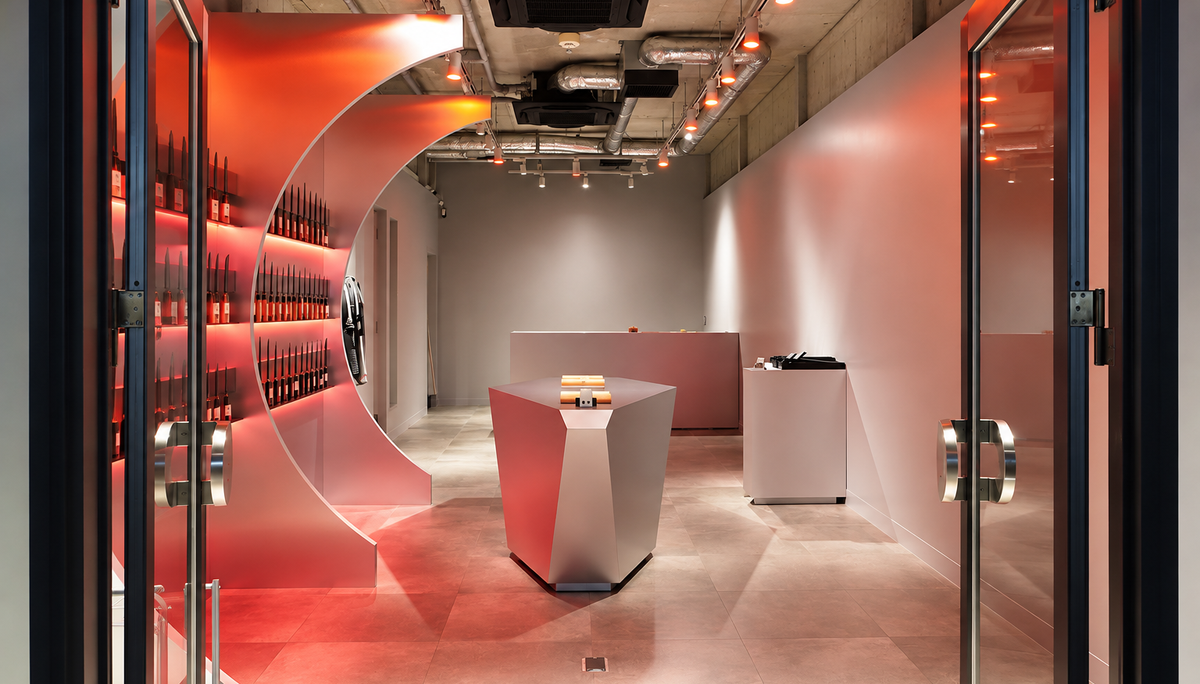
FE Opens on Takeshita Street, Our First Store in Tokyo
Takeshita Street is not the first place most people look for a kitchen knife. That is exactly why we chose it. Our new FE store in Harajuku, Tokyo, is open. It is our first store in Tokyo, and an unusual one. We opened it together with Genery Inc., a company that builds fashion brands and characters, mainly for Gen Z. One room, two cultures: knives and fashion. A store that does not look like a knife shop The interior is brushed silver, cut by lines of red light. The walls are metal, the displays curve, and the stands are geometric. At the center, there is a display where you can see each knife up close: the texture of the blade, the shape of the handle, and the small details that photos miss. Why Harajuku? For many years, Harajuku has brought together fashion, characters, design, and food, and people come from all over the world. Not everyone walking down Takeshita Street is looking for a knife, and that is part of the point. Imagine someone stepping in from the street, picking up a blade, and starting to ask questions. What is it made of? How is it made? Why does it look like this? We built the store for those questions. And if you want to go further, you can see how a knife is customized, right there in the store. ZAKU, our first series The Harajuku store centers on ZAKU, FE’s first series. Its blades have a raw, rough surface, inspired by meteorites, and a polished edge. The contrast is in the design. Harajuku is the third place to see ZAKU in person, after Kyoto and Osaka. Here, a knife is not only a cooking tool. It is also an object of design, material, and engineering. To see where the meteorite idea comes from, read an interview with our product designer Jack Tou. Working with Genery FE comes from the knife world. Genery comes from fashion and characters. The Harajuku store puts both in one room, so you can meet products and cultures you might not find otherwise. Alongside FE knives, the store carries LAZYSLAY, a fashion brand from Genery. Genery creates fashion, characters, and intellectual property, mainly for Gen Z. Its brand LAFARY is built around kawaii: apparel, goods, and character collaborations. LAFARY is active on social media and has stores at SHIBUYA109 in Shibuya, on Takeshita Street in Harajuku, and at HEP FIVE in Osaka. To learn more, visit Genery. What comes next FE is not only about a better knife. It is about bringing in ideas from other fields and other countries, and letting more people take part. We will keep working with companies and creators across industries to find out what a contemporary knife can be. To learn more about FE, read our material What is FE? A Knife Built Around Choice.
Knife Care Tips: How to Clean and Store Your Kitchen Knives
Knife Care Tips for Everyday Cooking It’s easy to forget your knife after dinner. It sits in the sink under a pile of plates, still wet, with a slice of tomato clinging to the blade. Later, it gets a quick rinse, a toss into the drawer with the other tools, and it is ready for tomorrow. Almost nothing in that story looks wrong, and almost all of it slowly wears a knife down. We want your knife to stay in great shape for years, so in today’s article, we will walk you through a few knife care tips: small, ordinary habits that keep it sharp, clean, and ready to use. The knife care tips that matter most If you only remember three things, make them these: wash the knife soon after you use it, dry it right away, and store it somewhere it will not rattle against other metal, ideally with a knife cover. The rest of this guide explains why and adds a few things that help a good knife last. Most of the damage happens after the cutting is over: in the sink, in the dishwasher, in the drawer. A knife can also be damaged by the wrong task. Cutting frozen food, for example, can easily chip the blade, and we will come back to that below. The good news is that knife care is mostly about habits, not effort. Wash the knife by hand right after cutting Food does more than make a knife dirty. Tomatoes, lemons, and onions are acidic, and salty food sits on steel in a way the metal does not like. Left on the blade for hours, they can stain it or leave small marks. So the simplest habit is also the most valuable: rinse the knife soon after you finish cutting. Use warm water, a little mild dish soap, and a soft sponge or cloth. Skip the rough scouring pad because it scratches the surface of the blade. Keep the sharp edge pointed away from you, and wipe from the spine toward the edge, never the other way; your fingers will thank you later. Why the dishwasher is not your knife’s friend A dishwasher is hot and humid, and it shakes everything inside. Blades knock against other items, strong detergent can leave marks, and the steam that lingers afterwards can sit on the steel. For a wooden handle, the heat and water are even harder because the wood can swell or crack. Hand washing takes about thirty seconds, and it is gentle on both the edge and the handle. Dry your tool right away Do not let a knife air-dry on the counter or in the rack. Water left on the steel leaves spots, and in time, those spots can turn into rust. Dry the blade straight after washing with a clean, soft cotton or linen towel, again wiping from the spine toward the edge. It takes ten seconds, and it is the habit that does the most for any iron-based steel. Look after the handle At FE, the handles are wood, and wood does not like to be soaked. Wipe the handle with a damp cloth instead of holding it under the tap, and dry it afterwards. Keep it away from very hot water and harsh cleaners. Now and then, a little oil helps wood stay supple and keeps moisture out. The usual advice is a food-safe mineral oil, or a mix of mineral oil and beeswax, applied thinly and wiped clean. Cooking oils such as olive or vegetable oil are best avoided because they can go rancid. There is one thing about FE that makes handling care less stressful. The handles are interchangeable, so if one wears out over the years, you can replace it without buying a new knife. Care slows the wear, and replacement is the safety net. To learn more about handles, see [Choosing a Knife Handle: Material, Feel and Balance Explained]. Choose your cutting board with care The edge of a good knife is extremely thin, and a hard surface blunts it fast. Glass, stone, and ceramic boards are the worst offenders. Wood and plastic boards are kinder because they are softer and more forgiving under the edge. A small tip helps here too. When you push chopped food off the board and into the pan, turn the knife around and use the spine. Dragging the edge sideways across the board wears it down for no reason. Store it where it will not rattle A knife left in a drawer spends its life knocking against other metal. Every knock can chip a fine edge, and every time you reach in blindly, you risk your fingers too. Give each knife a home instead: a magnetic strip on the wall, a knife block, a tray that sits in the drawer, or a knife cover. If you use a magnetic strip, place the knife on it gently, spine first, instead of letting the edge snap against the metal. Use the knife for what it is made for A good kitchen knife is thin on purpose, because a thin edge cuts cleanly. That also means it does not enjoy being asked to do other jobs. Do not poke with it, twist it inside a cut, open cans with it, or use it as a screwdriver. Avoid bones and frozen food, which can chip or bend a fine edge. Keep the edge sharp Even a well-kept knife gets dull eventually, and that is normal. But a dull knife is worth fixing sooner rather than later, because it can be more dangerous than a sharp one. It takes more force to cut and slips more easily, so it is harder to control. A simple test: if the blade slides off the skin of a tomato instead of biting in, it is time to sharpen it. The ideal sharpening frequency depends on how often you use your knife, the type of steel, the cutting board, and the ingredients you prepare. Rather than following a fixed schedule, we recommend sharpening your knife when you notice a decline in cutting performance. Professional chefs and frequent home cooks may need to sharpen their knives more often. What about rust and patina? If you notice small orange or reddish-brown spots on the blade, they may indicate rust. Address them as soon as possible. Light surface rust may be removed using an appropriate rust-removal product, but the suitable method depends on the blade's steel and surface finish. Abrasive products, including rust erasers, may scratch or alter the finish. If you are unsure how to proceed, please contact our customer support team. If rust appears on the cutting edge, sharpening may help remove light surface rust. However, deeper corrosion or pitting may require professional repair, as sharpening alone may not fully restore the blade. If you notice significant rust damage, we recommend consulting a knife specialist. Carbon steel knives may develop a discoloration known as patina over time. This occurs when the steel reacts with moisture, acids, and other substances found in food, causing changes to the blade's surface. Patina typically appears as a grey or bluish discoloration. Patina is a natural change that occurs with the use of carbon steel knives and is generally not considered a product defect. Where to start You don’t have to do everything at once; start with implementing one habit this week: dry the knife after you wash it. Once that feels automatic, you can move to pick another one. If you would like to learn more about FE and the idea behind the whole brand, start with [What is FE? A Knife Built Around Choice].
Choosing a Knife Handle: Material, Feel and Balance Explained
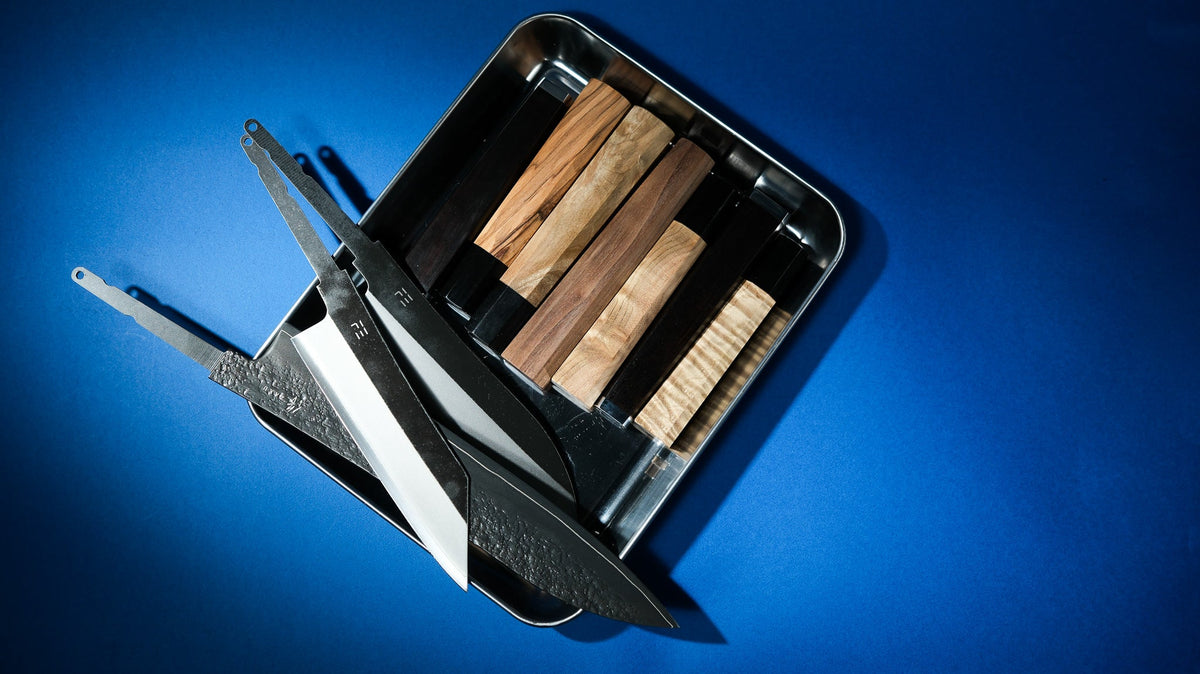
Choosing a Knife Handle: Material, Feel and Balance Explained Pick up two knives with the same blade but different handles, and your hand will tell you within seconds they aren't the same knife. One feels light and quick, while the other feels heavier and ready to go. Same steel, same edge, but a different handle will create a completely different experience. That is the handle at work, and it is the part of a knife most people think about last. This guide walks through knife handle materials, how a handle feels, and what balance means, so you know what to look for before you choose. Why does the handle matter as much as the blade? The blade does the heavy work, the cutting, but the handle is where your hand feels the knife. Every slice, push, and rock goes through your hand first. If the handle fits you, the knife just turns into an extension of your own hand, and you simply navigate the whole process with ease. If it does not fit well, you notice it by the end of the prep: a tired palm, a grip you keep adjusting, an overall feeling that a knife feels slightly wrong. This is also why a handle is a very important part for you to consider. Hands differ in size, in strength, and in the way they hold a knife. Explained: Common knife handle materials. Handles come from a few families of materials, and each one feels different in the hand. Generally speaking, a lot of Japanese knives have wooden handles; it is a traditional and classic choice. It is warm to the touch and comfortable, and every piece has its own grain, so no two handles look exactly alike. It asks for a little care: wood does not like long soaks in water, and it benefits from a little oil from time to time. Always dry it right after washing. If we are speaking about Western-style knives, they have a lot of different materials, such as resin, plastic, and epoxy. Synthetic materials, such as resin-based composites and plastics, resist water and stains well and stay consistent from one handle to the next. They often feel more neutral than wood, and you will find them on many knives built for heavy daily use. Metal handles are sturdy and easy to keep clean. They also tend to be heavy, and they can feel slippery in wet hands. None of these is the best in every case. It depends on what you value most: warmth, low maintenance, weight, or looks. At FE, the handles are made from wood, and there are four options to choose from. The four woods at FE We offer Olive, Walnut, Maple, and Ebony. Each has its own look and a different weight in the hand. Maple is minimalistic and clean, with exciting patterns. It is a hard, dense wood, and it is suitable for every kitchen. Walnut has a rich, brown look, from soft chocolate to deeper, darker lines. It is generally a relatively lightweight wood, making it a good option for those who prefer a lighter handle. Olive has a striking, golden-brown grain, and it is rare for two pieces to look the same. Olive is a dense hardwood, often giving the handle a more substantial feel compared with lighter woods. Every olive handle is, in a real sense, one of a kind. Ebony is nearly black, very dense, and fine-grained, with a smooth, polished finish. In general, it is the heaviest of the four and the one that changes how a knife balances the most. If you are torn between Maple and Walnut, the decision often comes down to color more than performance. Smooth cream or warm chocolate: pick the one you would enjoy seeing on your counter. What does “feel” really mean? Feel is the sum of small things. How thick is the handle compared with your hand? The shape under your fingers. Whether the surface is smooth and polished or has a little more grip from the grain. Whether the knife stays secure when your hands are wet from rinsing vegetables. The wood shapes some of this, but size and shape matter just as much. A handle that sits perfectly in a larger hand can feel too wide in a smaller one. The feeling that you will have will tell you everything that you need to know. What is balance, and why does a handle change it? A knife with its balance point toward the handle may feel lighter at the tip. On the other hand, a knife with its balance point toward the blade will feel heavier toward the tip. The ideal balance depends on personal preference and how the knife is used. The handle is half of that equation because it works as a counterweight to the blade. A dense wood like Ebony moves weight back toward your hand. A lighter wood, like walnut, leaves more of the weight in the blade. So the same blade can feel noticeably different depending on the handle you choose. There is no single correct balance. All of us have different preferences, and the right feel also depends on what you cut. How do you choose your handle? Start with how you cook and how the knife feels in your hand. These are starting points, not rules. If you like a light, quick knife for fast vegetable work, start with Walnut or Maple. If you prefer something steadier, with a little more presence in the hand, look at Olive or Ebony. If looks matter most to you, trust your eyes. A knife you truly enjoy seeing is a knife you will pick up more often. It is also not a permanent decision. At FE, handles are interchangeable; you can replace the handle without buying a new knife. How choosing a handle works at FE At FE, the blade and the handle are separate choices. You pick the shape that fits how you cook, then the handle that fits your hand and your taste. We put the two together by hand, and every knife is inspected for handle fit, sharpness, and straightness before it reaches you. If you are visiting Japan, visit one of our FE stores in person. You can hold the knives and feel the difference between blades and handles in person; we are located in Tokyo, Osaka, and Kyoto. To understand the whole customization process, read [How to Build a Custom Kitchen Knife at FE]. Caring for a wooden handle Wood is a natural material, so a little care goes a long way. Wipe the handle dry after washing, avoid leaving the knife soaking in the sink, and keep it out of the dishwasher. Depending on the handle's surface finish, applying a small amount of food-safe mineral oil or camellia oil can help maintain the wood in good condition. After applying the oil, wipe off any excess with a soft cloth. To understand the idea behind all of this, read [What is FE? A Knife Built Around Choice]. And if you are still deciding on the blade, see [Santoku vs Gyuto, or Bunka].

Knife guide: which knife size should you choose? 150, 165, 180 and 210 mm explained
Have you ever picked up a knife and thought, “this just feels off”? Most of the time, the reason is size. A blade that is a little too short makes you cut a cabbage in several moves, and a blade that is a little too long gets in your way on a small board. It’s likely no secret to you that there is a vast array of kitchen knives out there. Varying in length, type, and purpose. If you aren’t a professional chef or an expert in the field, it can all look a bit unusual or even confusing. But don’t worry, that’s what we’re here for. In today’s article, we’ll introduce you to the kitchen knives available at FE. We’ll talk about the differences in how they feel and the various blade lengths available. We’ll also explain what each knife is designed for so you can navigate your options more easily and make the best choice. What does knife size actually mean? When we say a Santoku is 165 mm, we mean the blade, measured from the heel to the tip. The handle is not counted. For reference, 150 mm is about 6 inches, 165 mm is about 6.5 inches, 180 mm is about 7 inches, 210 mm is about 8 inches, and 240 mm is about 9.5 inches. So when you compare sizes, you are really comparing reach. How much steel can travel through the food in a single stroke? How does size change the way you cook? A shorter blade stays close to you. It turns quickly, sits lightly in the hand, and gives you fine control near the board. It is the knife for small onions, herbs, shallow boards, and quick weeknight meals. Its limit is reach: a big cabbage or a thick piece of meat may take a few cuts instead of one. A longer blade gives you reach. It can glide through a large ingredient in one smooth stroke, and it makes slicing feel calm and even. It also asks for more space. It needs a bigger board and more room around it, and it can feel oversized when the kitchen is small. Neither one cuts better. The right length is the one that suits your board, your ingredients, and your hand. Santoku: 150, 165, or 180 mm The Santoku is an all-purpose knife for slicing, chopping, and dicing meat, fish, and vegetables. At FE, it comes in three sizes, and each one, of course, feels different. At 150 mm, it fits a small board easily and is quick to control, which many people find comfortable, compact, and light. For a very large cabbage or squash, you may need a couple of cuts. At 165 mm, it sits somewhere in the middle. There is enough length to handle most vegetables and a chicken breast in a single stroke, and it is still easy on a small or medium board. At 180 mm, it has the most reach. It moves through a whole cabbage, a squash, or a larger piece of meat with fewer strokes. It needs more board space and feels bigger in the hand, which suits you if you cook for several people and have the room on the cutting board. Gyuto: 180, 210, or 240 mm The Gyuto is a versatile chef’s knife, built for precision cutting, portioning, and everyday preparation. The curved edge and pointed tip let you rock the blade through food, and the longer length makes slicing smooth. At FE, it comes in three sizes. At 180 mm, it is a compact chef’s knife. It has the same length as the largest Santoku, but with a curved edge and a pointed tip. It is easy to control and more delicate if a chef’s knife is new to you. At 210 mm, it is often seen as the most popular size. It is long enough for cabbage, squash, and larger cuts of meat, and still manageable on a standard home cutting board. If you want one starting point, this is a very good one. At 240 mm, it gives you the longest strokes. It suits larger prep, bigger boards, and cooks who already feel at ease with a chef’s knife. On a small board, it can feel like too much. Bunka: 150, 165, or 180 mm The Bunka is a multi-purpose knife with a reverse tanto tip, which makes detailed work easier. The sizes follow the same logic as the Santoku. The 150 mm gives close control, the 165 mm sits in the middle, and the 180 mm gives more reach. If you are not sure whether you want a Santoku or a Bunka, read our detailed guide [Santoku, Gyuto or Bunka]. Why do some knives come in more sizes? You may have noticed that the Santoku, Gyuto, and Bunka each come in three sizes, and the Sujihiki does too, while the Petty, Hakata, and Kiritsuke come in two. Most of the specialist knives come in one size. There is a reason for that. The everyday shapes are used for so many different tasks, in so many different kitchens, that one length cannot suit everyone. A small board, a big family, a larger hand, a different recipe: all of these change which size feels right, so there is more choice. A specialist knife is made for one kind of job, so one well-chosen length usually covers it. The full FE range by size Knife Sizes What it is for Santoku 150, 165, 180 mm All-purpose everyday cutting: vegetables, boneless meat, fish Gyuto 180, 210, 240 mm Chef’s knife: larger ingredients, slicing, mixed prep Bunka 150, 165, 180 mm All-round cutting with a fine tip for detail Petty 130, 150 mm Trimming, peeling, and other small, detailed tasks Paring 90 mm Small work held in your hand Nakiri 165 mm Fast, clean vertical cuts through vegetables Kiritsuke Nakiri 165 mm A distinctive hybrid knife that combines the flat blade of a traditional vegetable knife (Nakiri) with a pointed, sword-like tip (Kiritsuke/Bunka). Hakata 165, 180 mm Everyday all-rounder in a style from Kyushu Kiritsuke 210, 240 mm Efficient slicing with a fine, pointed tip Sujihiki 210, 240, 270 mm Long, even slices of boneless meat and fish Honesuki 150 mm Boning and breaking down poultry Fillet 180 mm Filleting fish Steak 130 mm Cutting steak at the table Bread 230 mm Slicing bread Chinese cleaver 180 mm Broad blade for slicing and chopping vegetables and boneless meat How to choose your kitchen knife size Three questions get you most of the way. How much board do you have? A compact board points you toward 150 to 180 mm. A medium one works with 180 or 210 mm. A large board gives you room for 210 or 240 mm. Ask yourself what you cut most? Vegetables, herbs, and quick weeknight meals lean shorter. Large ingredients, roasts, and cooking for several people lean longer. How does it feel in your hand? Hand size and comfort matter just as much as the numbers. A knife that feels right is a knife you reach for. These are starting points, not rules: -Small kitchen, cooking for one or two: Santoku 150 or 165 mm, or Gyuto 180 mm. -Everyday home cooking: Santoku 165 or 180 mm, or Gyuto 210 mm. -Cooking for a family or in volume, with a large board: Gyuto 210 or 240 mm, or Santoku 180 mm. -Long, even slices of roasts or fish: Sujihiki 240 or 270 mm. And you do not need all of them. We are not telling you to build a collection. One size that suits you, and that you actually reach for, is worth more than a drawer of knives you are unsure about. Where to start Wherever you are, you can build your knife the same way. At any FE store, you can try the shapes and handles in your hands and compare them side by side. On the FE online store, you can choose your shape and your handle there too. Either way, start with the shape, since it is usually the easier decision, then take your time with the handle. To see how that works, read [How to Build a Custom Kitchen Knife at FE]. For the idea behind our brand, start with [What is FE? A Knife Built Around Choice].
Which Knife Fits Your Kitchen: Santoku, Gyuto or Bunka?
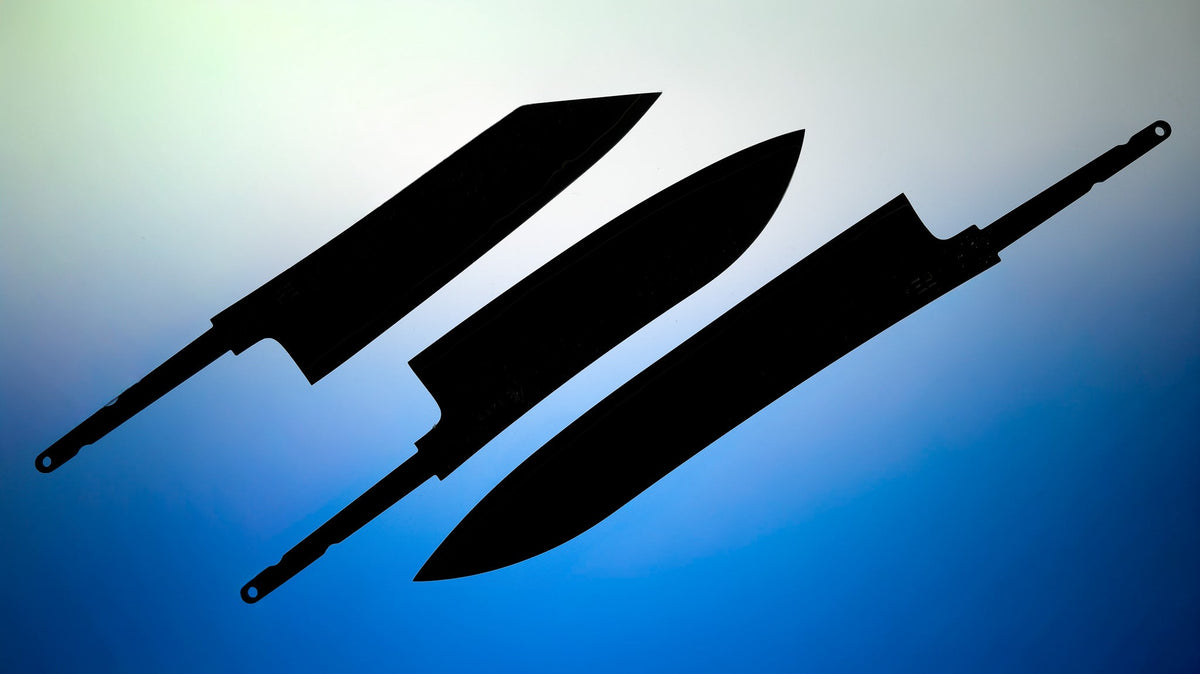
Most kitchens need one good all-purpose knife, and three names keep coming up: Santoku, Gyuto, and Bunka. All three can handle vegetables, meat, fish, herbs, and most everyday prep. That is why the Santoku vs Gyuto question comes up so often. The honest answer is that neither is better. They simply approach the same jobs differently. Bunka adds a third option that is easy to overlook: compact like a Santoku, but with a much more precise tip. Here is how to tell which one fits the way you cook. What is a Santoku? A Santoku is a compact all-purpose knife with a broad blade and a relatively flat cutting profile. The name means “three virtues” and is often associated with its versatility across meat, fish, and vegetables. Compared with a Gyuto, the Santoku usually has a less pronounced tip and keeps more of its cutting edge close to the board. Its flatter profile works particularly well for push-cutting, chopping, and everyday vegetable prep. That compact shape can also make it easier to control on a smaller cutting board. If you want one straightforward knife for everyday cooking and prefer controlled, relatively compact movements, the Santoku is a good place to start. At FE, the Santoku is available in 150, 165, and 180 mm. What is a Gyuto? A Gyuto is a chef’s-knife shape developed in Japan under Western influence. Its name literally means “beef sword,” reflecting its historical connection with meat preparation. Today, it is a much broader all-purpose knife used for meat, fish, vegetables, fruit, and general kitchen prep. Compared with a Santoku, a Gyuto usually has a longer, narrower profile and a more evident tip. The edge also tends to be more curved. That gives you more reach for longer slicing strokes and makes the tip useful for trimming, portioning, and other detailed work. Depending on the exact profile, the curve can also support more rocking motion than a flatter Santoku or Bunka. If you regularly work with larger ingredients, prefer longer slicing movements, or simply like having more blades in front of your hand, the Gyuto may feel more natural for you. At FE, the Gyuto is available in 180, 210, and 240 mm. What is a Bunka? A Bunka sits close to the Santoku in size and everyday use, but its geometry gives it a different character. The cutting edge is relatively straight, while the spine angles sharply toward the tip. This creates the distinctive K-tip, sometimes called a reverse-tanto tip. That fine point is useful when you want more precision for scoring, trimming, or detailed cuts around smaller ingredients. The Bunka is still an all-purpose knife. You do not need specialist cooking skills to use one. Think of it as an option for someone who likes the manageable proportions and flatter profile of a Santoku but wants a more precise tip. If a Santoku feels a little too rounded at the front, while a longer Gyuto feels like too much knife for your board, the Bunka is worth looking at. At FE, the Bunka is available in 150, 165, and 180 mm. Santoku, Gyuto, and Bunka at a glance Santoku Gyuto Bunka Edge profile Relatively flat More curved Relatively straight Tip Less pronounced Pointed Angular K-tip Typical movement Push-cutting, chopping Slicing, push/pull cuts, some rocking depending on profile Push-cutting, chopping, precise tip work Good for Compact everyday prep, vegetables, smaller boards Larger ingredients, longer slicing strokes, general prep Everyday prep with more precise tip work FE sizes 150, 165, 180 mm 180, 210, 240 mm 150, 165, 180 mm How do you choose? Forget the names for a second and think about your last week in the kitchen. If most of your cooking involves quick everyday prep, vegetables, smaller portions, and a compact cutting board, a Santoku may fit that routine very naturally. If you regularly work with larger ingredients, want longer slicing strokes, or simply enjoy the reach of a chef’s knife, look at the Gyuto. If you like a compact knife but frequently use the tip for controlled, detailed work, the Bunka sits somewhere between the two. And if you honestly do a bit of everything, pay attention to how you naturally move the knife. Do you prefer shorter push cuts and chopping? Do you like longer slicing strokes? Do you use the tip often? Your answer is usually more useful than the name on the product page. Length matters as much as shape. Shape is only half of the decision. A 165 mm Santoku and a 210 mm Gyuto can both be described as all-purpose knives, but they feel very different on the board. One keeps everything relatively close to your hand. The other gives you considerably more reach. That is why we recommend thinking about shape and length together. When you compare FE Santoku, Gyuto, and Bunka knives, shape and length are the first differences you are likely to notice in use. The broader FE process remains focused on precision and consistency. Our blades are CNC-machined to tolerances of up to 0.01 mm, vacuum heat-treated, gas-quenched, and cryogenically treated. Production batches are hardness-tested, followed by hand sharpening, assembly, finishing, and final inspection. Materials, finishes, handle configurations, weight, and other specifications can vary between FE models, so they matter too. But if you are trying to decide between Santoku, Gyuto, and Bunka, start with geometry. Put the three profiles next to each other. Look at the length, then look at the tip, and then think about what you actually cut. That will usually tell you more than a long specification list. Do you need all three knives? Most likely not. At FE, we are not telling you to buy more knives; we actually think the opposite. One knife you understand and actually reach for is worth more than a drawer full of knives you are never quite sure about. Start with the shape that matches the way you cook most days. Choose the length that fits your board and the amount of food you usually prepare. Then choose the handle that feels right in your hand. Because that is the part you will notice every single time you use it. Learn more about building your own combination in our article → [How to Build a Custom Kitchen Knife at FE]
How to Build a Custom Kitchen Knife at FE
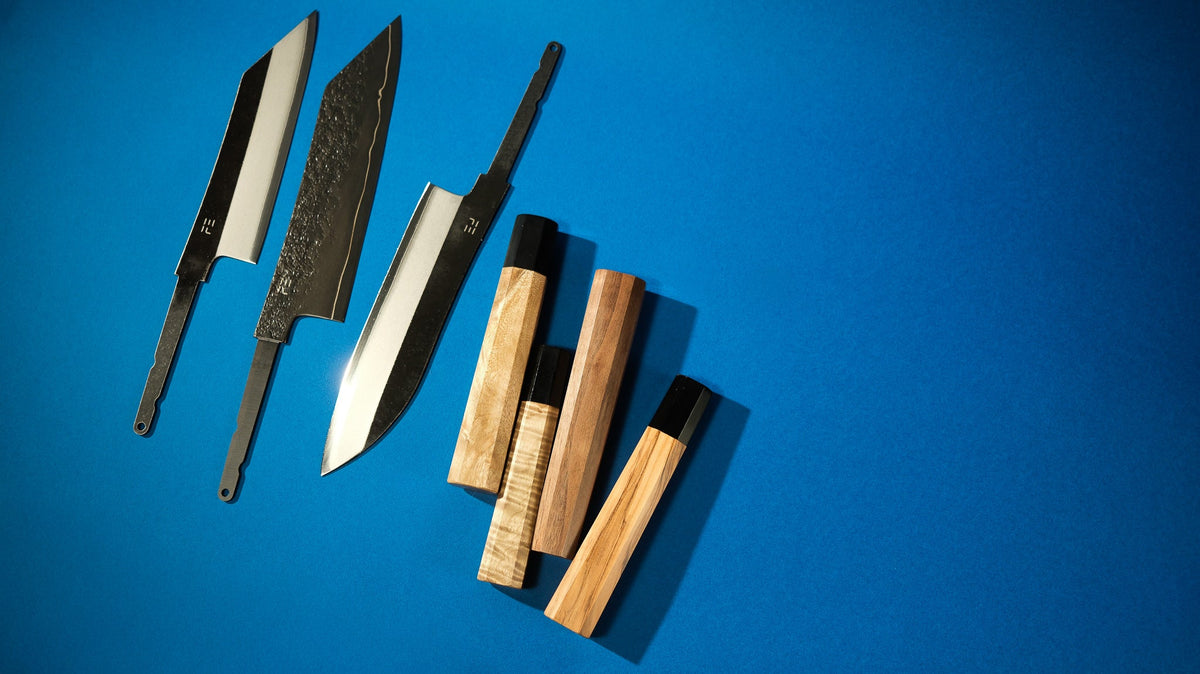
If you walk into almost any knife shop, you will notice the same thing: every knife is already finished and presented in its final shape. The blade, steel, length, and handle are all decided before you arrive, and your only job is to find the one that comes closest to what you had in mind. But what if the closest one is not quite right? Imagine having complete freedom of choice: you can create your own knife from scratch, from the blade type and finish to the handle... That sounds much better, doesn't it? This is the very idea behind the FE concept, and in this article, we’ll walk you through how to create a custom kitchen knife. What does a custom kitchen knife actually mean? At FE, a knife is not one fixed object; it is a system of parts. The blade and handle are separate components, each designed to fit the other through clear, shared standards. That is what makes the system flexible. You can choose a shape without being locked into one handle, and you can choose a handle without changing the blade. It also keeps working after the purchase. Say you own an FE knife and, a year from now, you want a different feel in your hand. You can fit another handle to the blade you already have, or another blade to the handle you love. Nothing has to be thrown away because one part changed. Customization at FE is not a color picker. It is not an engraving added at the end, and it is not a pile of options for the sake of having options. It is a way to make the decisions that change how a knife feels and performs, while understanding each one as you make it. Step one: choose the shape Kitchen knives come in so many shapes because kitchens ask for so many different things. The blade that glides through a roast is not the one you want for a pile of vegetables, and the one built for fine detail is not the one you want for a large cut of meat. Each shape exists for a reason. A Santoku is compact and steady, the everyday knife you reach for without thinking. A Gyuto is the all-round chef’s knife, with a long, slim blade that handles larger ingredients and slicing meat. A Bunka has a fine reverse tanto tip made for precise, detailed work. A Nakiri is straight and flat, built for clean, vertical cuts through vegetables. Petty, Sujihiki, Hakata, and others cover more specific jobs. Today, FE offers 15 different knife types, so there is plenty of room to find your own. To start, think about your own kitchen. What did you cook most this week? Pick the shape that matches it, then look at length, because the same shape feels like a different tool at 150 mm and at 210 mm. If you want help deciding, we wrote two guides: [Santoku vs Gyuto vs Bunka] and [choosing a knife size]. Step two: choose your own handle The handle is the part you touch every time you cook. Long after you stop thinking about the blade, your hand keeps remembering the handle. Its material, form, and weight change how the knife feels, and we believe this part matters just as much as the edge. At FE, the handle is a separate decision, not something added at the end. You can compare the options and feel how each one sits in your hand before you choose. Right now, you can pick from Olive, Walnut, Maple, and Ebony. Each wood has its own color and grain, from the pale warmth of Maple to the deep, almost mysterious black tone of Ebony. The handles are also interchangeable. If one wears out, or you simply want a different feel later, you can replace it without buying a new knife. Step three: assembly and finishing Once you have chosen a blade and a handle, we put them together. Handle assembly and surface finishing are done by hand. Before a knife reaches you, it is inspected for handle fit, sharpness, and straightness. The blades behind every combination are made the same way. They are CNC-machined to tolerances of up to 0.01 mm, vacuum heat-treated, gas-quenched, and cryogenically treated, and every production batch is hardness tested. This is exactly what gives true meaning to the freedom of choice. The ability to select elements yourself makes sense only when every combination has the same quality standard. A Santoku knife with a maple handle and an identical one with an ebony handle are crafted and inspected according to the same criteria. You choose the combination, while the quality standard remains constant. That is how we offer you this freedom without requiring you to compromise on the product's quality. Why we built it this way Part of the reason is practical: a knife that fits perfectly in your hand and suits your cooking style is more comfortable and efficient to use. However, a more significant reason arises from our experience with customers in the shop. We constantly encounter the same scenario: someone finds a blade they love but realizes they would prefer a different handle. With a standard off-the-shelf knife, that’s where the conversation ends, but with FE, that’s exactly where it begins. We want you to decide for yourself which knife you need, rather than settling for an option chosen by someone else. When you understand why you selected a specific shape, length, and handle, the finished knife becomes the incarnation of your own choices. Moreover, this isn't about buying more knives. If you have one custom-made knife that you reach for every day while cooking, that is truly all you need. Where to start Wherever you are, you can build your knife the same way. At any FE store, you can try the shapes and handles in your hands and compare them side by side. On the FE online store, you can choose your shape and your handle there too. Either way, start with the shape, since it is usually the easier decision, then take your time with the handle. To understand the thinking behind all of this, read [What is FE? A Knife Built Around Choice]. And if you would like to stay updated, create your FE account to follow our news, updates, and new articles.

FE Opens in Gion, Kyoto, With a Working Lab Behind Glass
Most knife shops show you the finished knife. At our new store in Gion, you can also see where the work happens. The FE Kyoto Gion store is open. Inside the shop, there is a lab behind a glass wall, and it is the part of the store we most want you to see. Here is what you will find there, and why we chose Gion. A lab you can see through The most distinctive feature of the Gion store is a glass-enclosed lab space inside the shop. It is not an interior designed to look like a research lab. It is a place where our staff actually carry out work and testing, and you can watch it happen through the glass. We built it this way because transparency is one of the central ideas behind FE. Words like sharp and high performance are easy to say, and hard to check. A finished knife can only tell you so much, so we would rather show you how it is made and how it performs. Sharpness is a good example. It is difficult to judge by feel alone. In the Gion lab, sharpness is measured with a special machine, so the result appears as a number instead of an adjective. A number does not tell you everything, and we will be honest about what it can and cannot say. But it is a clearer starting point than a promise. Choose your own knife, in person At the Gion store, you can build your knife from separate parts. You choose the blade shape and the handle, then combine them for the way you cook and the look you like. The goal is a knife that suits your hand and your cooking, not only your eye. Online, you can see a knife. In the store, you can hold it: feel the weight, the texture of the blade, and how each handle sits in your hand. That part is hard to convey on a screen. To see how shapes, sizes, and handles work together, read [How to Build a Custom Kitchen Knife at FE] and [What Kitchen Knife Size Should You Choose?] ZAKU, our first original series You will also find ZAKU here, FE’s first original series. It has a rugged, unpretentious, modern design, with a distinctive texture inspired by meteorites, and it looks and feels unlike a conventional knife. Meteoritic iron is one of the sources of inspiration behind FE, and Jack talks about it in his interview. Why Gion? Gion is one of Kyoto’s best-known districts. Its traditional wooden buildings and stone-paved streets have been preserved, and it welcomes visitors from Japan and from abroad. It is a place where traditional culture thrives. That is exactly why we wanted to be here. FE does not try to copy tradition as it is. We admire it and respect it, but we do not treat it as untouchable. We combine the Japanese philosophy of craftsmanship with techniques from around the world, modern materials, and new designs to offer a different kind of value in a kitchen knife. Gion felt like the right place to show that. If you are planning to visit Kyoto, stop by, hold a few knives, and see the lab for yourself. To learn more about FE, start with this article →[What is FE? A Knife Built Around Choice].
The Principles Behind FE
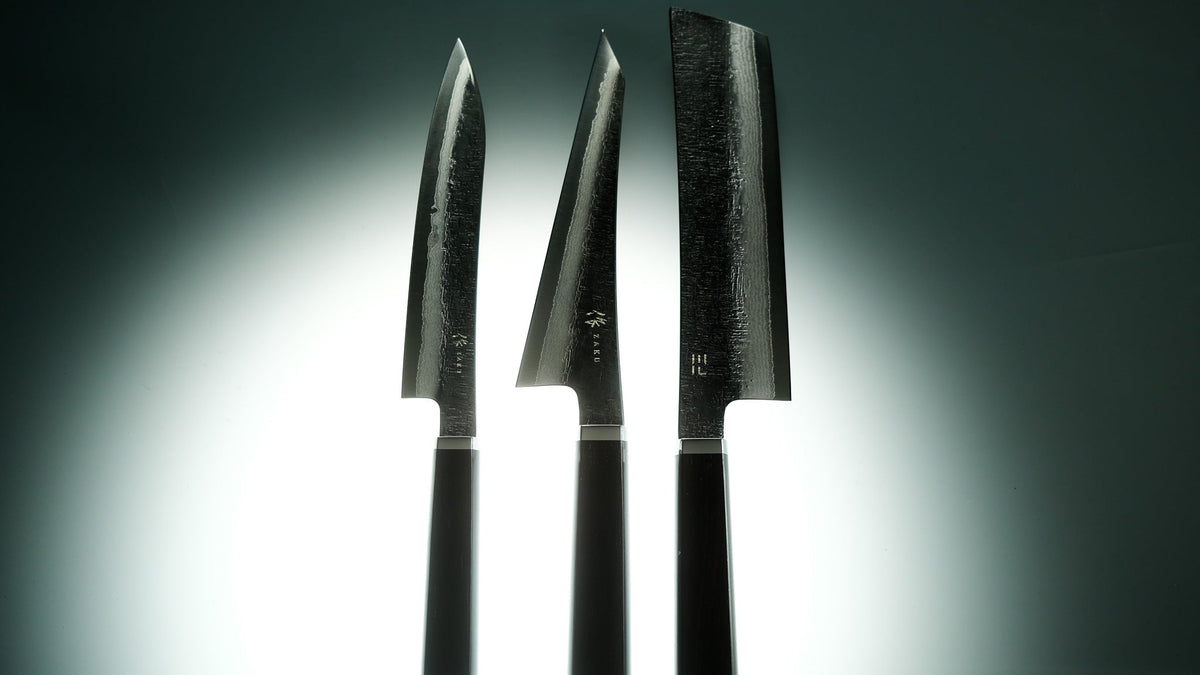
Kitchen knives are tools almost everyone uses on a daily basis. Whether you cook professionally or just a few times a week, a good knife matters. We built FE around one idea first: a knife has to be accessible to everyone, and you should be an active participant in choosing what’s best for you. And we are providing that freedom to you. With FE, we combined traditional knife-making knowledge with the freedom to choose what fits your cooking style. We don't claim one region or one lineage as the only correct way to make a knife. We draw on bladesmithing knowledge from wherever it's genuinely useful, combined with Japanese design thinking and performance standards, because the best answer to how a knife should be made is never going to come from just one place. We admire tradition and respect it, but we don't treat it as untouchable. The same goes for technology. There are countless techniques for making knives and processing steel, so why not experiment, try new things, and use different methods, while still respecting where they came from? Then there's customization. We care about it not because more options are automatically better, but because a tool becomes more meaningful when you take part in creating it. These ideas shape the way we think about FE. Most knife brands present a finished product. Say you're looking for a stainless steel Santoku: you might know exactly what you want, but in the end you choose from what's already on the shelf. You don't get to choose the blade, the steel, the shape, and the handle together. We wanted to give you a different experience. By offering interchangeable and replaceable handles, you can refresh, repair, or completely change the look of your knife without having to buy a new one. A future built through exchange Knife making has never developed in isolation. Different cultures bring their own approaches to steel, geometry, heat treatment, sharpening, handles, and manufacturing. Modern engineering adds another layer of knowledge. Some things stay the same, but manufacturing methods improve, new tools appear, and techniques move between countries, industries, and generations. What's considered traditional today was, at some point, a new solution to a practical problem. FE wants to continue that process: testing, improving, and researching further. We can't even call today's product finished. We think that's a fair thing to be. Innovation doesn't require pretending every question already has an answer. As technology advances, we can upgrade individual parts without redesigning the whole product. For FE, innovation isn't about rejecting what came before. It's about understanding it well enough to build from it. Our vision is a future where innovation in knife making is driven by the borderless exchange of knowledge. Our mission FE exists to create high-performance, customizable knives. We combine global knife-making knowledge, modern materials, and practical design, while making craftsmanship easier to understand and more accessible. That means thinking about more than the blade itself. We think about how the knife is selected, how it's assembled, how its performance is checked, how its components interact, and how you can understand those choices. We're working toward that mission in several ways. We aim to offer strong performance without turning a good knife into an object reserved only for collectors. It's the opposite: we want you to be able to enjoy the knife, not just admire it. We give you a real say in how your own knife is configured. While we keep studying techniques, materials, and ideas from different parts of the world, you get the benefit of that research every time you choose our product. We design products as systems, with components that can be replaced, changed, or developed over time where the design allows it. The goal is to give you enough information and enough choice to understand the tool you're buying. Accessibility matters You don't have to be a knife specialist or a chef to understand what makes a good kitchen knife. But we also know the knife world can get complicated fast. Steel names, hardness values, blade geometry, manufacturing terminology, and stories about craftsmanship can make this world feel intimidating when you just want a reliable tool for everyday cooking. FE wants to make that information clearer. Calling a tool accessible doesn't mean lowering its quality. It means making things clearer and removing unnecessary barriers around it. You should be able to understand why a blade shape exists, what a different size changes, why one handle feels different from another, and what actually happens during production and quality control. Price is part of accessibility too. Our aim is to find a balance between performance, design, and cost, so a serious kitchen knife doesn't have to exist only as a luxury object. A tool only becomes useful when people understand it, can choose it with confidence, and actually use it. Ownership creates connection Most products on the market arrive in their final shape, fully decided before you ever encounter them. With FE, we wanted to give some of those decisions back to you. You can think about the shape you need, the size that fits your kitchen, the handle that's most comfortable for you. We give you the room to combine every detail that makes sense for the way you cook. That doesn't mean unlimited options or decoration for its own sake. Customization changes the relationship between you and the product. It creates a connection, making the knife truly yours. For us, that's what participation means. When you understand why you chose a particular component, the finished knife carries some of your own decisions within it. That creates a different kind of ownership. Instead of simply asking "Which knife should I buy?", you can start asking "What knife makes sense for me?" The distinction is small, but it changes the experience. A knife becomes less like an object picked off a shelf, and more like a tool you had a role in defining. Craftsmanship should be visible Words like craftsmanship and quality get used everywhere, which makes them easy to say and harder to prove. We believe trust gets stronger when the process is visible. Rather than asking you to accept that care went into a product, we'd rather show you what actually happens. How the knife is assembled. What's finished by hand. How performance is evaluated. What part of the process is done by a machine, what part is done by a person, and why. This is why assembly, finishing, and quality control are core parts of the FE experience. The process itself holds information, and we want to share it with you. When you can see how a product comes together, technical language gets easier to understand. A phrase like "quality control" stops being an abstract promise and becomes a sequence of real checks. Transparency also means being honest about the role of machines. We don't believe craftsmanship disappears when technology is involved. A machine can provide precision and consistency, and a person can provide judgment, adjustment, and finishing. A tool should be able to evolve There's another principle behind how FE thinks about products. A knife doesn't have to stay exactly the same for its entire life, and in practice, it won't. Handles wear, your preferences change, new materials appear, and technology improves. We design our product as a system that can respond to those changes more easily than a product built as one fixed, permanent object. That's why replaceable and interchangeable components matter to FE's long-term direction. The idea isn't to make products disposable, or to chase endless upgrades for their own sake. It's the opposite. If one component changes, the whole knife shouldn't automatically become irrelevant. A tool can develop alongside the person using it. For FE, that's another form of sustainability: designing products with a longer relationship in mind. The reason behind everything All of these principles come back to the same question: can you understand why this product exists? Not because we tell you it's innovative. Not because we call it premium. Not because we wrap it in a story. Because the choices behind it are visible. The shape has a reason. The handle has a reason. The materials have a reason. The process has a reason. Your participation has a reason. That's the direction FE is working toward: a knife built from knowledge that can cross borders, a product that leaves room for the person using it, and a tool that can keep evolving as the world around it changes. Learn more about FE [What is FE? A Knife Built Around Choice]
"I Didn't Know a Knife Could Be Like This": Jack Tou, the Designer Behind FE
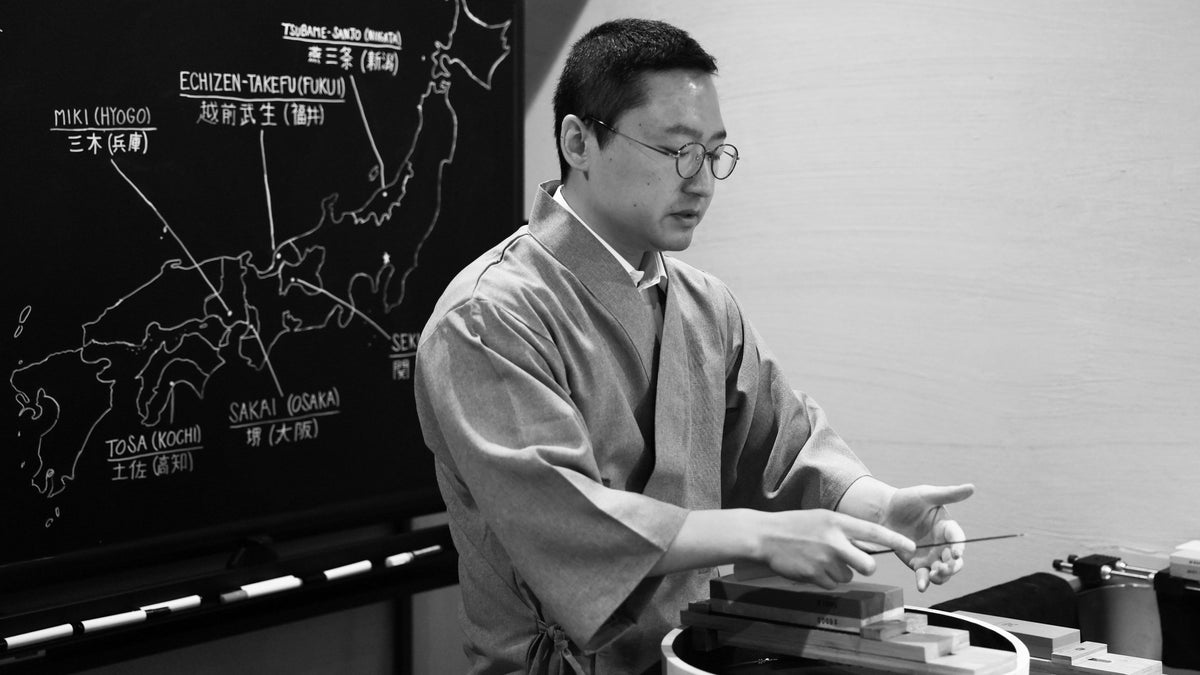
Before FE, Jack spent years working closely with Japanese craftsmen, developing a product line for another well-known Japanese knife brand. We sat down with him to ask what FE means to him, and how much work can sit behind a few silver lines on a blade. Before you started to draft any designs, what did you want FE to feel like? I wanted FE to give people one immediate, strong feeling: "I didn't know a knife could be like this." More convenient, more elegant, more reassuring, and unapologetically your own, a knife you put together yourself. I don't want a kitchen knife to be understood simply as a traditional kitchen tool. It can bring together technology, materials, aesthetics, and functionality, and become something that genuinely fits into modern life and improves it. What does the name FE mean to you? FE is a knife brand built on the belief that innovation comes from the exchange of knowledge. By bringing together contemporary knife-making techniques from around the world, we create high-performance, accessible knives while contributing to the continued development of knife-making cultures. But there's a second meaning that plays a vital role for me: Future. FE takes the best of traditional Japanese craftsmanship and gives you the freedom to choose what feels right, so the knife you end up with is unapologetically yours. If traditional Japanese brands are about preserving and carrying forward traditional culture and craftsmanship, then FE, to me, is a brand that belongs to our time. We live in an era of rapid technological development and AI, and I don't want the future to exist only in the shape of a knife. From products and packaging to retail spaces, digital interfaces, personalization, and photography, I want everything to share the same design language. Whether you meet a knife, a package, a screen, or an FE store, you should feel that they belong to the same system. Why does the future matter so much to you? I've always been fascinated by how human beings imagine the future. In ancient times, when people saw meteoric iron arriving from the sky, they understood it as something mysterious, sometimes even a material belonging to the gods. Today we analyze the same material through materials science and identify its iron, nickel, and very specific metallic structures. To me, these two ways of understanding it aren't contradictory. Technical drawings, industrial design, early digital interfaces, and now AI all record how people in different eras understood technology and the future. FE uses references from these visual languages, but I don't want them to be decoration. Ideally, every element has a function or a reason behind it. A line might come from the actual structure of a product. A number might correspond to a real technical parameter. An interface should help you make a better choice. The texture of a material should come from a genuine manufacturing process. I don't want FE's sense of the future to simply look futuristic. I want it to feel like the future because the product itself has been designed with the technologies and ways of thinking of our time. Which design decision took the most time? It may look like a small material choice, but our use of nickel (Ni) took a great deal of time and experimentation. Meteoric iron is one of the important sources of inspiration for FE. Myths and legends from cultures around the world tell of "metal from the sky" and weapons made from it. In real iron meteorites, one of the most characteristic features is iron and nickel existing together. That made me ask whether we could translate this material characteristic into FE's own design language. Nickel doesn't only influence the properties of an alloy. It can also create a very distinctive visual contrast in laminated steels and Damascus structures, so we began experimenting with nickel-containing materials and nickel Damascus techniques as part of FE's product system. Once we started manufacturing, we discovered this was far harder than drawing it. When pure nickel is forge-welded with steel, temperature, pressure, material thickness, and the whole processing sequence have to be carefully controlled. If they aren't, you can get delamination, uneven thickness, or a pattern without enough definition. What you finally see may only be a few silver lines running across the blade. But to make those lines a genuine part of the product and not surface decoration, we ran extensive testing and refinement of both materials and manufacturing processes. Where is customization going? This is one of the areas where I think FE is very different from other brands. Designing around the size of your hand, letting you choose a handle, and helping you find the right size is, to me, only the first step. In the future, I want you to be able to go further based on how you actually use your knives: choosing the blade shape, the dimensions, even different performance characteristics for your own needs. That idea has changed how I design our core products. If we want true personalization, we can't begin by treating every knife as a completely independent product. We need a unified set of standards and a coherent system from the start. The blade, the handle, and the other components need clear rules and interfaces between them. As technology advances, that lets us keep upgrading individual parts without redesigning the whole product. In the end, I don't want an FE product to be something that is "finished" once the design is done. I want it to be a system that keeps evolving with technology, with the people who use it, and with the era itself. Learn more about FEWhat is FE? A Knife Built Around Choice
Why choose FE? The Knife You Actually Understand
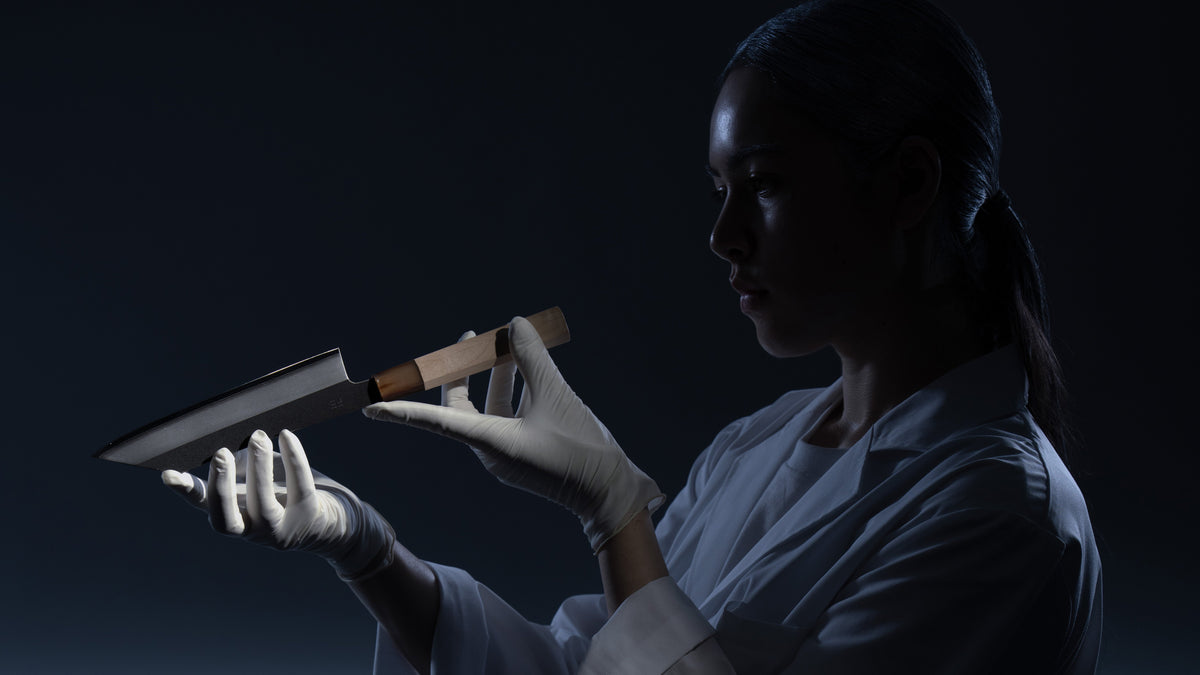
Why Choose FE? Think about how many products are out there right now. The amount of choice can feel overwhelming on its own. We are constantly told to buy this or that, told a product is excellent, has great quality, and yet you have no real way to check. You just have to believe it, and then make the purchase anyway. How insane is that? FE starts from the opposite instinct. Instead of asking you to trust marketing words like precision, premium, excellence, we would rather show you the product itself and let you decide whether it actually holds up. And there's a lot to hold up against: Japan, China, Europe, the US, new brands and new knives showing up everywhere, all claiming to be the one. Most knives arrive as a finished decision. Someone already picked the blade shape, the handle, the balance, and you either accept that or you don't. With FE, it's different. You choose the knife you want, not just the model that's already been decided for you. The blade and the handle are separate choices You pick the shape that fits the way you actually cook, then the handle that fits your hand and your taste. It's not just a color option bolted onto a fixed product. It changes what you are actually buying: not an object someone else finished, but one you had a real hand in. We don't hide the process behind the knives A lot of knife brands lean on a single word: handmade, Japanese, artisan, and let you assume the rest. FE would rather tell you what's true. Our blades are CNC-machined to tolerances of up to 0.01 mm, then vacuum heat-treated and gas-quenched, then cryogenically treated. Every production batch is hardness tested. Sharpening, assembly, and finishing are done by hand, and each knife is inspected for fit, sharpness, and straightness before it reaches you. None of that is a secret we are revealing. It's just the actual process, stated plainly instead of dressed up. Quality control isn't a claim; it's a step you can see We're not asking you to take "strict testing" on faith. Hardness testing, straightness checks, sharpness inspection: these are specific, repeatable steps that either happen or they don't. At FE, they happen on every batch, not just the ones that make it into photos. The range is wide because cooking isn't just one task A Santoku and a Gyuto solve different problems. So do a Nakiri and a Petty. FE's range exists because we would rather help you find the shape that actually matches how you cook, rather than sell you one knife and call it universal. We're not telling you to buy more knives This one matters to us more than it might sound like it should. FE's position isn't that you need a bigger collection of knives. It's that a knife should earn its place in your kitchen. A few knives you actually reach for, each one right for what you are doing, will always beat a drawer full of ones you don't fully trust. Global knowledge, not a single tradition There are so many techniques, materials, and machines behind knife-making today. It might sound corny, but we wanted to take the best of all of it and put that into what we give you. FE doesn't claim one region or one lineage as the only correct way to make a knife. We draw on bladesmithing knowledge from wherever it's genuinely useful, combined with Japanese design thinking and performance standards, because the best answer to how a knife should be made was never going to come from just one place. So, why FE? Because you get to choose the knife instead of accepting one that's already been decided for you. Because we tell you what's actually happening in production instead of asking you to trust an adjective. Because quality control is something we can point to, not just say. And because the knife you end up with is one you understand, not just one you were sold. Take the quiz to figure out what you actually need. https://feproject.com/pages/knife-quiz-kiosk?
Innovative Knife Brand FE has opened its first store in Osaka
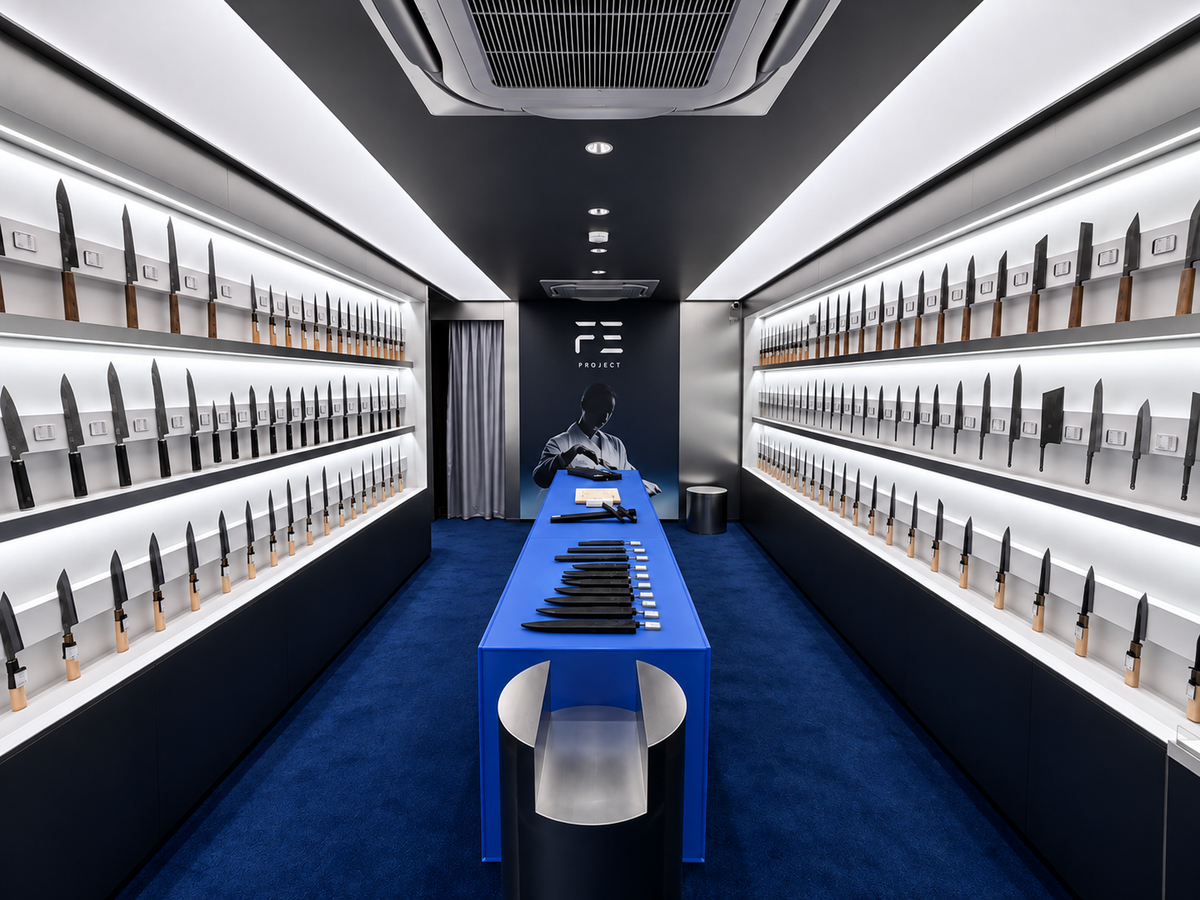
We are happy to share some news: our first physical FE store has opened in Osaka. FE brings together knife-making techniques from around the world with contemporary materials, grounded in Japanese design thinking and performance standards. At the Osaka Namba store, you can see and touch the knives in person, feel the differences between blades and handles, and choose the one that fits you. Through this physical space, FE delivers the craftsmanship and the pleasure of choosing a knife that online alone can't fully convey. A New Base for FE, Born in Osaka Osaka has welcomed many people from all backgrounds, blending them to create its own distinctive food, commerce, and culture. This city combines different things to create something that didn't exist before. That same idea runs through how we make knives. Rather than answering with a single region or tradition alone, we've pursued new possibilities for the kitchen knife by drawing on bladesmithing techniques from around the world and contemporary materials. FE also takes a different starting point on the kitchen knife itself: you choose the knife that fits your own cooking style and preferences, both blade and handle. Experience FE's Worldview Through the Space When we designed this store, we wanted it to feel futuristic: sharp lines, a metallic edge, unlike a regular knife shop. Knives with different shapes and expressions are arranged neatly along the walls, with a central space where you can pick up and compare products directly. In a space that feels closer to a research lab, built around function and accuracy, you can explore the differences for yourself and choose a knife by feel. You can also select the blade and handle separately, building a single knife from the elements you actually want. Not simply choosing a finished product, but comparing, choosing, and combining. This is what FE values most in how we make things: seeking better answers without being bound by existing frameworks. It's the same question at the center of the brand from the start. What if choosing the knife was part of the product itself? Not an add-on, not a feature, but the actual idea. A tool that can be understood, not just admired. What Grows From the Store: FE's Future FE Osaka Namba is a place to see, touch, and experience craftsmanship that combines bladesmithing techniques from around the world with Japanese design thinking. Where your own sense of feel meets how FE makes things, new encounters with knives emerge that didn't exist before. Rather than lining up finished answers, we keep searching for the next one. From Osaka, and on to the next city after that. FE will continue expanding its store presence, delivering a new form of the kitchen knife, built for this era, to more people. We're looking forward to seeing you - come say hi once you are in Osaka.
What is FE? A Knife Built Around Choice
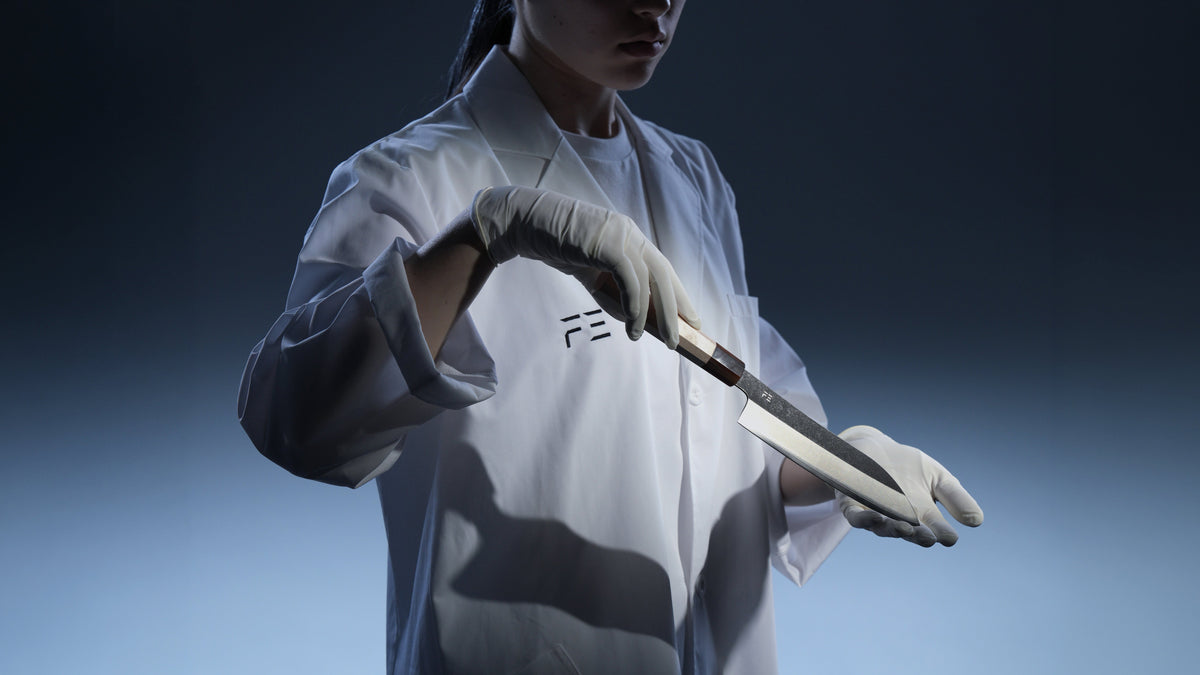
When you buy a kitchen knife, the blade, handle, shape, and materials have already been decided for you. What you see is the final object: a fixed model and shape, ready to take home. FE starts from a different place. What if choosing the knife was part of the product itself? Not an add-on, not a feature, but the actual idea. A tool that can be understood, not just admired. It starts with an element. The name FE comes from Ferrum, Latin for iron. It's purposefully simple. Instead of building an identity around a region, a legend, or a traditional image of knife-making, FE begins with the material itself and asks what a kitchen knife can become when contemporary design, engineering, and different traditions of knife-making knowledge come together. This isn't an attempt to remove tradition from the knife, not at all. It's an attempt to look at it from another direction. Your shape. Your handle. Your knife. There are so many shapes in the range that it can look complicated at first. Some people want the compact form of a Santoku. Others prefer the precision and pointed tip of a Bunka. A Gyuto gives you uncompromised versatility. A flat, rectangular Nakiri blade is built for clean, vertical push-cutting. Those shapes exist because different cutting tasks create different requirements, and making those differences easy to understand is part of what FE stands for. Then there's the handle: a different story entirely. Its material, form, and feel change the relationship between your hand and the blade. Building FE, we decided to give you the freedom to build your own tool. You choose the blade. You choose the handle that fits the way you cook. FE treats those decisions as part of the experience, not something to hide inside a finished product. Choose the shape. Choose the handle. Build the combination that makes sense for how you cook. The current FE collection spans everyday shapes like Santoku, Gyuto, Bunka, Nakiri, and Petty, alongside more specialized shapes like Sujihiki, Honesuki, Hakata, and Kiritsuke. We're not telling you that you need more knives. It's closer to the opposite: the point is to understand the differences well enough to choose what you actually need. A knife that's personal in ways a spec sheet doesn't explain. The process should be visible Knife language turns abstract fast: premium, sharp, crafted, high performance. With FE, we'd rather explain what actually happens. Production starts with premium steel, then precision machining. Our blades are CNC-machined to tolerances of up to 0.01 mm. They're vacuum heat-treated and gas-quenched to control distortion and consistency, then cryogenically treated at sub-zero temperatures. Every production batch is hardness tested. Final sharpening is done by hand. Handle assembly and surface finishing are done the same way. Each knife is then inspected for handle fit, sharpness, and straightness. Transparency is one of the central ideas behind FE. Our goal is to make the process more visible: less mystery, more information. A modern product can take a long path from material to finished object: design, steel, machining, heat treatment, finishing, assembly, quality control. We want that path to be understandable. What material is being used? How is the blade shaped? What's being measured? What's finished by hand? Those questions aren't interruptions to the product story. They are the product story. Performance you can examine Sharpness is a good example. It's easy to call a knife extremely sharp. It's more interesting to ask how sharpness is actually evaluated, what affects it, how long it lasts, and what a measurement can and can't tell you. That approach extends past the edge. FE cares about the whole system around the knife: material selection, blade geometry, heat treatment, handle choice, assembly, inspection, and eventually the way the tool changes through use. Instead of asking you to accept performance as an adjective, we want more of that performance to be visible. A knife is not only the blade FE was never meant to be just a collection of individual products. The knife exists inside a larger system: the blade and the handle, the way they're combined, the process behind them, the way you choose, the way the knife is tested, maintained, and understood after you own it. Even the store and the digital experience are part of that system. This is why customization matters to FE. It's not a choice of colors. It changes your role, from selecting a finished object to taking part in the decisions that make it. FE is an ongoing project, built around research and iteration on purpose. Some ideas already exist as finished products. Others are still experiments: new materials, new interfaces, new testing methods, digital tools, store experiences, different ways of helping people choose. We think unfinished is a fair thing to be. Innovation doesn't require pretending every question already has an answer. Sometimes it just means showing the test, showing the drawing, showing what changed between the first version and the second. The object at the center of all this stays simple. What changes is how you get there, and the decision is yours. FE. One Element. Every Blade.
Iron Is Where We Start. Why does FE focus on iron?
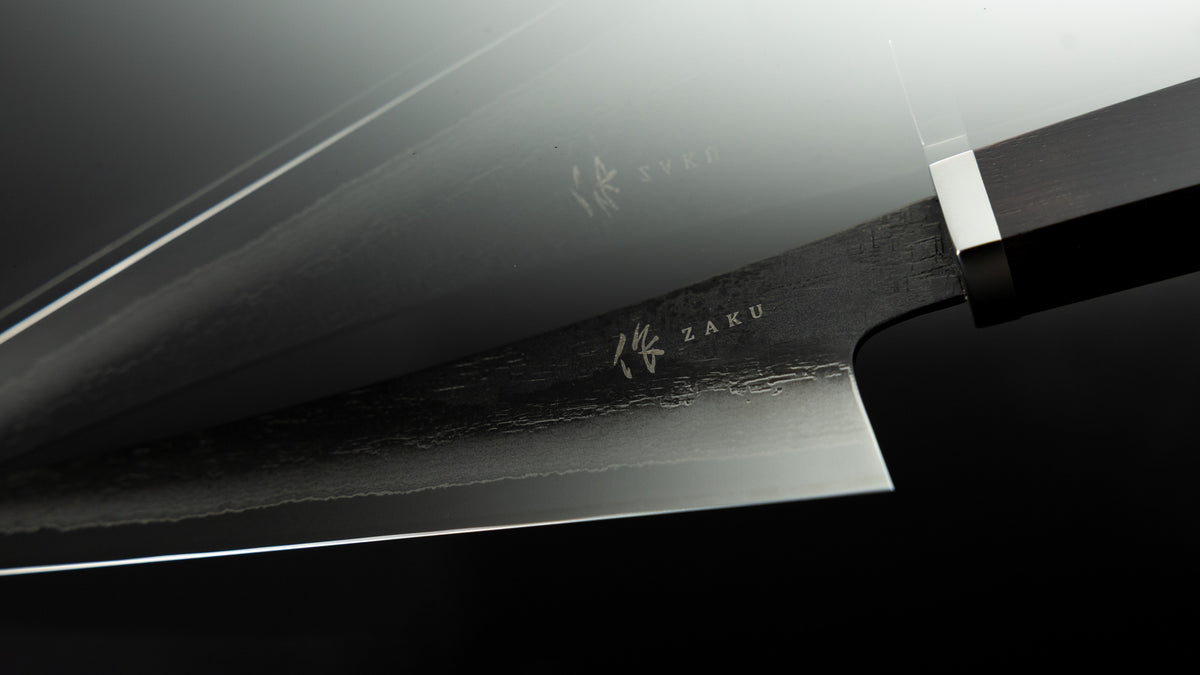
Every kitchen knife starts with a metal, and for almost every knife you will ever hold, that metal is iron. This article explains why we start there. The short version: iron is not a fixed material. It has kept changing for thousands of years, from metal that fell from the sky to the modern steels in your kitchen, and every generation of smiths added something to it. We want FE to respect that history, and to keep adding to it with the technology of our time. Here is how the story goes: where iron comes from, how people learned to work it, how steel evolved, and how FE builds on all of it. The origins of iron For most of human history, a blade was made from whatever could be found and shaped. First came stone, chipped into a point. Then copper, soft but workable. Then bronze, which is copper mixed with tin. Bronze was harder and durable enough that many bronze blades and tools survive in museums today. But iron was already on Earth, and some of it had arrived from the sky. Metal from the sky Long before anyone learned to produce iron, people already knew it in a rare form: meteorites. Iron ore hides inside ordinary-looking rock, and getting the metal out means building a very hot furnace and knowing exactly what to do. Humanity did not arrive at that skill overnight. But now and then, rocky and metallic masses fall to Earth from space, and some of them are made almost entirely of iron and nickel. Imagine finding one thousands of years ago. You have never seen a metal like this. It is heavy, shiny, and strange, and it fell from the sky. Because it was so rare, people treated it as special, and in some places as sacred. They could not melt it, but they could hammer it into beads, ceremonial objects, jewelry, and blades. The most famous example is the dagger of Tutankhamun. It was found in 1925 in the wrappings of the mummy, and it is more than 3,300 years old. In 2016, Italian and Egyptian researchers analyzed the blade with a non-invasive X-ray technique. They found about 10 percent nickel and a little cobalt, a combination that is typical of iron meteorites and very rare in iron made from ore. The blade really was made from metal that fell from space, and the dry air inside the tomb kept it free of rust for over three thousand years. How iron took over from bronze Meteorites were rare, but iron ore is not. It lies in the ground across the world, which meant a smith in almost any region could, in principle, learn to work it. Bronze, by contrast, needs tin, and tin was not buried everywhere. Here is the surprising part: early iron was actually softer than bronze. It won slowly, by being easier to find and cheaper to make, and because smiths kept learning how to improve it. One of the biggest improvements was carbon. Iron mixed with the right amount of carbon becomes steel, a metal that can be hardened and sharpened to an edge that bronze could not hold as well. Steel is an alloy, and what makes it steel is control over its carbon content. Smiths found different ways to get there, adding carbon to soft iron or taking carbon out of carbon-rich iron. So iron did not win because it was perfect. It won because it was available, and because the people who worked with it never stopped improving it. How people learned to work iron Once people could make iron and steel themselves, each culture developed its own methods, shaped by the materials and conditions around it. Japan has little iron ore, so traditional steelmakers relied on iron sand. They smelted it with charcoal in a clay furnace called a tatara, over about three days and nights, to produce tamahagane, the steel behind the traditional Japanese sword. In India, smiths made steel in sealed clay crucibles. The result, known as wootz, had a rippled surface pattern. Traders carried it to the Middle East, where it was forged into the blades that came to be known as Damascus steel. Today, the name Damascus is also used for pattern-welded steel, made of layers of different metals forged together. In Europe, towns like Solingen in Germany and Sheffield in England became famous for their blades and cutlery. Different furnaces in different places, and the same metal at the core. Techniques moved between countries and generations, and what we call traditional today was once a new solution to a practical problem. How steel evolved For centuries, the standard knife steel was carbon steel: iron with carbon in it, hardened to hold a sharp edge. It has been trusted by smiths for a very long time, and it has one well-known characteristic. Why does iron rust? Rust is what happens when iron comes into contact with oxygen and water. The surface slowly turns into iron oxide, the flaky orange-brown layer you have probably seen on an old gate or a forgotten pan. This layer does not hold on. It crumbles away and exposes fresh metal underneath, so the rust keeps working its way inward. Carbon steel behaves the same way, which is why a carbon steel knife asks for a little care. Some carbon steels also develop a patina, a slow darkening that is not rust and simply records how the knife has been used. Then came stainless steel In August 1913, in Sheffield, a metallurgist named Harry Brearley was trying to make a steel that would stand up better to the heat and wear inside gun barrels. He added chromium and noticed something unexpected: the steel resisted corrosion. He first called it rustless steel. The name stainless came later, suggested by a local cutlery manufacturer. Others had experimented with chromium steels before him, but Brearley is widely credited with creating the first practical stainless steel. Here is what the chromium does. On the surface of the steel, it reacts with oxygen in the air and forms a layer of chromium oxide. You cannot see it, and it is far thinner than a human hair, but it clings tightly to the steel and seals it off from air and water. If you scratch it, a new layer forms by itself, as long as there is air. Plain iron has no such layer. A steel needs at least 10.5 percent chromium to count as stainless, and most stainless knife steels contain 13 percent or more. That does not make them rust-proof, but it makes them highly resistant. Modern powder metallurgy and other high-performance steels push hardness and edge holding further still. Each steel is a trade-off between rust resistance, how well it holds an edge, how easy it is to sharpen, and how it ages with use. No single steel is best at everything. The right one is the one whose trade-offs suit the knife and the way you cook. If you want to know how to look after a kitchen knife, read [Knife Care Tips for Everyday Cooking]. How FE builds on iron We admire the people who learned to work iron long before us, and we respect what they built. But we do not treat it as untouchable. Those smiths were defining the technology of their time. They used the best furnaces, tools, and knowledge they had, and they kept improving them. We live in a different time, with different tools, and we think the best way to honor them is to keep going. That is why FE draws on knife-making knowledge from different traditions and combines it with what is possible today. Production starts with premium steel. Our blades are CNC-machined to tolerances of up to 0.01 mm, vacuum heat-treated, gas-quenched, and cryogenically treated, and every production batch is hardness-tested. The final sharpening, handle assembly, and surface finishing are done by hand, and each knife is inspected for handle fit, sharpness, and straightness. The meteorite story is part of FE too. Meteoritic iron is one of the sources of inspiration behind our design. Iron meteorites contain nickel alongside iron, so we asked whether we could carry that idea into a modern knife, and you can see a trace of it in the silver lines that run across some of our blades. A smith once judged the heat of the fire by the color of the glowing metal. Today the tools are different, but the goal is the same: to understand what happens to the steel, and to make it visible to you. Why iron is where we start Iron has been through a great deal: a metal that fell from the sky, a clay furnace fed with sand and charcoal, a crucible in India, a laboratory in Sheffield. At every step, someone found a way to make it better. That is why we start with iron. Not because it is perfect, but because it has never stopped changing, and there is still room to change it. We keep researching, testing, and looking for materials that may work even better. From tradition to technology, and then a little further. Iron is where FE begins. Where we go next, we are still finding out. To learn more about FE, start with [What is FE? A Knife Built Around Choice].