When you buy a kitchen knife, the blade, handle, shape, and materials have already been decided for you. What you see is the final object: a fixed model and shape, ready to take home.
FE starts from a different place. What if choosing the knife was part of the product itself? Not an add-on, not a feature, but the actual idea. A tool that can be understood, not just admired.
It starts with an element. The name FE comes from Ferrum, Latin for iron. It's purposefully simple. Instead of building an identity around a region, a legend, or a traditional image of knife-making, FE begins with the material itself and asks what a kitchen knife can become when contemporary design, engineering, and different traditions of knife-making knowledge come together.
This isn't an attempt to remove tradition from the knife, not at all. It's an attempt to look at it from another direction.

Your shape. Your handle. Your knife.
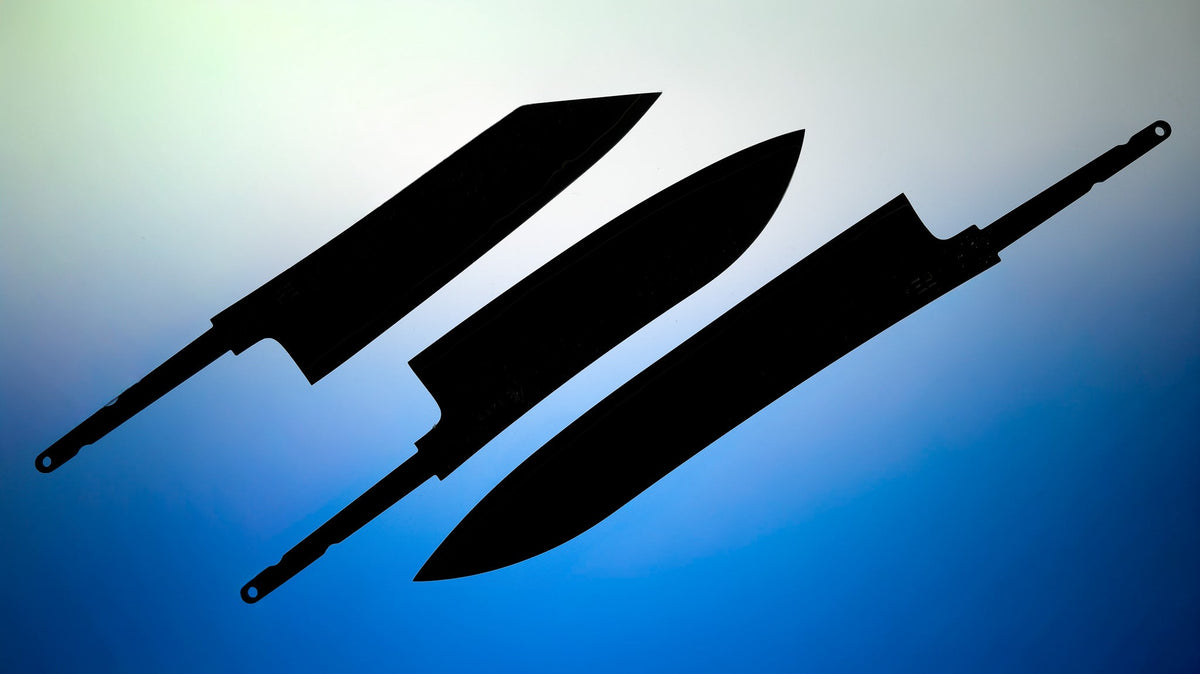
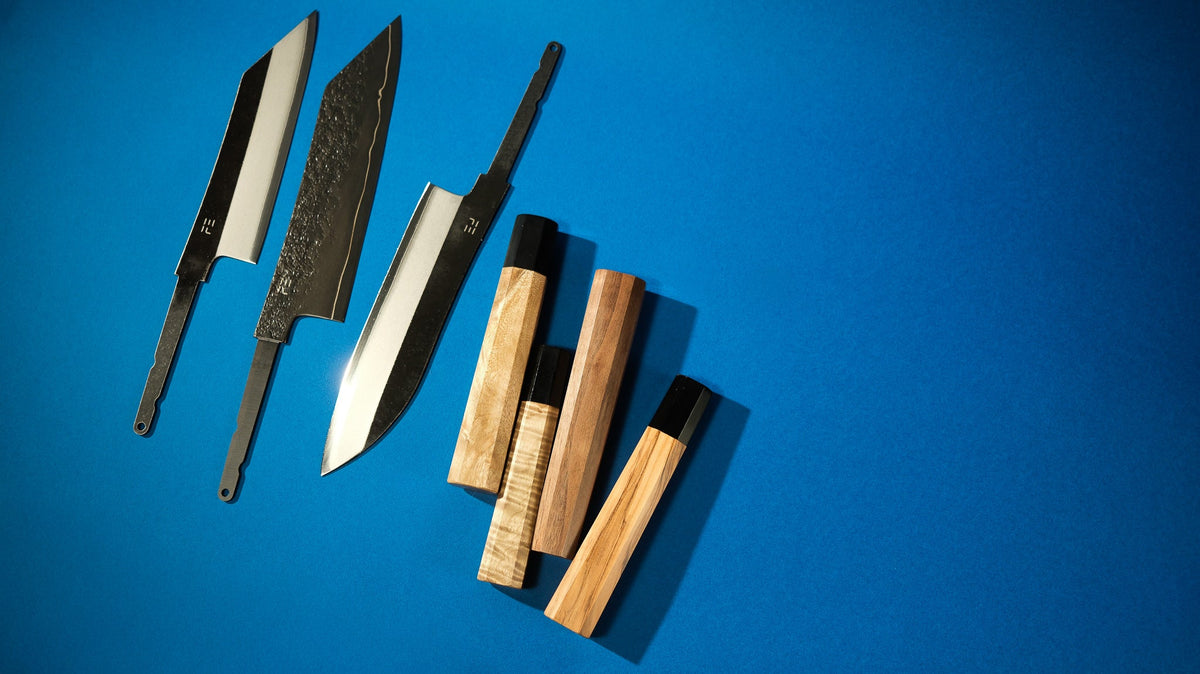
There are so many shapes in the range that it can look complicated at first. Some people want the compact form of a Santoku. Others prefer the precision and pointed tip of a Bunka. A Gyuto gives you uncompromised versatility. A flat, rectangular Nakiri blade is built for clean, vertical push-cutting. Those shapes exist because different cutting tasks create different requirements, and making those differences easy to understand is part of what FE stands for.
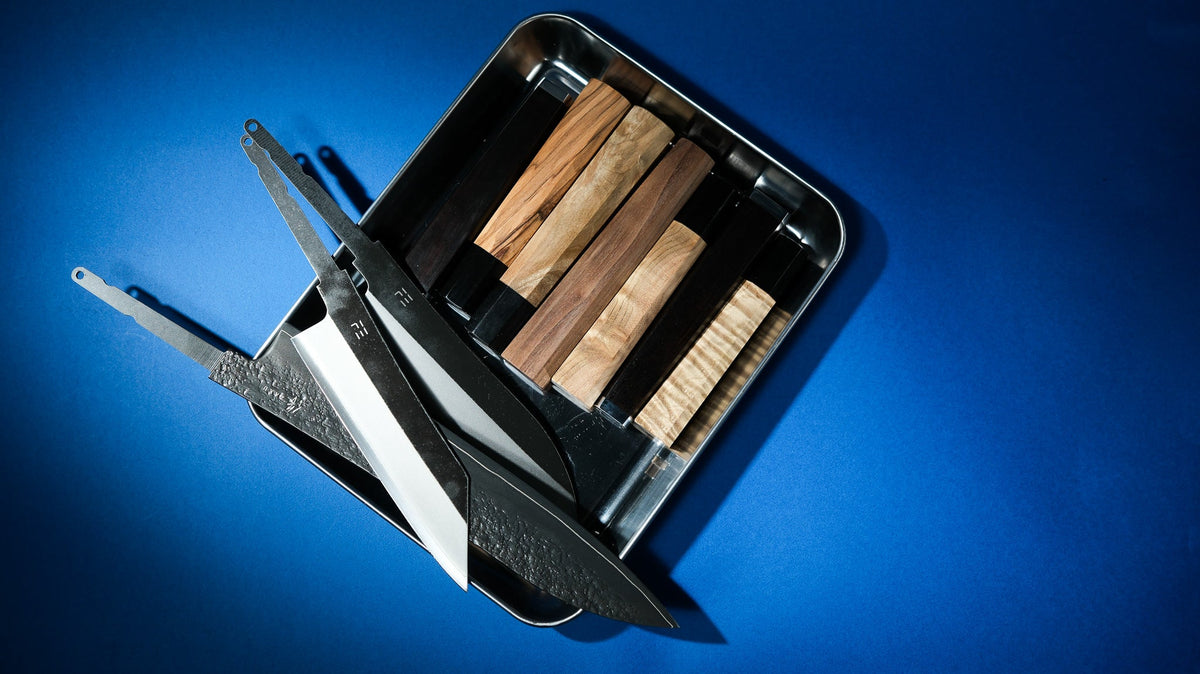
Then there's the handle: a different story entirely. Its material, form, and feel change the relationship between your hand and the blade. Building FE, we decided to give you the freedom to build your own tool. You choose the blade. You choose the handle that fits the way you cook. FE treats those decisions as part of the experience, not something to hide inside a finished product.
Choose the shape. Choose the handle. Build the combination that makes sense for how you cook.
The current FE collection spans everyday shapes like Santoku, Gyuto, Bunka, Nakiri, and Petty, alongside more specialized shapes like Sujihiki, Honesuki, Hakata, and Kiritsuke.
We're not telling you that you need more knives. It's closer to the opposite: the point is to understand the differences well enough to choose what you actually need. A knife that's personal in ways a spec sheet doesn't explain.

The process should be visible
Knife language turns abstract fast: premium, sharp, crafted, high performance. With FE, we'd rather explain what actually happens.
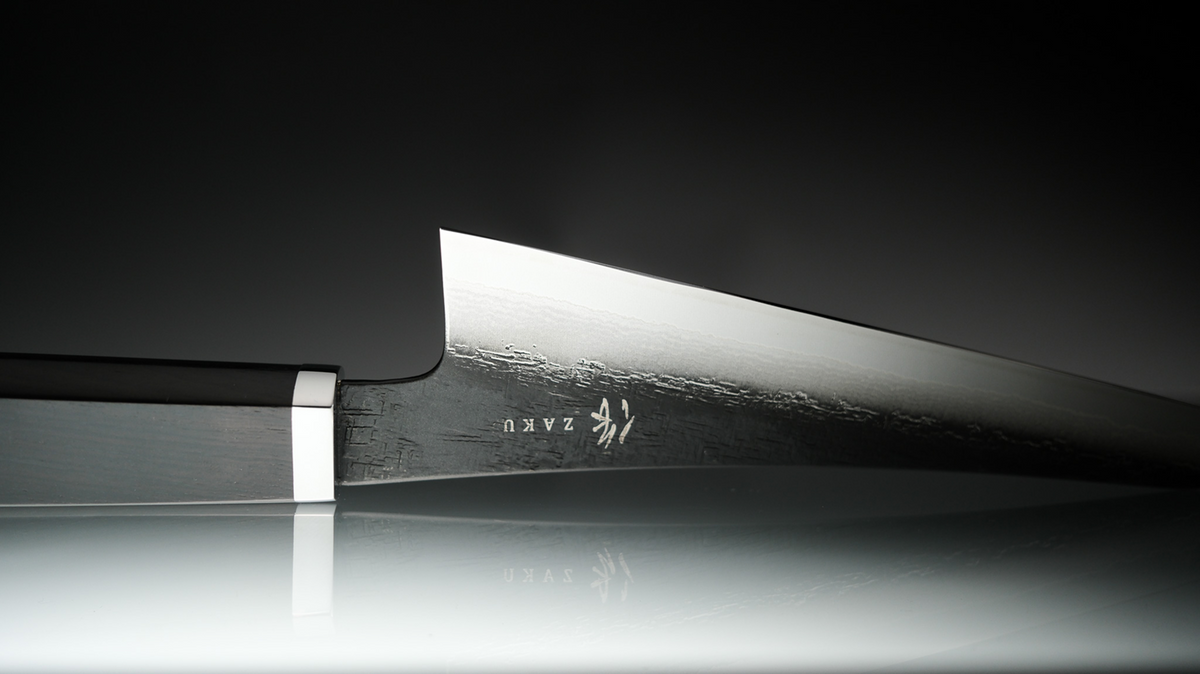
Production starts with premium steel, then precision machining. Our blades are CNC-machined to tolerances of up to 0.01 mm. They're vacuum heat-treated and gas-quenched to control distortion and consistency, then cryogenically treated at sub-zero temperatures. Every production batch is hardness tested.
Final sharpening is done by hand. Handle assembly and surface finishing are done the same way. Each knife is then inspected for handle fit, sharpness, and straightness.
Transparency is one of the central ideas behind FE. Our goal is to make the process more visible: less mystery, more information.
A modern product can take a long path from material to finished object: design, steel, machining, heat treatment, finishing, assembly, quality control. We want that path to be understandable. What material is being used? How is the blade shaped? What's being measured? What's finished by hand? Those questions aren't interruptions to the product story. They are the product story.
Performance you can examine
Sharpness is a good example. It's easy to call a knife extremely sharp. It's more interesting to ask how sharpness is actually evaluated, what affects it, how long it lasts, and what a measurement can and can't tell you.
That approach extends past the edge. FE cares about the whole system around the knife: material selection, blade geometry, heat treatment, handle choice, assembly, inspection, and eventually the way the tool changes through use. Instead of asking you to accept performance as an adjective, we want more of that performance to be visible.

A knife is not only the blade
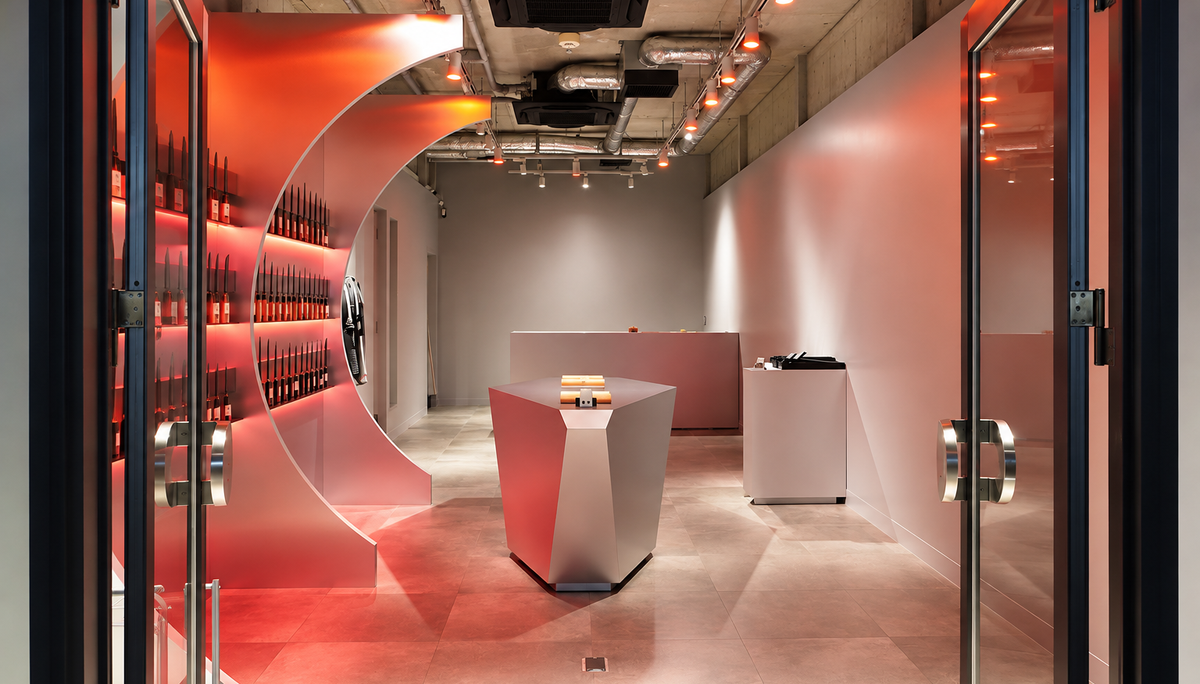
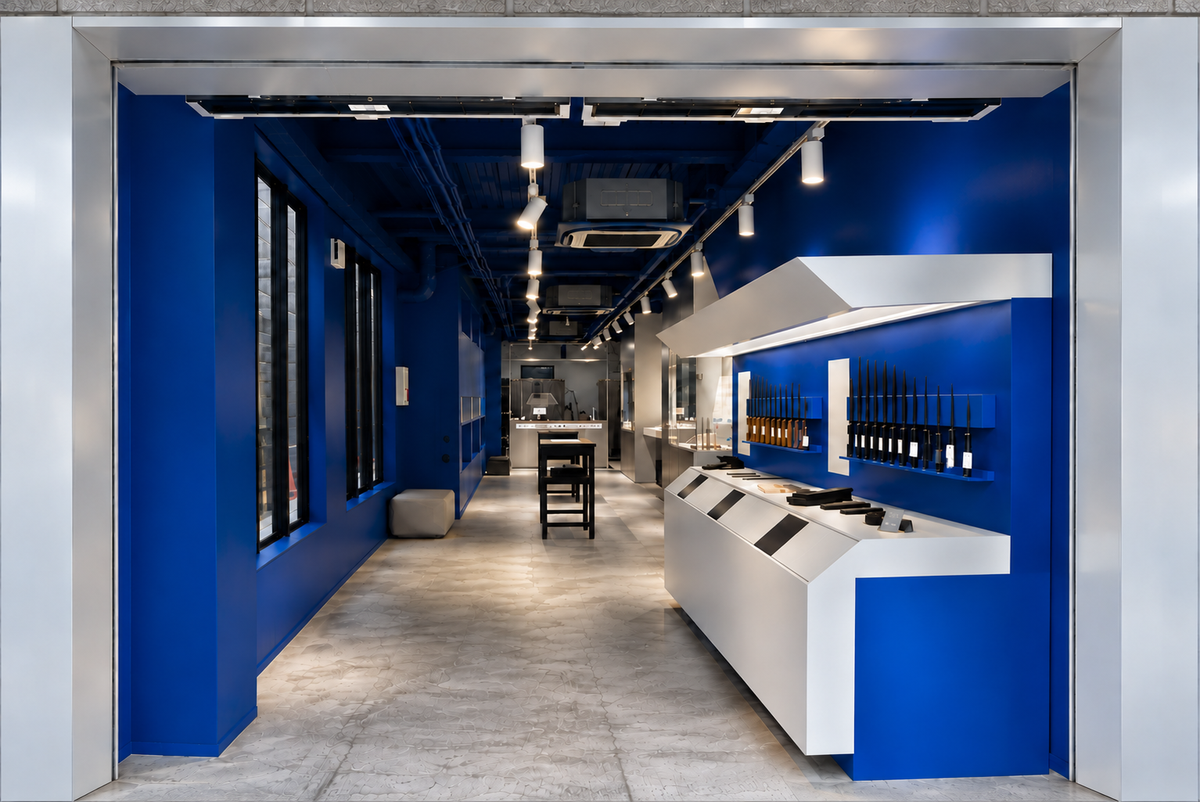
FE was never meant to be just a collection of individual products. The knife exists inside a larger system: the blade and the handle, the way they're combined, the process behind them, the way you choose, the way the knife is tested, maintained, and understood after you own it. Even the store and the digital experience are part of that system.
This is why customization matters to FE. It's not a choice of colors. It changes your role, from selecting a finished object to taking part in the decisions that make it.

FE is an ongoing project, built around research and iteration on purpose. Some ideas already exist as finished products. Others are still experiments: new materials, new interfaces, new testing methods, digital tools, store experiences, different ways of helping people choose. We think unfinished is a fair thing to be. Innovation doesn't require pretending every question already has an answer. Sometimes it just means showing the test, showing the drawing, showing what changed between the first version and the second.
The object at the center of all this stays simple. What changes is how you get there, and the decision is yours.
FE. One Element. Every Blade.