If you walk into almost any knife shop, you will notice the same thing: every knife is already finished and presented in its final shape. The blade, steel, length, and handle are all decided before you arrive, and your only job is to find the one that comes closest to what you had in mind. But what if the closest one is not quite right?
Imagine having complete freedom of choice: you can create your own knife from scratch, from the blade type and finish to the handle... That sounds much better, doesn't it? This is the very idea behind the FE concept, and in this article, we’ll walk you through how to create a custom kitchen knife.

What does a custom kitchen knife actually mean?
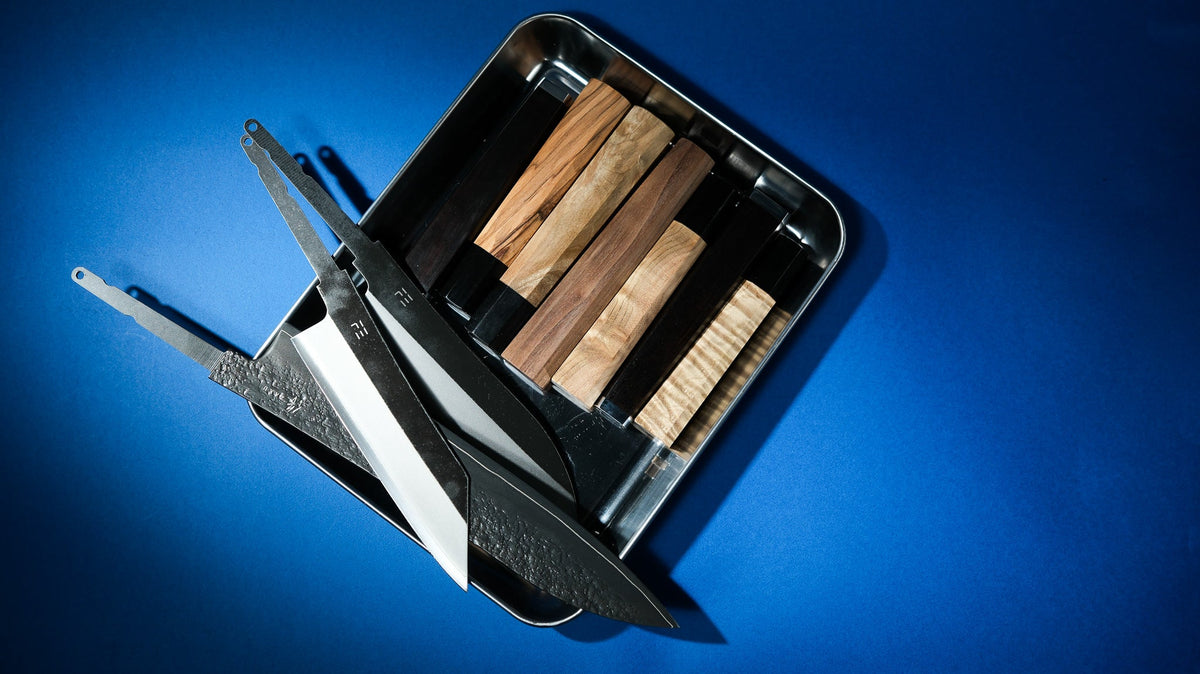
At FE, a knife is not one fixed object; it is a system of parts. The blade and handle are separate components, each designed to fit the other through clear, shared standards. That is what makes the system flexible. You can choose a shape without being locked into one handle, and you can choose a handle without changing the blade.
It also keeps working after the purchase. Say you own an FE knife and, a year from now, you want a different feel in your hand. You can fit another handle to the blade you already have, or another blade to the handle you love. Nothing has to be thrown away because one part changed.
Customization at FE is not a color picker. It is not an engraving added at the end, and it is not a pile of options for the sake of having options. It is a way to make the decisions that change how a knife feels and performs, while understanding each one as you make it.
Step one: choose the shape
Kitchen knives come in so many shapes because kitchens ask for so many different things. The blade that glides through a roast is not the one you want for a pile of vegetables, and the one built for fine detail is not the one you want for a large cut of meat. Each shape exists for a reason.
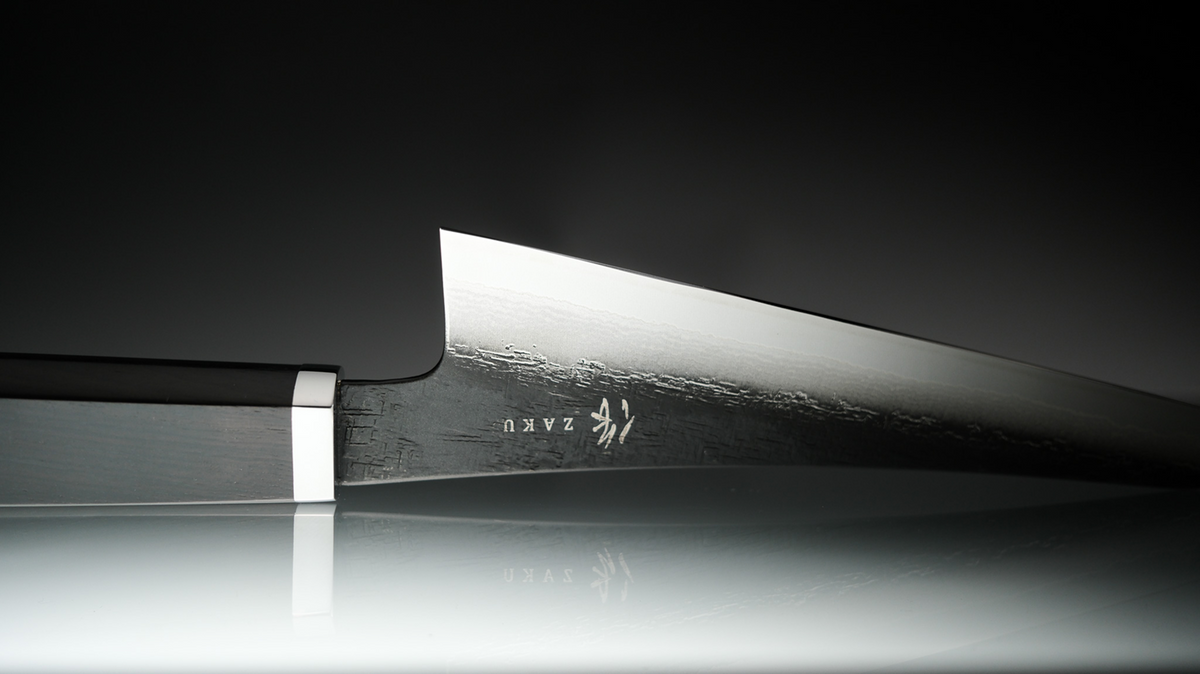
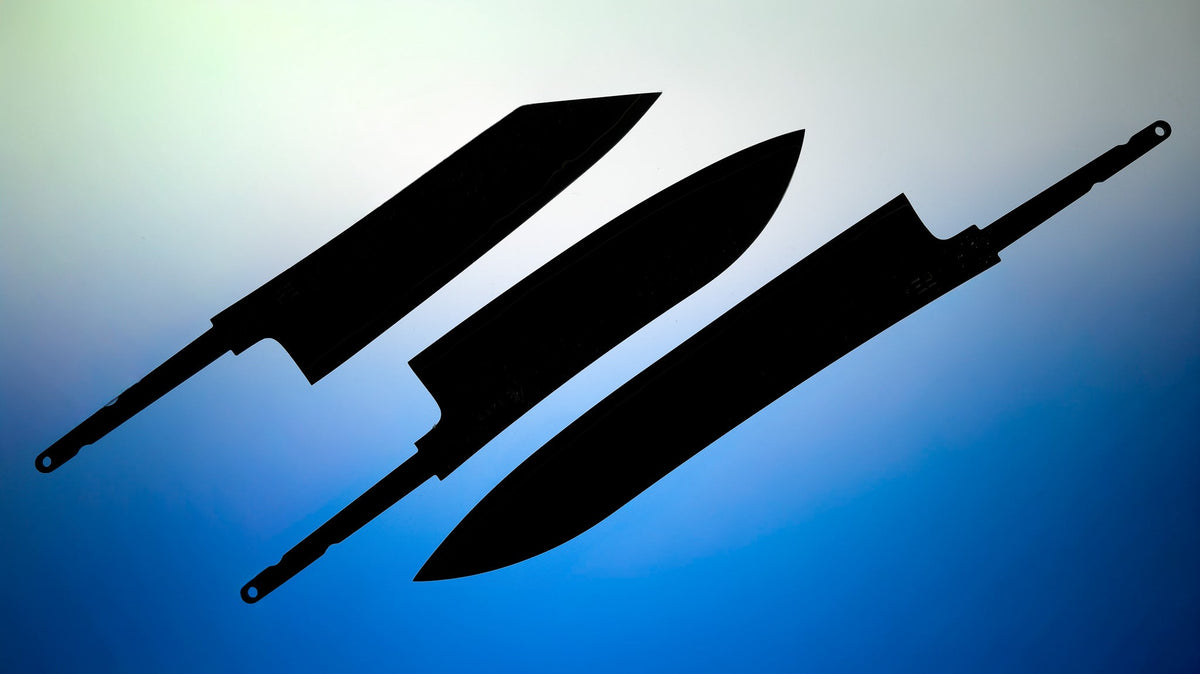
A Santoku is compact and steady, the everyday knife you reach for without thinking. A Gyuto is the all-round chef’s knife, with a long, slim blade that handles larger ingredients and slicing meat. A Bunka has a fine reverse tanto tip made for precise, detailed work. A Nakiri is straight and flat, built for clean, vertical cuts through vegetables. Petty, Sujihiki, Hakata, and others cover more specific jobs.
Today, FE offers 15 different knife types, so there is plenty of room to find your own.
To start, think about your own kitchen. What did you cook most this week? Pick the shape that matches it, then look at length, because the same shape feels like a different tool at 150 mm and at 210 mm. If you want help deciding, we wrote two guides: [Santoku vs Gyuto vs Bunka] and [choosing a knife size].

Step two: choose your own handle
The handle is the part you touch every time you cook. Long after you stop thinking about the blade, your hand keeps remembering the handle. Its material, form, and weight change how the knife feels, and we believe this part matters just as much as the edge.
At FE, the handle is a separate decision, not something added at the end. You can compare the options and feel how each one sits in your hand before you choose. Right now, you can pick from Olive, Walnut, Maple, and Ebony. Each wood has its own color and grain, from the pale warmth of Maple to the deep, almost mysterious black tone of Ebony.
The handles are also interchangeable. If one wears out, or you simply want a different feel later, you can replace it without buying a new knife.
Step three: assembly and finishing
Once you have chosen a blade and a handle, we put them together. Handle assembly and surface finishing are done by hand. Before a knife reaches you, it is inspected for handle fit, sharpness, and straightness.
The blades behind every combination are made the same way. They are CNC-machined to tolerances of up to 0.01 mm, vacuum heat-treated, gas-quenched, and cryogenically treated, and every production batch is hardness tested.
This is exactly what gives true meaning to the freedom of choice. The ability to select elements yourself makes sense only when every combination has the same quality standard. A Santoku knife with a maple handle and an identical one with an ebony handle are crafted and inspected according to the same criteria. You choose the combination, while the quality standard remains constant. That is how we offer you this freedom without requiring you to compromise on the product's quality.

Why we built it this way
Part of the reason is practical: a knife that fits perfectly in your hand and suits your cooking style is more comfortable and efficient to use. However, a more significant reason arises from our experience with customers in the shop. We constantly encounter the same scenario: someone finds a blade they love but realizes they would prefer a different handle. With a standard off-the-shelf knife, that’s where the conversation ends, but with FE, that’s exactly where it begins.
We want you to decide for yourself which knife you need, rather than settling for an option chosen by someone else. When you understand why you selected a specific shape, length, and handle, the finished knife becomes the incarnation of your own choices. Moreover, this isn't about buying more knives. If you have one custom-made knife that you reach for every day while cooking, that is truly all you need.

Where to start
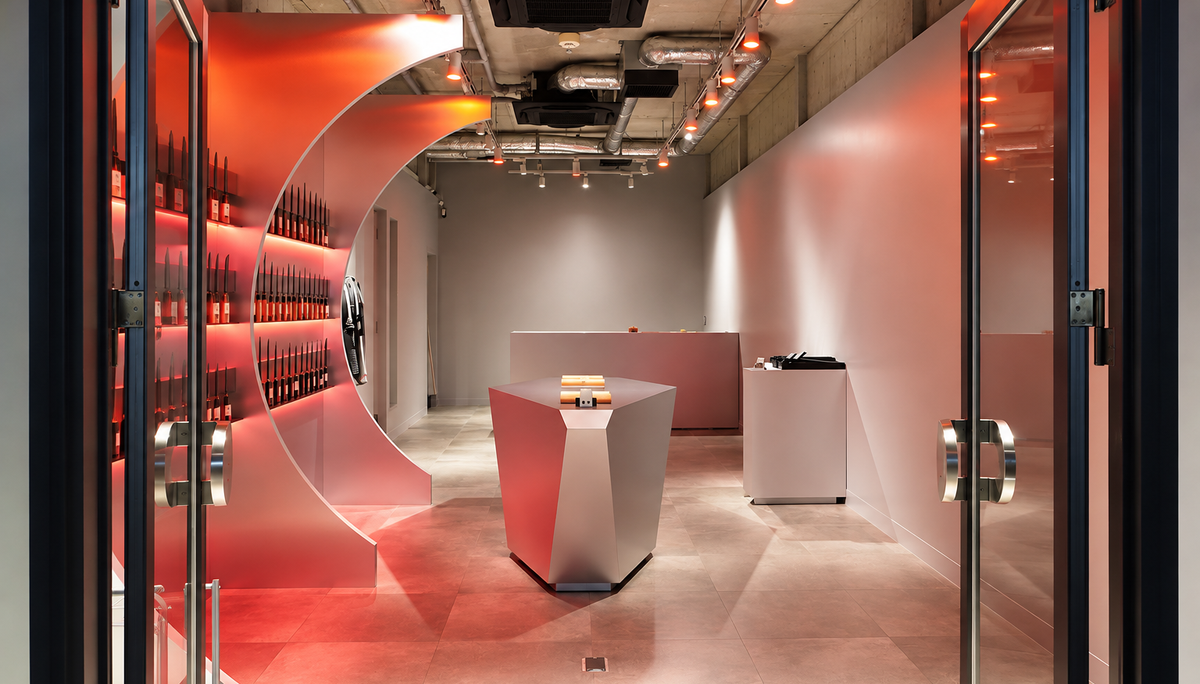
Wherever you are, you can build your knife the same way. At any FE store, you can try the shapes and handles in your hands and compare them side by side. On the FE online store, you can choose your shape and your handle there too. Either way, start with the shape, since it is usually the easier decision, then take your time with the handle.
To understand the thinking behind all of this, read [What is FE? A Knife Built Around Choice]. And if you would like to stay updated, create your FE account to follow our news, updates, and new articles.