Every kitchen knife starts with a metal, and for almost every knife you will ever hold, that metal is iron.
This article explains why we start there. The short version: iron is not a fixed material. It has kept changing for thousands of years, from metal that fell from the sky to the modern steels in your kitchen, and every generation of smiths added something to it. We want FE to respect that history, and to keep adding to it with the technology of our time.
Here is how the story goes: where iron comes from, how people learned to work it, how steel evolved, and how FE builds on all of it.
The origins of iron
For most of human history, a blade was made from whatever could be found and shaped. First came stone, chipped into a point. Then copper, soft but workable. Then bronze, which is copper mixed with tin. Bronze was harder and durable enough that many bronze blades and tools survive in museums today. But iron was already on Earth, and some of it had arrived from the sky.
Metal from the sky
Long before anyone learned to produce iron, people already knew it in a rare form: meteorites. Iron ore hides inside ordinary-looking rock, and getting the metal out means building a very hot furnace and knowing exactly what to do. Humanity did not arrive at that skill overnight. But now and then, rocky and metallic masses fall to Earth from space, and some of them are made almost entirely of iron and nickel.
Imagine finding one thousands of years ago. You have never seen a metal like this. It is heavy, shiny, and strange, and it fell from the sky. Because it was so rare, people treated it as special, and in some places as sacred. They could not melt it, but they could hammer it into beads, ceremonial objects, jewelry, and blades.
The most famous example is the dagger of Tutankhamun. It was found in 1925 in the wrappings of the mummy, and it is more than 3,300 years old. In 2016, Italian and Egyptian researchers analyzed the blade with a non-invasive X-ray technique. They found about 10 percent nickel and a little cobalt, a combination that is typical of iron meteorites and very rare in iron made from ore. The blade really was made from metal that fell from space, and the dry air inside the tomb kept it free of rust for over three thousand years.

How iron took over from bronze
Meteorites were rare, but iron ore is not. It lies in the ground across the world, which meant a smith in almost any region could, in principle, learn to work it. Bronze, by contrast, needs tin, and tin was not buried everywhere.
Here is the surprising part: early iron was actually softer than bronze. It won slowly, by being easier to find and cheaper to make, and because smiths kept learning how to improve it. One of the biggest improvements was carbon. Iron mixed with the right amount of carbon becomes steel, a metal that can be hardened and sharpened to an edge that bronze could not hold as well. Steel is an alloy, and what makes it steel is control over its carbon content. Smiths found different ways to get there, adding carbon to soft iron or taking carbon out of carbon-rich iron. So iron did not win because it was perfect. It won because it was available, and because the people who worked with it never stopped improving it.
How people learned to work iron
Once people could make iron and steel themselves, each culture developed its own methods, shaped by the materials and conditions around it.
Japan has little iron ore, so traditional steelmakers relied on iron sand. They smelted it with charcoal in a clay furnace called a tatara, over about three days and nights, to produce tamahagane, the steel behind the traditional Japanese sword. In India, smiths made steel in sealed clay crucibles. The result, known as wootz, had a rippled surface pattern. Traders carried it to the Middle East, where it was forged into the blades that came to be known as Damascus steel. Today, the name Damascus is also used for pattern-welded steel, made of layers of different metals forged together. In Europe, towns like Solingen in Germany and Sheffield in England became famous for their blades and cutlery.
Different furnaces in different places, and the same metal at the core. Techniques moved between countries and generations, and what we call traditional today was once a new solution to a practical problem.

How steel evolved
For centuries, the standard knife steel was carbon steel: iron with carbon in it, hardened to hold a sharp edge. It has been trusted by smiths for a very long time, and it has one well-known characteristic.
Why does iron rust?
Rust is what happens when iron comes into contact with oxygen and water. The surface slowly turns into iron oxide, the flaky orange-brown layer you have probably seen on an old gate or a forgotten pan. This layer does not hold on. It crumbles away and exposes fresh metal underneath, so the rust keeps working its way inward. Carbon steel behaves the same way, which is why a carbon steel knife asks for a little care. Some carbon steels also develop a patina, a slow darkening that is not rust and simply records how the knife has been used.

Then came stainless steel
In August 1913, in Sheffield, a metallurgist named Harry Brearley was trying to make a steel that would stand up better to the heat and wear inside gun barrels. He added chromium and noticed something unexpected: the steel resisted corrosion. He first called it rustless steel. The name stainless came later, suggested by a local cutlery manufacturer. Others had experimented with chromium steels before him, but Brearley is widely credited with creating the first practical stainless steel.
Here is what the chromium does. On the surface of the steel, it reacts with oxygen in the air and forms a layer of chromium oxide. You cannot see it, and it is far thinner than a human hair, but it clings tightly to the steel and seals it off from air and water. If you scratch it, a new layer forms by itself, as long as there is air. Plain iron has no such layer. A steel needs at least 10.5 percent chromium to count as stainless, and most stainless knife steels contain 13 percent or more. That does not make them rust-proof, but it makes them highly resistant.
Modern powder metallurgy and other high-performance steels push hardness and edge holding further still. Each steel is a trade-off between rust resistance, how well it holds an edge, how easy it is to sharpen, and how it ages with use. No single steel is best at everything. The right one is the one whose trade-offs suit the knife and the way you cook.
If you want to know how to look after a kitchen knife, read [Knife Care Tips for Everyday Cooking].
How FE builds on iron
We admire the people who learned to work iron long before us, and we respect what they built. But we do not treat it as untouchable. Those smiths were defining the technology of their time. They used the best furnaces, tools, and knowledge they had, and they kept improving them. We live in a different time, with different tools, and we think the best way to honor them is to keep going.
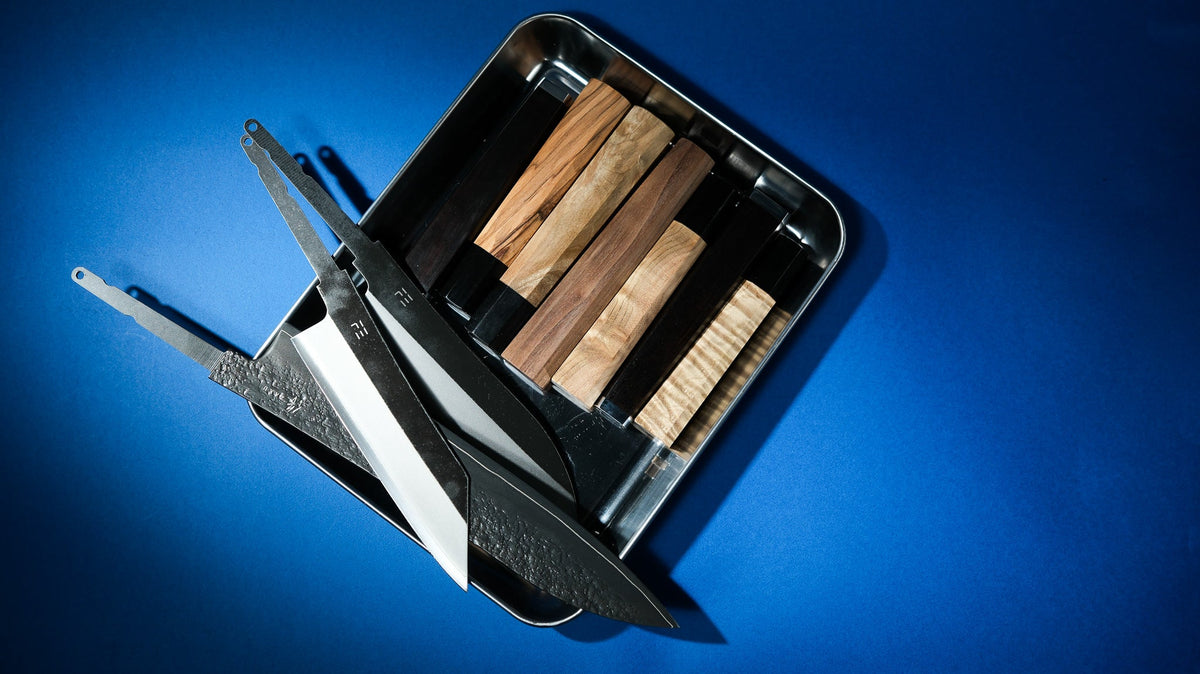
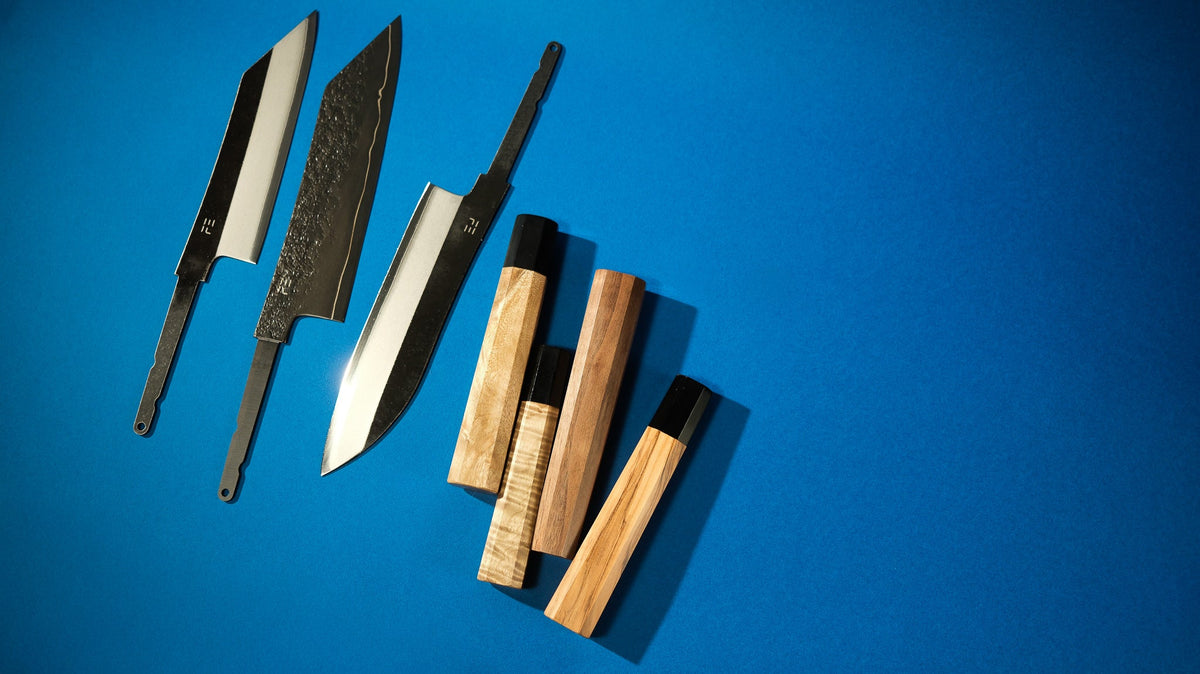
That is why FE draws on knife-making knowledge from different traditions and combines it with what is possible today. Production starts with premium steel. Our blades are CNC-machined to tolerances of up to 0.01 mm, vacuum heat-treated, gas-quenched, and cryogenically treated, and every production batch is hardness-tested. The final sharpening, handle assembly, and surface finishing are done by hand, and each knife is inspected for handle fit, sharpness, and straightness.
The meteorite story is part of FE too. Meteoritic iron is one of the sources of inspiration behind our design. Iron meteorites contain nickel alongside iron, so we asked whether we could carry that idea into a modern knife, and you can see a trace of it in the silver lines that run across some of our blades.
A smith once judged the heat of the fire by the color of the glowing metal. Today the tools are different, but the goal is the same: to understand what happens to the steel, and to make it visible to you.

Why iron is where we start
Iron has been through a great deal: a metal that fell from the sky, a clay furnace fed with sand and charcoal, a crucible in India, a laboratory in Sheffield. At every step, someone found a way to make it better.
That is why we start with iron. Not because it is perfect, but because it has never stopped changing, and there is still room to change it. We keep researching, testing, and looking for materials that may work even better. From tradition to technology, and then a little further. Iron is where FE begins. Where we go next, we are still finding out.
To learn more about FE, start with [What is FE? A Knife Built Around Choice].
Share