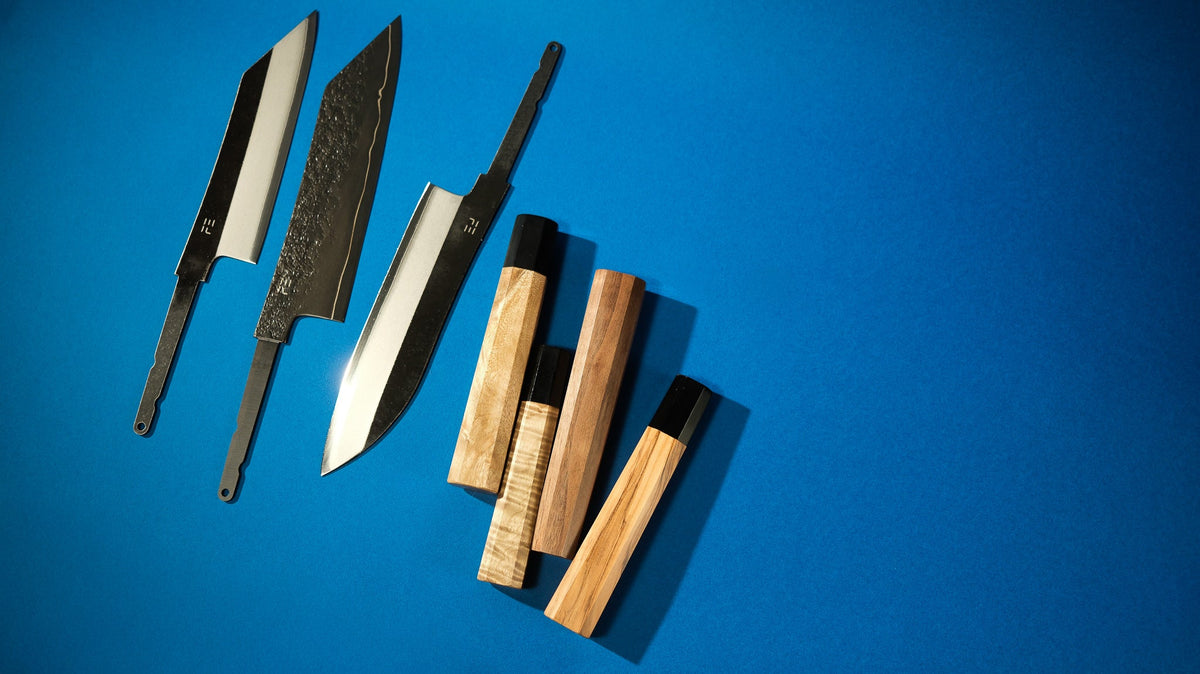
Have you ever picked up a knife and thought, “this just feels off”? Most of the time, the reason is size. A blade that is a little too short makes you cut a cabbage in several moves, and a blade that is a little too long gets in your way on a small board.
It’s likely no secret to you that there is a vast array of kitchen knives out there. Varying in length, type, and purpose. If you aren’t a professional chef or an expert in the field, it can all look a bit unusual or even confusing. But don’t worry, that’s what we’re here for. In today’s article, we’ll introduce you to the kitchen knives available at FE. We’ll talk about the differences in how they feel and the various blade lengths available. We’ll also explain what each knife is designed for so you can navigate your options more easily and make the best choice.
What does knife size actually mean?
When we say a Santoku is 165 mm, we mean the blade, measured from the heel to the tip. The handle is not counted. For reference, 150 mm is about 6 inches, 165 mm is about 6.5 inches, 180 mm is about 7 inches, 210 mm is about 8 inches, and 240 mm is about 9.5 inches.
So when you compare sizes, you are really comparing reach. How much steel can travel through the food in a single stroke?

How does size change the way you cook?
A shorter blade stays close to you. It turns quickly, sits lightly in the hand, and gives you fine control near the board. It is the knife for small onions, herbs, shallow boards, and quick weeknight meals. Its limit is reach: a big cabbage or a thick piece of meat may take a few cuts instead of one.
A longer blade gives you reach. It can glide through a large ingredient in one smooth stroke, and it makes slicing feel calm and even. It also asks for more space. It needs a bigger board and more room around it, and it can feel oversized when the kitchen is small. Neither one cuts better. The right length is the one that suits your board, your ingredients, and your hand.
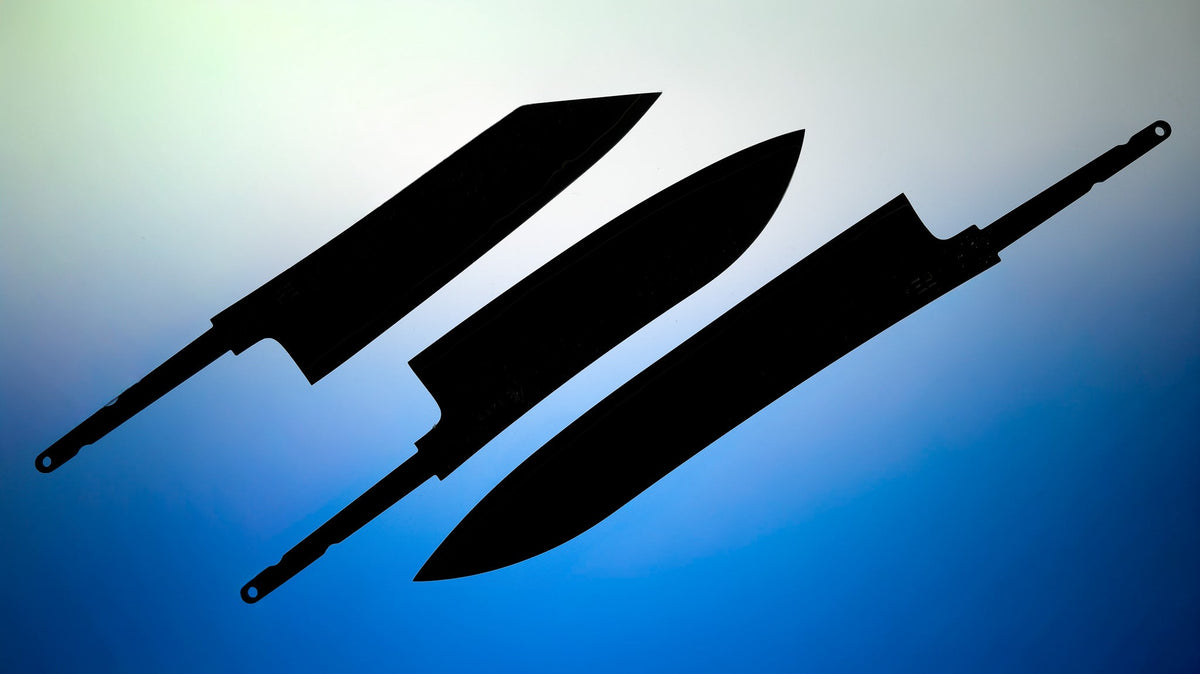
Santoku: 150, 165, or 180 mm
The Santoku is an all-purpose knife for slicing, chopping, and dicing meat, fish, and vegetables. At FE, it comes in three sizes, and each one, of course, feels different.
At 150 mm, it fits a small board easily and is quick to control, which many people find comfortable, compact, and light. For a very large cabbage or squash, you may need a couple of cuts.
At 165 mm, it sits somewhere in the middle. There is enough length to handle most vegetables and a chicken breast in a single stroke, and it is still easy on a small or medium board.
At 180 mm, it has the most reach. It moves through a whole cabbage, a squash, or a larger piece of meat with fewer strokes. It needs more board space and feels bigger in the hand, which suits you if you cook for several people and have the room on the cutting board.
Gyuto: 180, 210, or 240 mm
The Gyuto is a versatile chef’s knife, built for precision cutting, portioning, and everyday preparation. The curved edge and pointed tip let you rock the blade through food, and the longer length makes slicing smooth. At FE, it comes in three sizes.
At 180 mm, it is a compact chef’s knife. It has the same length as the largest Santoku, but with a curved edge and a pointed tip. It is easy to control and more delicate if a chef’s knife is new to you.
At 210 mm, it is often seen as the most popular size. It is long enough for cabbage, squash, and larger cuts of meat, and still manageable on a standard home cutting board. If you want one starting point, this is a very good one.
At 240 mm, it gives you the longest strokes. It suits larger prep, bigger boards, and cooks who already feel at ease with a chef’s knife. On a small board, it can feel like too much.
Bunka: 150, 165, or 180 mm
The Bunka is a multi-purpose knife with a reverse tanto tip, which makes detailed work easier. The sizes follow the same logic as the Santoku. The 150 mm gives close control, the 165 mm sits in the middle, and the 180 mm gives more reach. If you are not sure whether you want a Santoku or a Bunka, read our detailed guide [Santoku, Gyuto or Bunka].

Why do some knives come in more sizes?
You may have noticed that the Santoku, Gyuto, and Bunka each come in three sizes, and the Sujihiki does too, while the Petty, Hakata, and Kiritsuke come in two. Most of the specialist knives come in one size.
There is a reason for that. The everyday shapes are used for so many different tasks, in so many different kitchens, that one length cannot suit everyone. A small board, a big family, a larger hand, a different recipe: all of these change which size feels right, so there is more choice. A specialist knife is made for one kind of job, so one well-chosen length usually covers it.
The full FE range by size
|
Knife |
Sizes |
What it is for |
|
Santoku |
150, 165, 180 mm |
All-purpose everyday cutting: vegetables, boneless meat, fish |
|
Gyuto |
180, 210, 240 mm |
Chef’s knife: larger ingredients, slicing, mixed prep |
|
Bunka |
150, 165, 180 mm |
All-round cutting with a fine tip for detail |
|
Petty |
130, 150 mm |
Trimming, peeling, and other small, detailed tasks |
|
Paring |
90 mm |
Small work held in your hand |
|
Nakiri |
165 mm |
Fast, clean vertical cuts through vegetables |
|
Kiritsuke Nakiri |
165 mm |
A distinctive hybrid knife that combines the flat blade of a traditional vegetable knife (Nakiri) with a pointed, sword-like tip (Kiritsuke/Bunka). |
|
Hakata |
165, 180 mm |
Everyday all-rounder in a style from Kyushu |
|
Kiritsuke |
210, 240 mm |
Efficient slicing with a fine, pointed tip |
|
Sujihiki |
210, 240, 270 mm |
Long, even slices of boneless meat and fish |
|
Honesuki |
150 mm |
Boning and breaking down poultry |
|
Fillet |
180 mm |
Filleting fish |
|
Steak |
130 mm |
Cutting steak at the table |
|
Bread |
230 mm |
Slicing bread |
|
Chinese cleaver |
180 mm |
Broad blade for slicing and chopping vegetables and boneless meat |

How to choose your kitchen knife size
Three questions get you most of the way. How much board do you have? A compact board points you toward 150 to 180 mm. A medium one works with 180 or 210 mm. A large board gives you room for 210 or 240 mm.
Ask yourself what you cut most? Vegetables, herbs, and quick weeknight meals lean shorter. Large ingredients, roasts, and cooking for several people lean longer.
How does it feel in your hand? Hand size and comfort matter just as much as the numbers. A knife that feels right is a knife you reach for.
These are starting points, not rules:
-Small kitchen, cooking for one or two: Santoku 150 or 165 mm, or Gyuto 180 mm.
-Everyday home cooking: Santoku 165 or 180 mm, or Gyuto 210 mm.
-Cooking for a family or in volume, with a large board: Gyuto 210 or 240 mm, or Santoku 180 mm.
-Long, even slices of roasts or fish: Sujihiki 240 or 270 mm.
And you do not need all of them. We are not telling you to build a collection. One size that suits you, and that you actually reach for, is worth more than a drawer of knives you are unsure about.

Where to start
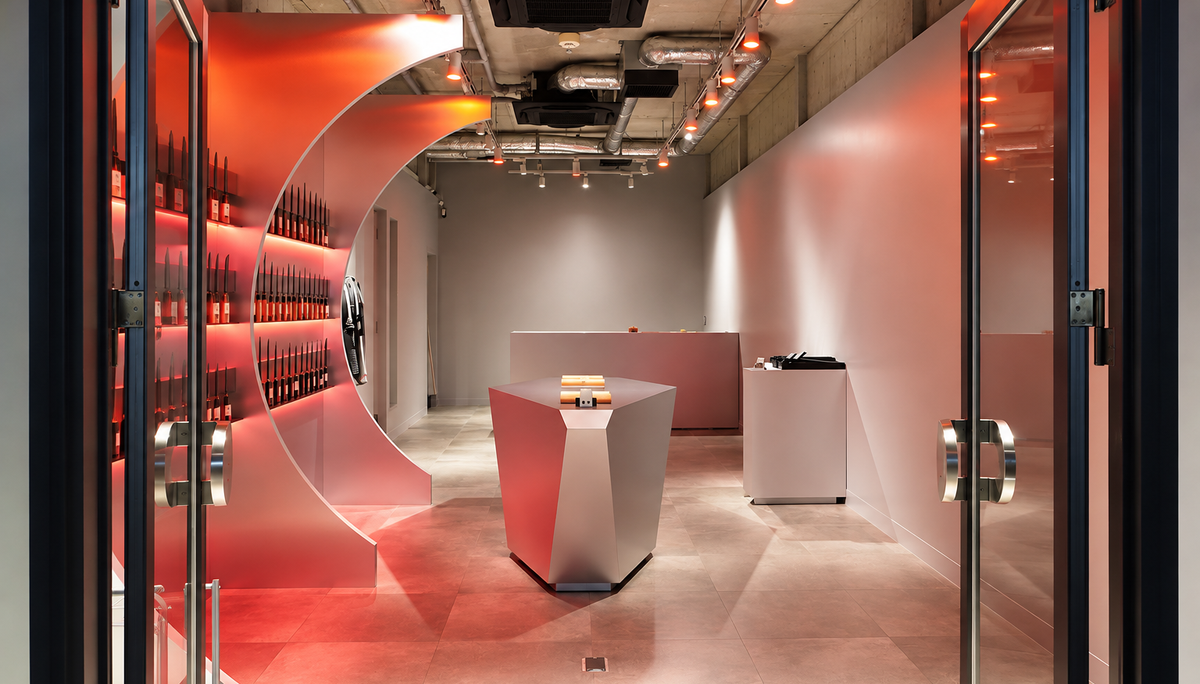
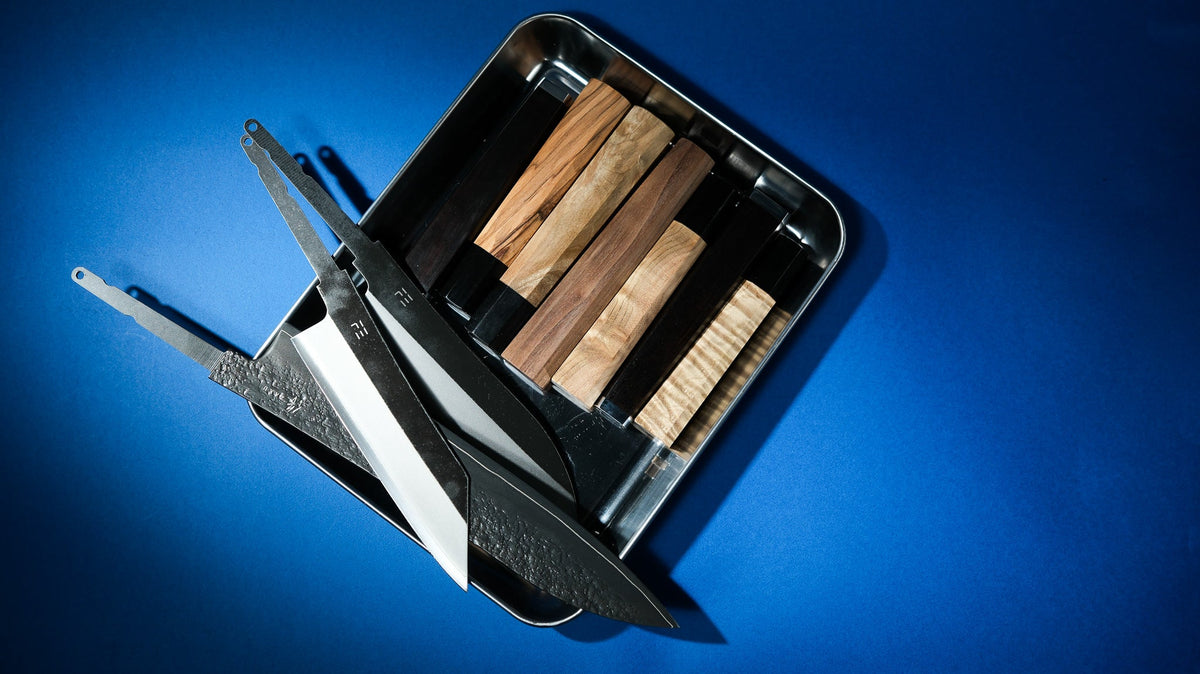
Wherever you are, you can build your knife the same way. At any FE store, you can try the shapes and handles in your hands and compare them side by side. On the FE online store, you can choose your shape and your handle there too. Either way, start with the shape, since it is usually the easier decision, then take your time with the handle.
To see how that works, read [How to Build a Custom Kitchen Knife at FE]. For the idea behind our brand, start with [What is FE? A Knife Built Around Choice].