Knife Care Tips for Everyday Cooking
It’s easy to forget your knife after dinner. It sits in the sink under a pile of plates, still wet, with a slice of tomato clinging to the blade. Later, it gets a quick rinse, a toss into the drawer with the other tools, and it is ready for tomorrow.
Almost nothing in that story looks wrong, and almost all of it slowly wears a knife down. We want your knife to stay in great shape for years, so in today’s article, we will walk you through a few knife care tips: small, ordinary habits that keep it sharp, clean, and ready to use.
The knife care tips that matter most
If you only remember three things, make them these: wash the knife soon after you use it, dry it right away, and store it somewhere it will not rattle against other metal, ideally with a knife cover. The rest of this guide explains why and adds a few things that help a good knife last.
Most of the damage happens after the cutting is over: in the sink, in the dishwasher, in the drawer. A knife can also be damaged by the wrong task. Cutting frozen food, for example, can easily chip the blade, and we will come back to that below. The good news is that knife care is mostly about habits, not effort.

Wash the knife by hand right after cutting
Food does more than make a knife dirty. Tomatoes, lemons, and onions are acidic, and salty food sits on steel in a way the metal does not like. Left on the blade for hours, they can stain it or leave small marks. So the simplest habit is also the most valuable: rinse the knife soon after you finish cutting.
Use warm water, a little mild dish soap, and a soft sponge or cloth. Skip the rough scouring pad because it scratches the surface of the blade. Keep the sharp edge pointed away from you, and wipe from the spine toward the edge, never the other way; your fingers will thank you later.
Why the dishwasher is not your knife’s friend
A dishwasher is hot and humid, and it shakes everything inside. Blades knock against other items, strong detergent can leave marks, and the steam that lingers afterwards can sit on the steel. For a wooden handle, the heat and water are even harder because the wood can swell or crack. Hand washing takes about thirty seconds, and it is gentle on both the edge and the handle.
Dry your tool right away
Do not let a knife air-dry on the counter or in the rack. Water left on the steel leaves spots, and in time, those spots can turn into rust. Dry the blade straight after washing with a clean, soft cotton or linen towel, again wiping from the spine toward the edge. It takes ten seconds, and it is the habit that does the most for any iron-based steel.

Look after the handle
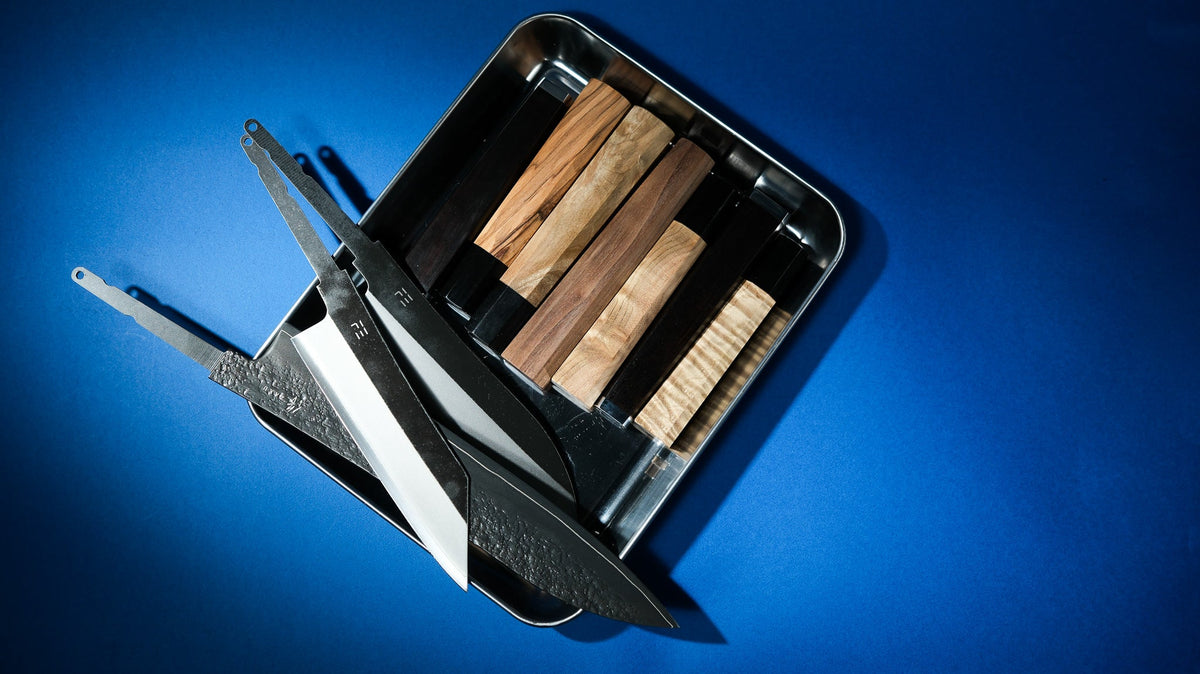
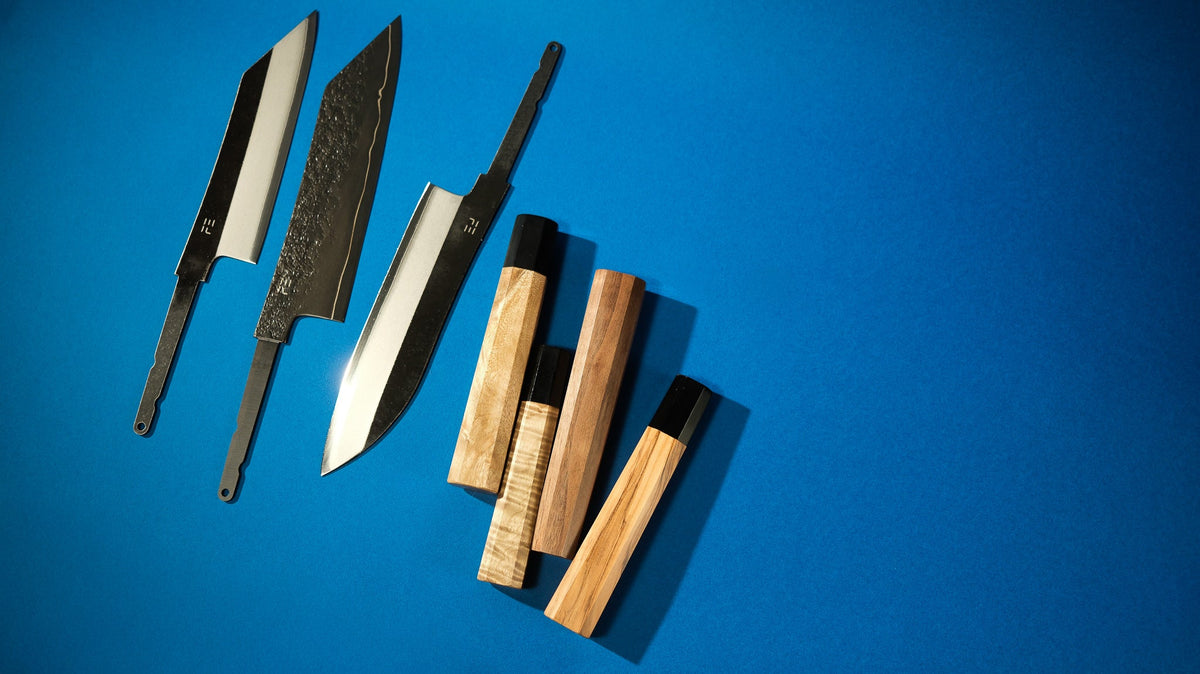
At FE, the handles are wood, and wood does not like to be soaked. Wipe the handle with a damp cloth instead of holding it under the tap, and dry it afterwards. Keep it away from very hot water and harsh cleaners.
Now and then, a little oil helps wood stay supple and keeps moisture out. The usual advice is a food-safe mineral oil, or a mix of mineral oil and beeswax, applied thinly and wiped clean. Cooking oils such as olive or vegetable oil are best avoided because they can go rancid.
There is one thing about FE that makes handling care less stressful. The handles are interchangeable, so if one wears out over the years, you can replace it without buying a new knife. Care slows the wear, and replacement is the safety net. To learn more about handles, see [Choosing a Knife Handle: Material, Feel and Balance Explained].
Choose your cutting board with care
The edge of a good knife is extremely thin, and a hard surface blunts it fast. Glass, stone, and ceramic boards are the worst offenders. Wood and plastic boards are kinder because they are softer and more forgiving under the edge.
A small tip helps here too. When you push chopped food off the board and into the pan, turn the knife around and use the spine. Dragging the edge sideways across the board wears it down for no reason.
Store it where it will not rattle
A knife left in a drawer spends its life knocking against other metal. Every knock can chip a fine edge, and every time you reach in blindly, you risk your fingers too. Give each knife a home instead: a magnetic strip on the wall, a knife block, a tray that sits in the drawer, or a knife cover. If you use a magnetic strip, place the knife on it gently, spine first, instead of letting the edge snap against the metal.

Use the knife for what it is made for
A good kitchen knife is thin on purpose, because a thin edge cuts cleanly. That also means it does not enjoy being asked to do other jobs. Do not poke with it, twist it inside a cut, open cans with it, or use it as a screwdriver. Avoid bones and frozen food, which can chip or bend a fine edge.
Keep the edge sharp
Even a well-kept knife gets dull eventually, and that is normal. But a dull knife is worth fixing sooner rather than later, because it can be more dangerous than a sharp one. It takes more force to cut and slips more easily, so it is harder to control. A simple test: if the blade slides off the skin of a tomato instead of biting in, it is time to sharpen it.
The ideal sharpening frequency depends on how often you use your knife, the type of steel, the cutting board, and the ingredients you prepare. Rather than following a fixed schedule, we recommend sharpening your knife when you notice a decline in cutting performance. Professional chefs and frequent home cooks may need to sharpen their knives more often.

What about rust and patina?
If you notice small orange or reddish-brown spots on the blade, they may indicate rust. Address them as soon as possible. Light surface rust may be removed using an appropriate rust-removal product, but the suitable method depends on the blade's steel and surface finish. Abrasive products, including rust erasers, may scratch or alter the finish. If you are unsure how to proceed, please contact our customer support team.
If rust appears on the cutting edge, sharpening may help remove light surface rust. However, deeper corrosion or pitting may require professional repair, as sharpening alone may not fully restore the blade. If you notice significant rust damage, we recommend consulting a knife specialist.
Carbon steel knives may develop a discoloration known as patina over time. This occurs when the steel reacts with moisture, acids, and other substances found in food, causing changes to the blade's surface. Patina typically appears as a grey or bluish discoloration. Patina is a natural change that occurs with the use of carbon steel knives and is generally not considered a product defect.
Where to start
You don’t have to do everything at once; start with implementing one habit this week: dry the knife after you wash it. Once that feels automatic, you can move to pick another one.
If you would like to learn more about FE and the idea behind the whole brand, start with [What is FE? A Knife Built Around Choice].