Before FE, Jack spent years working closely with Japanese craftsmen, developing a product line for another well-known Japanese knife brand. We sat down with him to ask what FE means to him, and how much work can sit behind a few silver lines on a blade.
Before you started to draft any designs, what did you want FE to feel like?
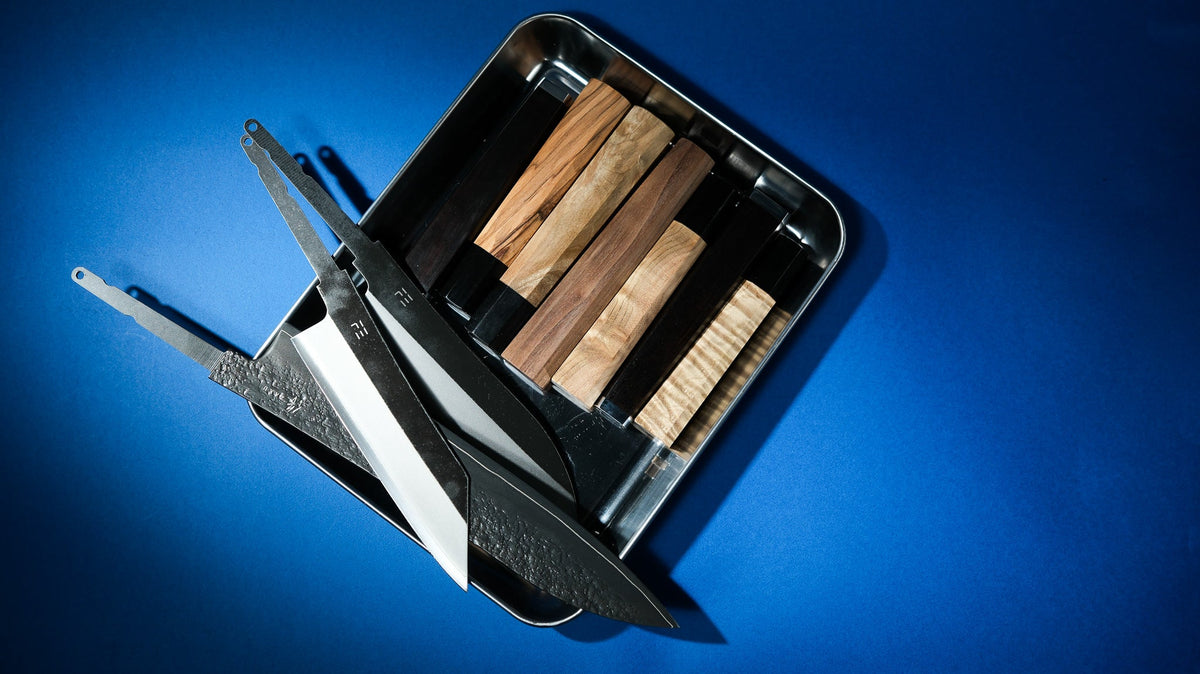
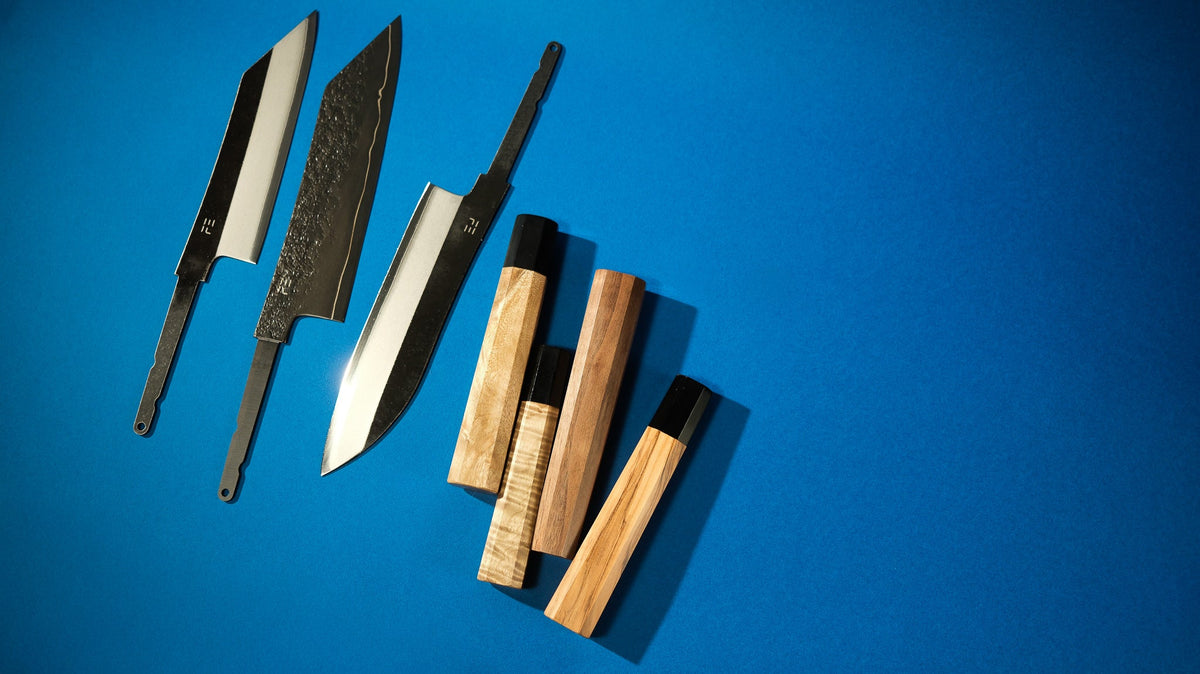
I wanted FE to give people one immediate, strong feeling: "I didn't know a knife could be like this." More convenient, more elegant, more reassuring, and unapologetically your own, a knife you put together yourself.
I don't want a kitchen knife to be understood simply as a traditional kitchen tool. It can bring together technology, materials, aesthetics, and functionality, and become something that genuinely fits into modern life and improves it.

What does the name FE mean to you?
FE is a knife brand built on the belief that innovation comes from the exchange of knowledge. By bringing together contemporary knife-making techniques from around the world, we create high-performance, accessible knives while contributing to the continued development of knife-making cultures.
But there's a second meaning that plays a vital role for me: Future. FE takes the best of traditional Japanese craftsmanship and gives you the freedom to choose what feels right, so the knife you end up with is unapologetically yours.
If traditional Japanese brands are about preserving and carrying forward traditional culture and craftsmanship, then FE, to me, is a brand that belongs to our time. We live in an era of rapid technological development and AI, and I don't want the future to exist only in the shape of a knife.
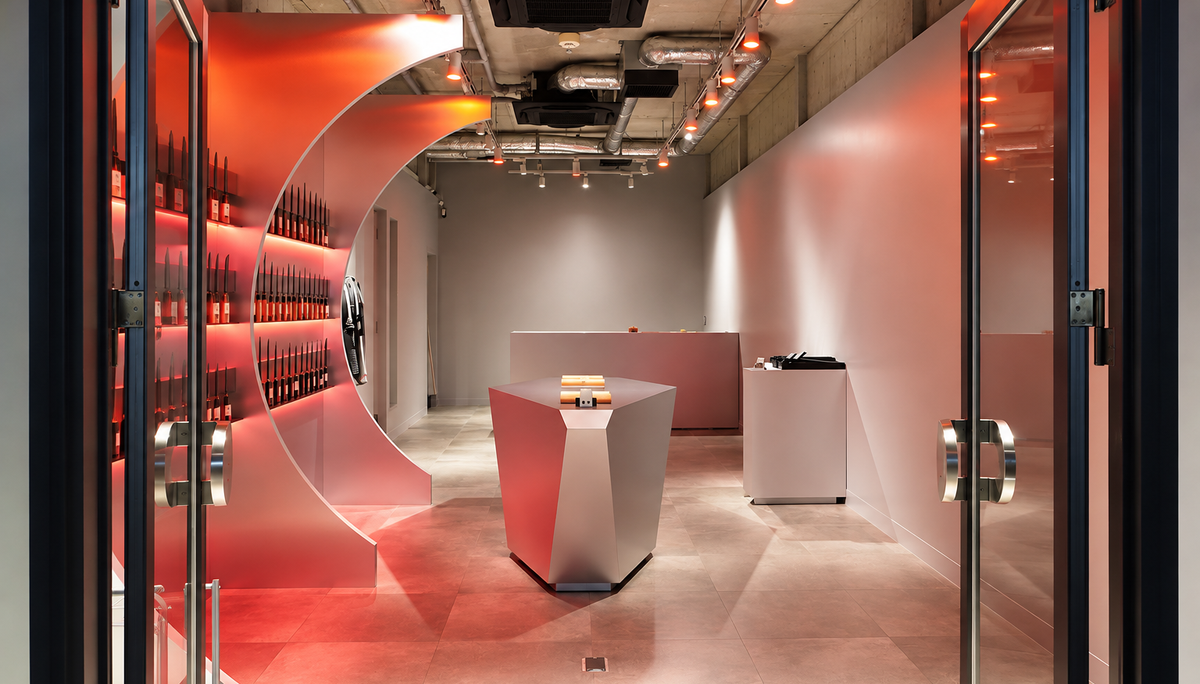
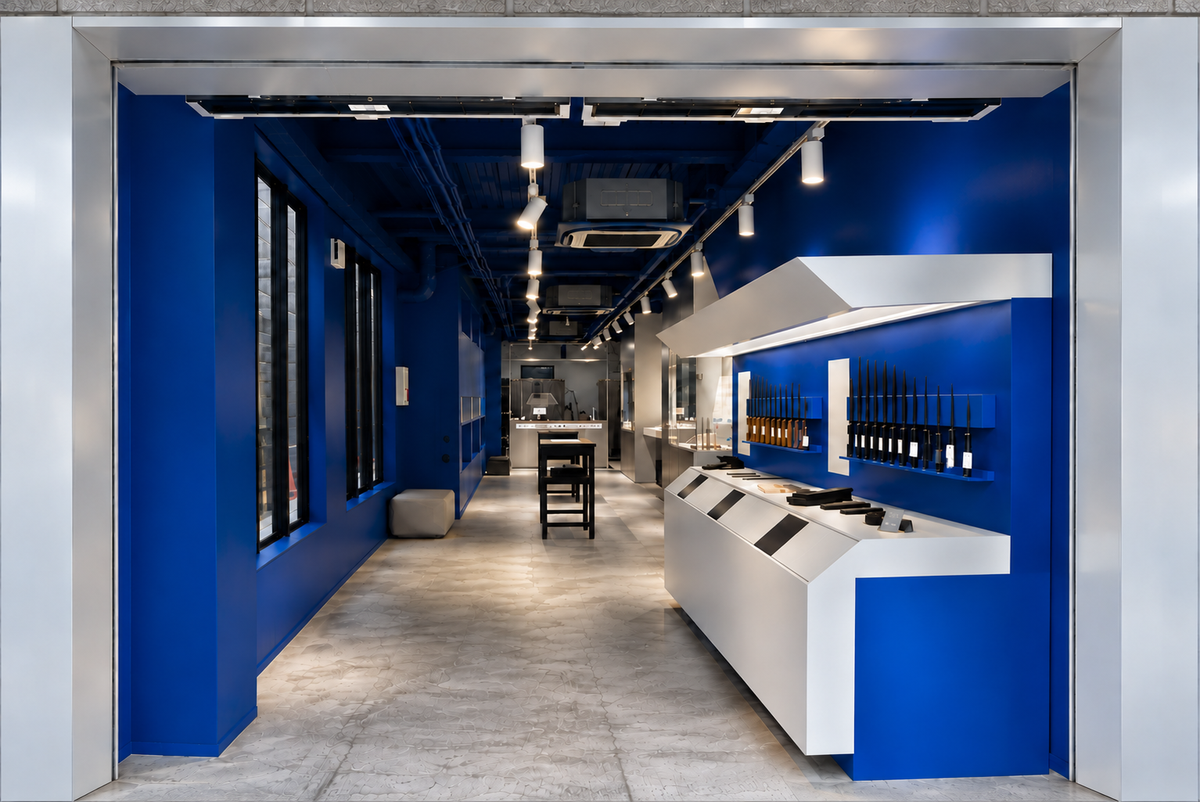
From products and packaging to retail spaces, digital interfaces, personalization, and photography, I want everything to share the same design language. Whether you meet a knife, a package, a screen, or an FE store, you should feel that they belong to the same system.

Why does the future matter so much to you?
I've always been fascinated by how human beings imagine the future.
In ancient times, when people saw meteoric iron arriving from the sky, they understood it as something mysterious, sometimes even a material belonging to the gods. Today we analyze the same material through materials science and identify its iron, nickel, and very specific metallic structures. To me, these two ways of understanding it aren't contradictory.
Technical drawings, industrial design, early digital interfaces, and now AI all record how people in different eras understood technology and the future. FE uses references from these visual languages, but I don't want them to be decoration.
Ideally, every element has a function or a reason behind it. A line might come from the actual structure of a product. A number might correspond to a real technical parameter. An interface should help you make a better choice. The texture of a material should come from a genuine manufacturing process.
I don't want FE's sense of the future to simply look futuristic. I want it to feel like the future because the product itself has been designed with the technologies and ways of thinking of our time.

Which design decision took the most time?
It may look like a small material choice, but our use of nickel (Ni) took a great deal of time and experimentation. Meteoric iron is one of the important sources of inspiration for FE. Myths and legends from cultures around the world tell of "metal from the sky" and weapons made from it. In real iron meteorites, one of the most characteristic features is iron and nickel existing together. That made me ask whether we could translate this material characteristic into FE's own design language.
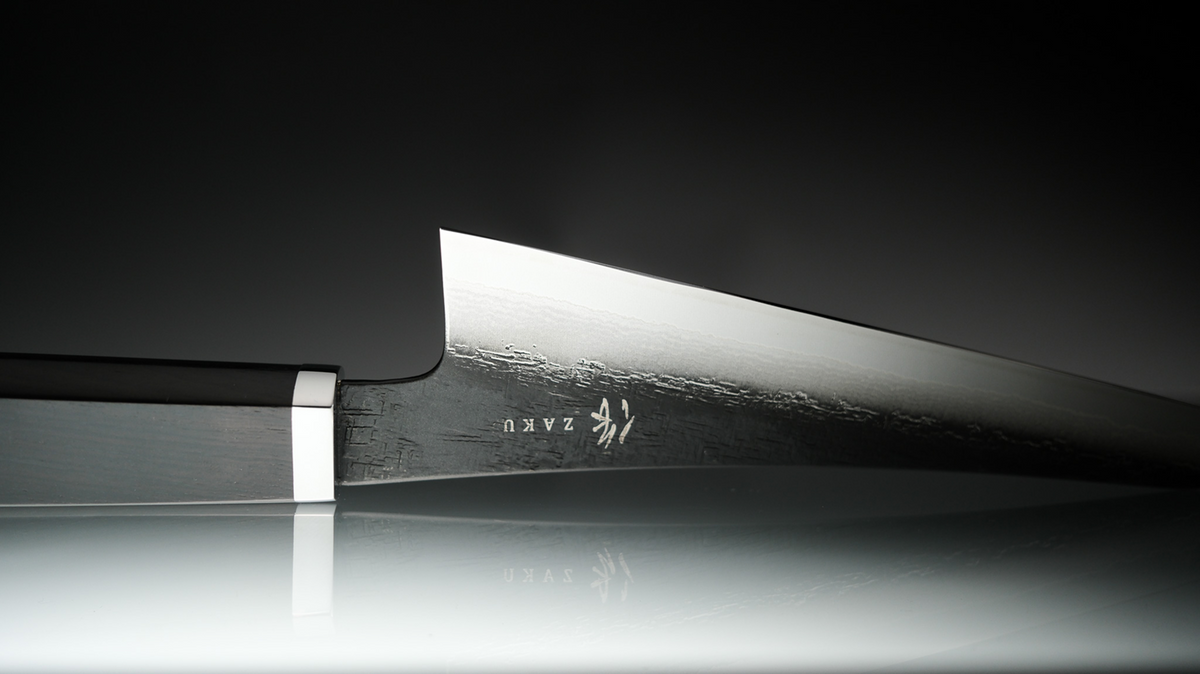
Nickel doesn't only influence the properties of an alloy. It can also create a very distinctive visual contrast in laminated steels and Damascus structures, so we began experimenting with nickel-containing materials and nickel Damascus techniques as part of FE's product system.

Once we started manufacturing, we discovered this was far harder than drawing it. When pure nickel is forge-welded with steel, temperature, pressure, material thickness, and the whole processing sequence have to be carefully controlled. If they aren't, you can get delamination, uneven thickness, or a pattern without enough definition.
What you finally see may only be a few silver lines running across the blade. But to make those lines a genuine part of the product and not surface decoration, we ran extensive testing and refinement of both materials and manufacturing processes.
Where is customization going?
This is one of the areas where I think FE is very different from other brands.
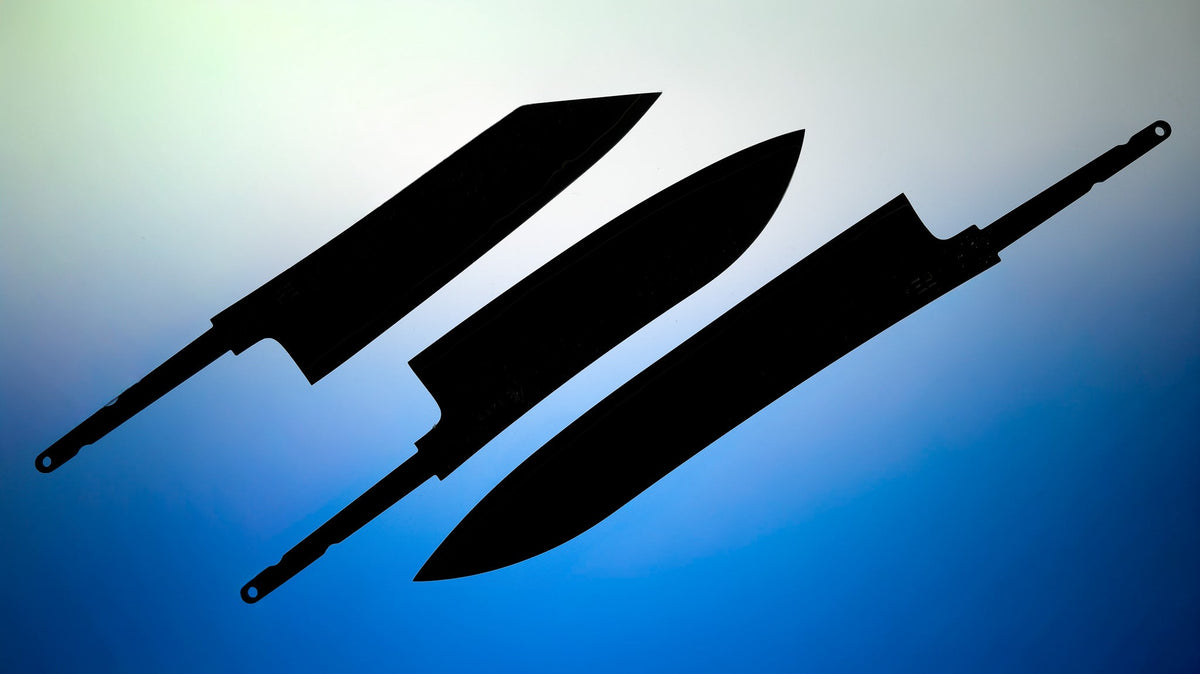
Designing around the size of your hand, letting you choose a handle, and helping you find the right size is, to me, only the first step. In the future, I want you to be able to go further based on how you actually use your knives: choosing the blade shape, the dimensions, even different performance characteristics for your own needs.

That idea has changed how I design our core products. If we want true personalization, we can't begin by treating every knife as a completely independent product. We need a unified set of standards and a coherent system from the start. The blade, the handle, and the other components need clear rules and interfaces between them. As technology advances, that lets us keep upgrading individual parts without redesigning the whole product.
In the end, I don't want an FE product to be something that is "finished" once the design is done. I want it to be a system that keeps evolving with technology, with the people who use it, and with the era itself.
Learn more about FE
What is FE? A Knife Built Around Choice