Most kitchens need one good all-purpose knife, and three names keep coming up: Santoku, Gyuto, and Bunka. All three can handle vegetables, meat, fish, herbs, and most everyday prep. That is why the Santoku vs Gyuto question comes up so often. The honest answer is that neither is better. They simply approach the same jobs differently. Bunka adds a third option that is easy to overlook: compact like a Santoku, but with a much more precise tip. Here is how to tell which one fits the way you cook.

What is a Santoku?
A Santoku is a compact all-purpose knife with a broad blade and a relatively flat cutting profile. The name means “three virtues” and is often associated with its versatility across meat, fish, and vegetables.
Compared with a Gyuto, the Santoku usually has a less pronounced tip and keeps more of its cutting edge close to the board. Its flatter profile works particularly well for push-cutting, chopping, and everyday vegetable prep. That compact shape can also make it easier to control on a smaller cutting board.
If you want one straightforward knife for everyday cooking and prefer controlled, relatively compact movements, the Santoku is a good place to start. At FE, the Santoku is available in 150, 165, and 180 mm.
What is a Gyuto?
A Gyuto is a chef’s-knife shape developed in Japan under Western influence. Its name literally means “beef sword,” reflecting its historical connection with meat preparation. Today, it is a much broader all-purpose knife used for meat, fish, vegetables, fruit, and general kitchen prep. Compared with a Santoku, a Gyuto usually has a longer, narrower profile and a more evident tip. The edge also tends to be more curved.
That gives you more reach for longer slicing strokes and makes the tip useful for trimming, portioning, and other detailed work. Depending on the exact profile, the curve can also support more rocking motion than a flatter Santoku or Bunka.
If you regularly work with larger ingredients, prefer longer slicing movements, or simply like having more blades in front of your hand, the Gyuto may feel more natural for you. At FE, the Gyuto is available in 180, 210, and 240 mm.
What is a Bunka?
A Bunka sits close to the Santoku in size and everyday use, but its geometry gives it a different character. The cutting edge is relatively straight, while the spine angles sharply toward the tip. This creates the distinctive K-tip, sometimes called a reverse-tanto tip. That fine point is useful when you want more precision for scoring, trimming, or detailed cuts around smaller ingredients.
The Bunka is still an all-purpose knife. You do not need specialist cooking skills to use one. Think of it as an option for someone who likes the manageable proportions and flatter profile of a Santoku but wants a more precise tip. If a Santoku feels a little too rounded at the front, while a longer Gyuto feels like too much knife for your board, the Bunka is worth looking at. At FE, the Bunka is available in 150, 165, and 180 mm.

Santoku, Gyuto, and Bunka at a glance
|
Santoku |
Gyuto |
Bunka |
|
|
Edge profile |
Relatively flat |
More curved |
Relatively straight |
|
Tip |
Less pronounced |
Pointed |
Angular K-tip |
|
Typical movement |
Push-cutting, chopping |
Slicing, push/pull cuts, some rocking depending on profile |
Push-cutting, chopping, precise tip work |
|
Good for |
Compact everyday prep, vegetables, smaller boards |
Larger ingredients, longer slicing strokes, general prep |
Everyday prep with more precise tip work |
|
FE sizes |
150, 165, 180 mm |
180, 210, 240 mm |
150, 165, 180 mm |
How do you choose?
Forget the names for a second and think about your last week in the kitchen. If most of your cooking involves quick everyday prep, vegetables, smaller portions, and a compact cutting board, a Santoku may fit that routine very naturally.
If you regularly work with larger ingredients, want longer slicing strokes, or simply enjoy the reach of a chef’s knife, look at the Gyuto. If you like a compact knife but frequently use the tip for controlled, detailed work, the Bunka sits somewhere between the two.
And if you honestly do a bit of everything, pay attention to how you naturally move the knife. Do you prefer shorter push cuts and chopping? Do you like longer slicing strokes? Do you use the tip often?
Your answer is usually more useful than the name on the product page. Length matters as much as shape.
Shape is only half of the decision. A 165 mm Santoku and a 210 mm Gyuto can both be described as all-purpose knives, but they feel very different on the board.

One keeps everything relatively close to your hand. The other gives you considerably more reach. That is why we recommend thinking about shape and length together.
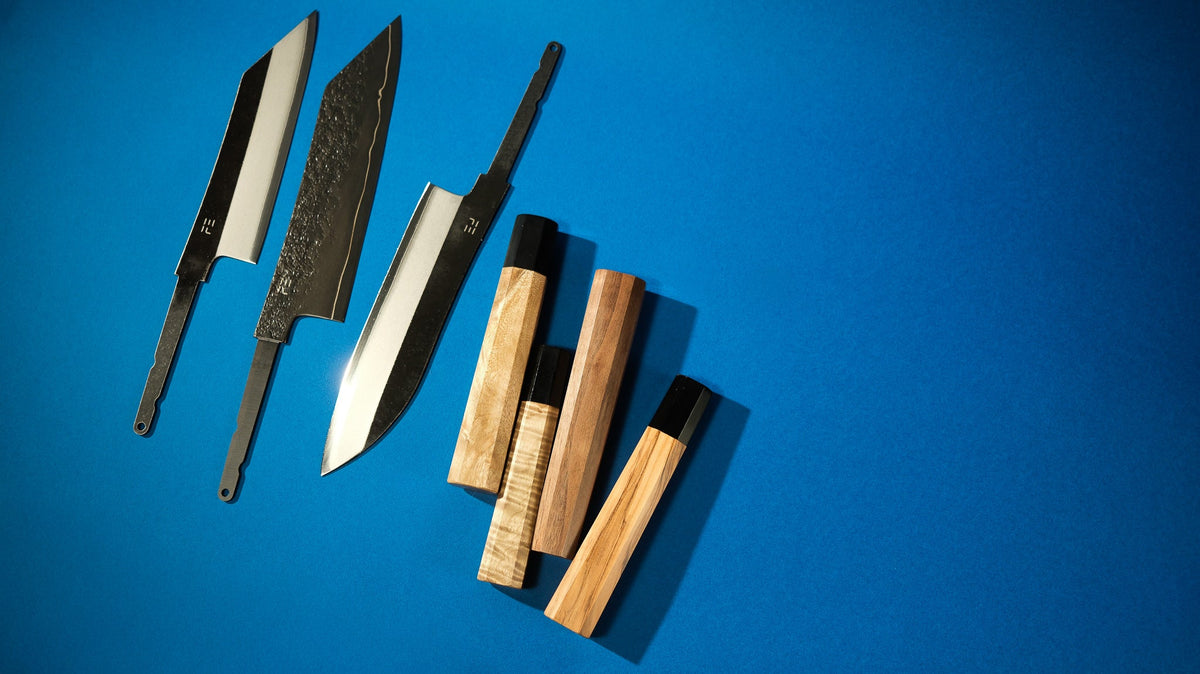
When you compare FE Santoku, Gyuto, and Bunka knives, shape and length are the first differences you are likely to notice in use.
The broader FE process remains focused on precision and consistency. Our blades are CNC-machined to tolerances of up to 0.01 mm, vacuum heat-treated, gas-quenched, and cryogenically treated. Production batches are hardness-tested, followed by hand sharpening, assembly, finishing, and final inspection.
Materials, finishes, handle configurations, weight, and other specifications can vary between FE models, so they matter too. But if you are trying to decide between Santoku, Gyuto, and Bunka, start with geometry.
Put the three profiles next to each other. Look at the length, then look at the tip, and then think about what you actually cut. That will usually tell you more than a long specification list.

Do you need all three knives?
Most likely not. At FE, we are not telling you to buy more knives; we actually think the opposite. One knife you understand and actually reach for is worth more than a drawer full of knives you are never quite sure about.
Start with the shape that matches the way you cook most days. Choose the length that fits your board and the amount of food you usually prepare. Then choose the handle that feels right in your hand.
Because that is the part you will notice every single time you use it.
Learn more about building your own combination in our article → [How to Build a Custom Kitchen Knife at FE]