
Artikel
Geschichten, Interviews und Leitfäden von den Menschen hinter FE.

Making Your Own Tool: A Conversation with FE's Creative Director Stefan Kitanovikj
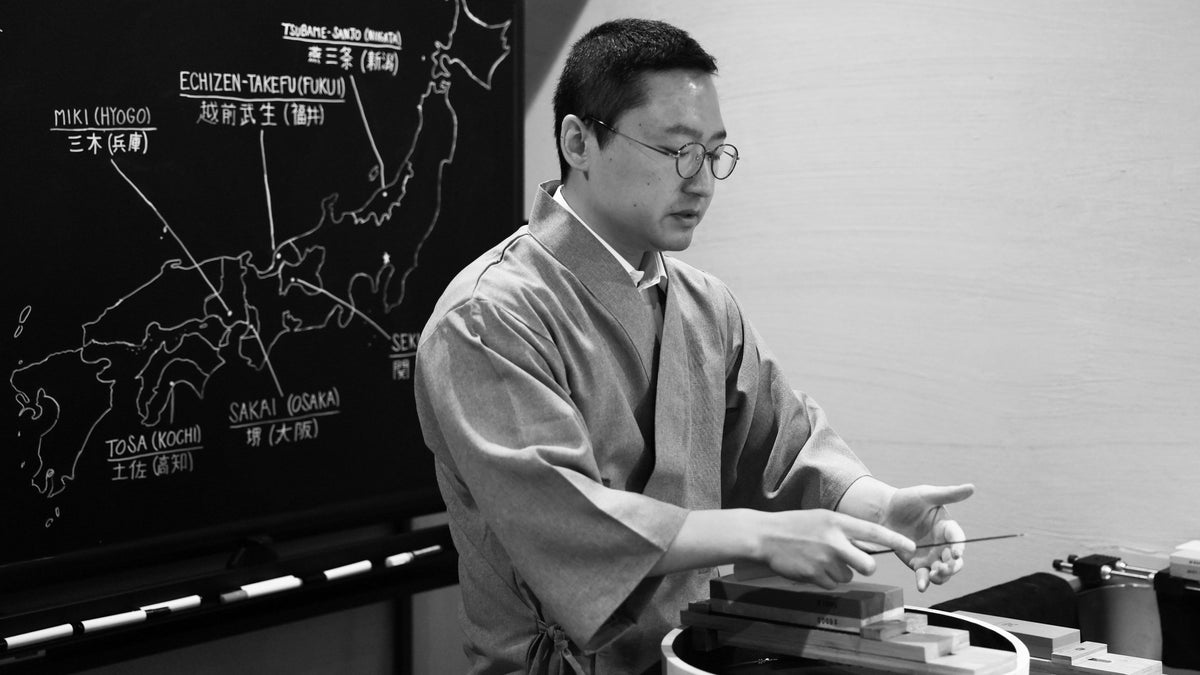
FE lets people build the knife they will use every day: they choose the blade and the handle, and they can see it being assembled in-store. We spoke with Stefan Kitanovikj, the creative director and brand designer behind FE, about fine art, cross-border craft, and why a knife brand chose facts over storytelling. You trained as a fine artist, not a knifemaker. How did that path lead you to FE? My background is in fine arts. I'm a classically trained visual artist. Over time, I felt that art didn't answer my need to connect with people, while design is something people use every day. So I moved into fashion. Clothes are about as close to people as anything can be, and I wanted to design things people live with daily. From fashion I moved into product design, and today I work as a creative director. I've lived and studied in Japan, and I specialize in traditional Japanese crafts. There is so much beautiful knowledge in these crafts, and I wanted to find a way to share it with the world. FE grew out of that, and I designed the brand myself, from the logo to the store graphics. Before FE had a name or a visual identity, what problems did you set out to solve? Everything I make starts with solving a problem for the customer. Before FE existed, I noticed that across Japanese knife brands, customers were left out of creating the tool they would use it every day. With FE, I wanted to let people create that tool themselves. That's why FE is the first brand in the world that lets customers fully customize both the blade and the handle. The second problem was that knife culture around the world is very landlocked. While doing my research, I realized that the best design comes from exchanging knowledge across borders. So with FE, we work with knife specialists in other countries to bring thecustomer the best-designed knife possible. You have spent time face to face with the people buying the knives. What did they teach you that a design meeting never could? A lot. In art and design, we usually sit in the atelier , working from our assumptions about what a customer wants. Being out front and actually learning what people want is far more rewarding, and far more important. It isn't about knowing aesthetics or giving good references. It's about solving a specific problem. Many brands focus on creating an experience: a story , a link to a specific culture or a specific period. That isn't enough. What customers taught me is what they really need: a very good product. So FE was deliberately built without that layer , with no emotional packaging and no story wrapped around it. It is grounded in tradition and research, but the point is simply the product. At FE, customers build their knife instead of picking one off a shelf. Why does taking part matter? A knife is a tool you might use every day for the next twenty years. You can own a product for that long and still not understand it. But when you choose your own knife, you consider which metal and which wood to use, and in the process you learn about your tool. Throughout history , people made their own tools. Today everything is ready-made, straight off the shelf. We wanted to go back to something fundamentally human:preparing your own food, and making the tool you prepare it with. In FE stores, people can watch their knives being assembled. What about the way knives are usually sold did you want to open up? I worked for another Japanese knife brand before FE, so I saw this up close. So much knowledge about traditional crafts, in Japan and in the place I come from, is locked away in a village nobody can reach, in a language most people don't speak. I wanted an exchange. I wanted people to see. That's why , in our stores, you can watch your knife being put together. Transparency matters because people carry a lot of assumptions. Craftsmen are craftsmen, and we respect them. But we live in a world where all this information is accessible. Mystifying something as simple as how a knife is made just doesn't hold up, especially in the age of AI. You call FE contemporary, not modern. What is the difference? People often think of tradition as something that stopped at a certain point, put in a box and labelled "traditional craft”. But who decided that? Tradition evolves with people. We don't build cars the way we did twenty years ago. Things change with the way we live. So FE isn't about being modern. Modern is already old. Contemporary is the word, because contemporary keeps moving with the people who use it. FE is named after iron, not a place or a master craftsman, and it avoids the usual language of heritage and luxury. What did you want to communicate instead? Simplicity . Fe is iron, element 26, and every knife is made with iron, wherever in the world it comes from. That is the whole brand: one element, every blade. We wanted FE to be international and open, a bridge between German, Japanese, Chinese, and Middle Eastern knifemaking, so we could create a tradition and a luxury of our own. When tradition is attached to a product, it often turns into a kind of luxury most peoplecan't take part in. Yes, these products take time to make. But by exchanging knowledge, we can make them accessible, so people can be part of a new tradition and a new kind of luxury: contemporary custom. Which part of FE feels the most personal to you? The logo, because I designed it myself. It is two letters built from a few straight bars, each one cut at an angle, the way a blade is cut. Nothing else. I don't want customers to sit through long explanations or convoluted concepts. Deep down, I'm a very simple man. At the end of the day , this is a knife, a tool you use every day, and I want people to experience it in the simplest way. When I got the brief for an international brand bringing together different skills, I thought about who I am: a foreigner who lives and designs in Japan, and works with craftsmen in Japan, Germany, and China. A logo for that brand couldn't belong to one country . So no calligraphy, no crest, no craftsman's signature. Just the symbol for iron, which reads thesame in every language. You built FE's visual identity yourself. What rules did you set? Very few, and that is the point. One element. One blue. Line drawings instead of mood photography. Numbers and measurements instead of adjectives. English and Japanese side by side. Whether it's the website, a poster, a film, or a shop window in Kyoto, it should looks like it came from the same technical drawing. Our philosophy is three ideas, and the identity has to carry all three: global knowledge, convergence and divergence, and continuous evolution. Knowledge from around the world converges on one element, iron, and from there it opens out into your knife. And it is never finished. Measured, refined, then measured again. Robots, wireframes, and data are an unusual visual world for a knife brand. Why does FE embrace robotics and AI? Because FE is built on technology, AI, and information, and heavily on data. A traditional craftsman rarely makes the same knife twice, and some people value that. We wanted one standard of quality instead: a knife checked against every parameter of a good product, which we can replicate so that every knife you receive meets it. I drew robot hands and a robot head as wireframes, like an engineering drawing. In our visuals, the knife starts as a flat outline, becomes a mesh, and then becomes the real object. They show you how the thing is built, not a story about it. It is the same transparency as watching your knife being assembled in the store. Which idea for FE sounded great in theory and proved hardest to make real? What did it teach you? The customization. In theory, of course, it sounded amazing: you come into a store, look through the options, choose a blade and a handle, and your knife is ready in just 30 minutes. Nobody had done it, and I really wanted to give that to customers. But we weren't sure people would actually do it. Making it real was another matter. Joining a handle to a blade requires chemicals and machinery, and running all of that inside a store is a serious operational challenge. What I learned is that the concept matters. When you believe in a concept deeply , and it closes a real gap for customers, it pays off. If you believe in it, your stakeholders and yourcustomers will believe in it too. When someone meets FE for the first time, what should they understand in the first five minutes, and what do you hope they discover later? In the first five minutes, I want them to enter a world where facts matter more than emotions. Whether they walk into a store or open the website, I want them transported into a world without national borders, a world of technology . We live in a globalized society , and people should experience an international brand at every step. Later, I hope they realize they are simply getting a quality product. We did the work and the research, and they get to enjoy the result. And honestly, I want people to have a cool experience in our stores and online. FE is about world-building: imagining tools shared across borders that meet the needs of every contemporary person. What makes a good knife to you, and has FE changed your answer? Surprisingly, I don't cook for myself. That's why we have talented product designers, and I put a lot of trust in their expertise. What FE taught me is that a personalized knife is probably the best knife you can have, because it is your choice and your decision. FE is still young. What are you most excited to work on next? We're trying to make the most contemporary product for our customers, and the possibilities are endless. There is so much knowledge out there, not only in knifemaking but in metallurgy and the development of new steels. Our ZAKU blades already take their surface from meteorites, so I'm exploring where we can go with metallurgy , technology, and handles, because a lot of knives simply aren't comfortable to hold. I also want to expand what people can personalize. If technology allows, I'd love to let people choose the pattern on their blade, or how the knife fits their grip. Right now we offer handles in different sizes. What we're developing is a system that lets customers scan their hands in our stores. Based on the size of their hand and how they use a knife, we'll translate that into their perfectly personalized product.

Knife Shopping in Japan A Visitor’s Guide
Japan has a long tradition of crafts and arts, from ikebana, tea, and kabuki to martial arts. Knife making is one of them. It grew out of the techniques smiths developed for samurai swords, around a thousand years ago. As demand for swords declined during the Edo period and following the Meiji Restoration, many smiths began adapting their ancestral craft to other products. To keep working, skilled smiths applied centuries of metalworking knowledge to kitchen knives and other cutlery. This tradition continued to develop after World War II. Today, Japanese kitchen knives are loved by home cooks and chefs around the world. In this guide, we will walk you through the knife types you will meet online or during your trip to Japan, and what to look for in a shop. It also covers where to buy and how to get your knife home safely. Types of Japanese kitchen knives and their usage Before the knife types, it helps to know how Japanese knives differ from the Western knives most of us grew up with. Many Japanese kitchen knives feature relatively acute edge angles and thin blade geometries, allowing for precise and delicate cutting. However, edge angles, steel hardness, and blade construction vary widely depending on the knife's design, intended use, and manufacturer. Many traditional Western-style chef's knives feature full-tang construction and heavier handles, although blade thickness, balance, and handle design can differ considerably between products. One term will help as you read on. A bevel is the angled surface that leads to the edge. Single-bevel knives are ground on one side only and come in right-handed and left-handed versions. Double-bevel knives are ground on both sides and suit either hand. Most common types of steel: carbon steel vs stainless steel Whatever shape you choose, the steel decides how the knife behaves day to day. Most Japanese knives are made from carbon steel or stainless steel. Carbon steels, such as white (Shirogami) and blue (Aogami) steel, take a very fine edge and are easy to sharpen. They can rust if left wet, so dry them after use. White Steel contains very few impurities and is known for its ease of sharpening and ability to achieve a sharp cutting edge. On the other hand, Blue Steel, which contains added chromium and tungsten, offers excellent wear resistance, allowing it to maintain its sharpness for a longer period of time. The most common Japanese knife types Santoku (三徳) The name means “three virtues”, referring to the knife’s suitability for fish, meat, and vegetables. It is an all-purpose knife and a practical first Japanese knife for home cooks. Typically 160 to 180 mm, double-bevel, and widely available. Gyuto (牛刀) The Japanese take on the Western chef’s knife. The name literally means “cow sword”, a nod to its origins as a butcher’s tool. Compared to the Santoku, the blade is longer and more pointed, with a slight curve that suits rocking cuts. Also double-bevel. Typically 210 to 240 mm. Bunka (文化包丁) is close to the Santoku in size and use, with a reverse tanto tip that makes detailed work easier. Best suited for push-cutting and tap-chopping, the sharp tip excels at fine detailing, scoring, and working with fish or small proteins. Nakiri (菜切り) is a vegetable knife designed for chopping, slicing, and dicing produce cleanly on a cutting board. It looks like a Usuba but has a double bevel instead of a single bevel. Typically 165 to 180 mm. Kiritsuke (切付) is traditionally a single-bevel knife and a status symbol: only the executive chef was allowed to use it. It handles most general prep, and its distinctive K-tip allows precise, detailed work. Many modern versions are double-bevel. Typically 210 to 330 mm. Petty (ペティナイフ) A small, versatile utility knife, typically 120 to 150 mm. It is made for small, detailed jobs such as mincing, dicing, and cutting small foods. Many cooks pair one larger knife for most tasks with a smaller one for fine work. Below, we walk you through the more specialized knives. Bread knife (パン切り, pankiri) A long knife with a serrated edge. It slices crusty loaves and pastries without crushing their soft insides. Typically 200 to 250 mm. Usuba (薄刃) A thin, single-bevel knife made for cutting, peeling, and slicing vegetables with high precision. It is built for professional chefs with advanced knife skills. It cuts firm or delicate vegetables cleanly, without cracking or damaging their cell structure, and it is also used for intricate garnishing and carving. Typically 165 to 240 mm. Deba (出刃) A traditional single-bevel knife with a heavy, thick spine, made mainly for butchering and filleting whole fish. The heel of the blade is exceptionally thick, so it can chop through fish heads and small-to-medium fish bones without damaging the edge. Sizes run from about 100 mm to 240 mm or more, and 150 to 210 mm is common. Yanagiba (柳刃) The name means “willow-leaf blade”. It is a long, slender, single-bevel knife made for slicing boneless fish fillets into sashimi and sushi. The blade is typically 240 to 300 mm. Honesuki (骨透き) A stiff, triangular knife built to work in tight spaces and around joints. It is mainly used for deboning and breaking down whole poultry such as chicken, duck, and turkey. The edge is often single-bevel or asymmetric, though double-bevel versions are common. Typically 135 to 165 mm, with 150 mm the most common. Menkiri (麺切り) A specialty knife made for cutting noodles. The sobakiri and udonkiri are closely related versions. The name literally means “noodle cutter” (men is noodle, kiri is cut). The blade is wide, typically 27 cm or longer, with a completely flat, straight edge. That lets the chef slice down through folded sheets of wheat or buckwheat dough in one vertical motion, without sawing. How to choose a Japanese knife in the shop You do not need to be an expert; these questions will make your shopping easier. First, what do you cook most? Is that mostly vegetables, a bit of everything, or larger cuts of meat and meals for several people? Second, which shape? The best Japanese knife for beginners is usually a Santoku, a Gyuto, or a Bunka. If you are unsure, read [Santoku vs Gyuto vs Bunka]. Lastly, think about what handle you would like to use; for that, see our article [Choosing a Knife Handle: Material, Feel and Balance Explained]. Where to go knife shopping in Japan Tokyo: Kappabashi. Known as Kitchen Town, this is a street of kitchenware shops, a short walk from Asakusa, where knives are a main attraction. There you can find everything: from kitchen knives to teacups. Osaka has a number of knife shops, particularly on Dōguyasuji (道具屋筋) street in the Namba area. Like Kappabashi, it is full of restaurant supply stores, but it sits inside a covered arcade about 150 meters long. Similar to Kappabashi, you can find a lot of commercial cookware, ceramic tableware, pottery, and of course kitchen knives. If you would like to dive really deep into the knife topic, you should consider visiting Seki; this city is close to Nagoya. Seki is world-famous for a 700-year blade-making tradition that began with forging high-quality samurai swords during the Kamakura period. Today, the city is a global cutlery hub that utilizes those ancient smithing techniques to produce approximately 50% of Japan’s domestic kitchen knives. FE stores. If you would rather compare many shapes, sizes, and handles in one place, we have stores in Osaka, Kyoto, and Tokyo. At each one, you can hold the knives and build your own from a blade and a handle. You can also browse what we have available online at feproject.com. Carrying your knife in Japan Japanese law prohibits carrying a blade longer than 6 cm in public without a justifiable reason. Police guidance gives two examples: a cook taking a knife to work, and someone who has bought a knife and is taking it home. A freshly bought knife on its way to your hotel or the airport follows the same logic. The practical approach is simple: keep the knife sealed in the shop’s packaging, together with a receipt. Getting it home Knives cannot go in your carry-on bag. On flights from and within Japan, they must go in your checked luggage. Wrap the blade, keep it in its box or sheath, and place it in the middle of your clothes. A saya, a traditional wooden sheath, protects the blade well. Ask whether the shop sells one or can make one for your knife. The rules that matter most come after you leave Japan. Most countries allow knife imports, but check your own customs rules before you buy. If you have a layover, check whether your bag stays checked through to the end. The final word You do not need a collection; one knife in a shape and size you understand is worth more than a bag of knives you feel unsure about. We hope this guide gave you some useful information and that it helps you choose with confidence and find a knife you will enjoy using. If you take one thing from it, let it be this: start with how you cook, then pick the shape and the handle that fit. To learn more about FE, start with What is FE? A Knife Built Around Choice.

Kurouchi, Damascus and Nashiji: Japanese Knife Finishes Explained
Put three Santoku knives side by side. Same shape, same length, same task in the kitchen. Yet one is matte black with a bright cutting edge, another has a fine pear-skin texture, and the third has flowing silver lines. You would never mistake one for another. In this article, we walk you through the knife finishes we have at FE, their main characteristics, and how they differ, so it is easier for you to pick. What Is Kurouchi? How the Makers Get That Black, Stunning Look Kurouchi (黒打ち) means “black forged”. It is the dark, rough-looking surface you see on a knife that has not been polished all over. Here is where the black comes from. Traditionally, the steel is forged and heat-treated, and its surface reacts with oxygen and forms a dark oxide layer called forge scale. Most makers grind it away. With kurouchi, makers leave it, usually on the upper part of the blade, and grind only the cutting edge bright. Heating and forging are not the only way to get this look. In lacquered kurouchi, the forge scale is sealed with a food-safe lacquer. Another way is black oxide or an acid bath, where a darkened finish is applied during production. These give the look of kurouchi, but they are more through forging and heat-treatment. Kurouchi is mostly visual and traditional, and its practical effects are modest. The steel, the geometry, and the heat treatment matter far more to how a knife cuts. Some people prefer the character and old, traditional feel of kurouchi, while others want a cleaner look. Perks of Kurouchi Finish Some rust protection: The kurouchi finish gives the steel a little protection from rust, but not complete protection. The edge still needs care, especially on carbon steel blades. Aesthetic appeal: The kurouchi finish is highly valued for its look. It carries the feel of traditional Japanese knife-making and gives each knife an artisanal character, which appeals to anyone who appreciates the beauty in a working tool. Hides everyday marks: The matte, textured surface shows fewer scratches, so the knife looks good even with frequent use. Explore the Kurouchi Collection at FE What Is Damascus? Beautiful, Wavy Pattern Explained A Damascus finish comes from a blade made of several steels that are layered, folded, and forge-welded together. An acid etch then brings out the flowing pattern, which can look like water or wood grain. The acid attacks layers of different composition differently. Where nickel is used, it stays bright while the steel layers turn darker. On Japanese kitchen knives, Damascus is usually cladding. A hard core steel does the cutting, and the patterned layers wrap around it and stop at the bevel. Those outer layers help protect a hard core from side impact. At FE, nickel took a great deal of time and experimentation to get right. Beyond its effect on an alloy’s properties, nickel creates a very distinctive visual contrast in laminated steels and Damascus structures. That is why we began working with nickel-containing materials and nickel Damascus techniques as part of FE’s product system. Perks of Damascus Finish Visual depth: The layered pattern gives each blade its own character. Protection for the core: Softer outer layers help shield a hard core steel from side impact. A record of the work: The pattern reflects how the layers were welded, folded, and shaped. Making a Damascus blade takes more time and skill, which is why it usually costs more. The pattern itself does not make a knife sharper, but if you value the craft and the look, it is a knife you will enjoy every time you pick it up. Explore the Damascus Collection at FE: What Is Nashiji? How the Pear-Skin Texture Is Made Nashiji (梨地) means “pear skin”. The finish resembles a speckled, slightly rough surface that mimics the tiny dots and micro-grain of a Japanese pear (Nashi). There is no single way to make it, and the texture varies from maker to maker, even from knife to knife. Most descriptions point to light hammering or stippling of the blade surface, by hand or by tool. The blade is then polished so the peaks smooth out and the valleys stay. Some makers describe fine blasting or acid etching instead. The texture typically covers the upper part of the blade face, while the cutting edge is polished. Nashiji sits between two other looks. It is quieter than kurouchi and finer than hammered tsuchime, which has visible dimples. You will see it mostly on mid-range and premium clad knives, with either stainless or carbon steel cladding. Perks of Nashiji Finish Hides micro-scratches: The texture is more forgiving than a mirror polish under daily use. Subtle food release: Due to the texture of the finish, slices come off the blade a bit more easily. A quiet look: Rustic and traditional, without being flashy. Explore the Nashiji Collection at FE Which Finish Will You Pick? A finish is easy to read about and much easier to judge in your hand. Want the raw, forged look? Go for the kurouchi. If you want a quiet, textured surface? Take a look at the nashiji collection. Sophisticated, layered silver lines are something that you are leaning towards? Then go for Damascus blades. At the FE, there are not only different shapes of knives, finishes, and handles available; we are giving you the option of customizing your own tool. You can select parts of the knives that suit your needs! Browse the full range at feproject.com, or if you are planning to visit Japan,make sure to stop by one of our stores. We are located in Osaka Namba, Kyoto Gion, or Harajuku Street in Tokyo.

FE Opens on Takeshita Street, Our First Store in Tokyo
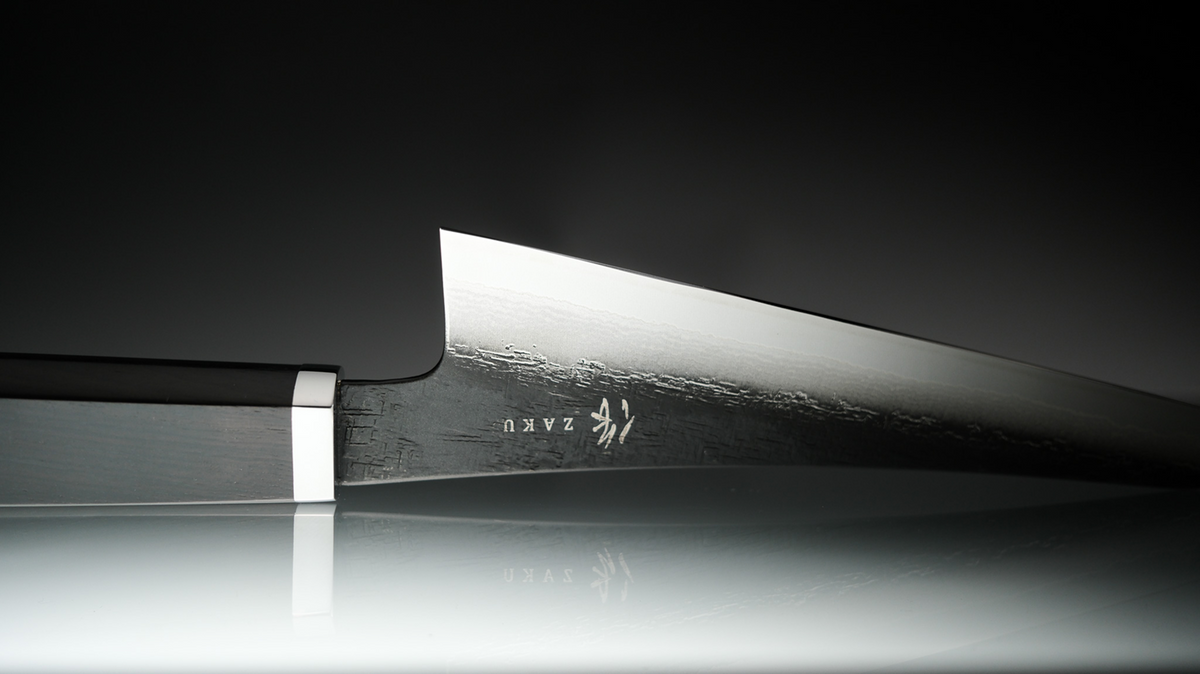
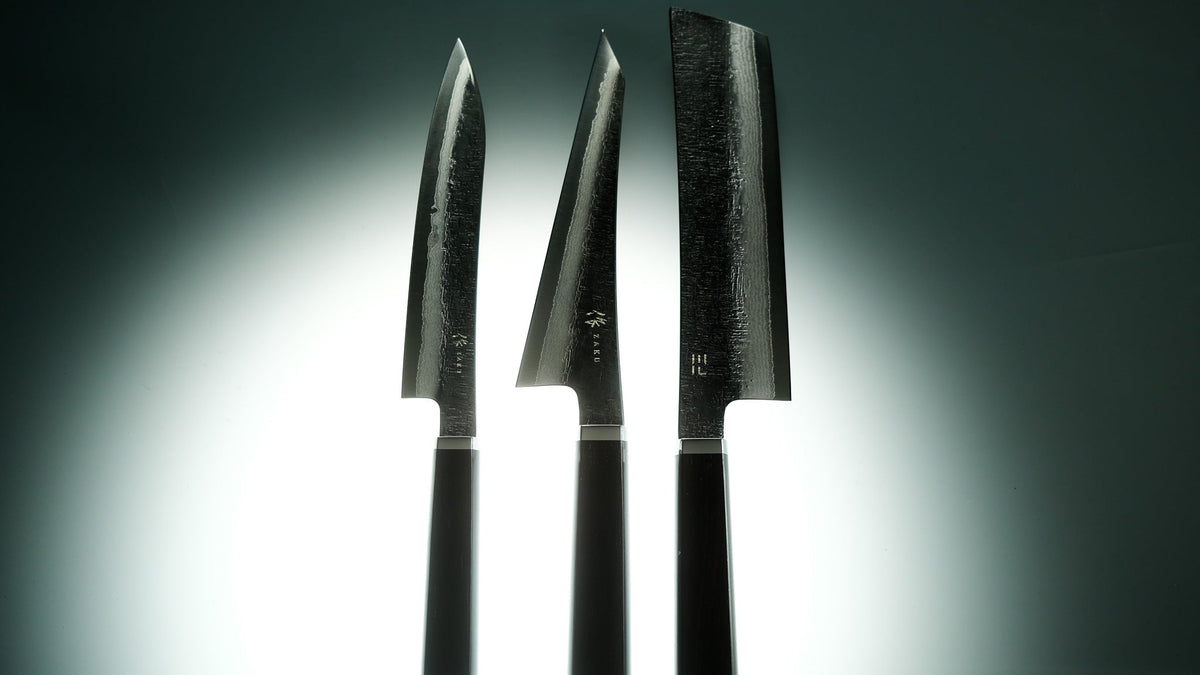
Takeshita Street is not the first place most people look for a kitchen knife. That is exactly why we chose it. Our new FE store in Harajuku, Tokyo, is open. It is our first store in Tokyo, and an unusual one. We opened it together with Genery Inc., a company that builds fashion brands and characters, mainly for Gen Z. One room, two cultures: knives and fashion. A store that does not look like a knife shop The interior is brushed silver, cut by lines of red light. The walls are metal, the displays curve, and the stands are geometric. At the center, there is a display where you can see each knife up close: the texture of the blade, the shape of the handle, and the small details that photos miss. Why Harajuku? For many years, Harajuku has brought together fashion, characters, design, and food, and people come from all over the world. Not everyone walking down Takeshita Street is looking for a knife, and that is part of the point. Imagine someone stepping in from the street, picking up a blade, and starting to ask questions. What is it made of? How is it made? Why does it look like this? We built the store for those questions. And if you want to go further, you can see how a knife is customized, right there in the store. ZAKU, our first series The Harajuku store centers on ZAKU, FE’s first series. Its blades have a raw, rough surface, inspired by meteorites, and a polished edge. The contrast is in the design. Harajuku is the third place to see ZAKU in person, after Kyoto and Osaka. Here, a knife is not only a cooking tool. It is also an object of design, material, and engineering. To see where the meteorite idea comes from, read an interview with our product designer Jack Tou. Working with Genery FE comes from the knife world. Genery comes from fashion and characters. The Harajuku store puts both in one room, so you can meet products and cultures you might not find otherwise. Alongside FE knives, the store carries LAZYSLAY, a fashion brand from Genery. Genery creates fashion, characters, and intellectual property, mainly for Gen Z. Its brand LAFARY is built around kawaii: apparel, goods, and character collaborations. LAFARY is active on social media and has stores at SHIBUYA109 in Shibuya, on Takeshita Street in Harajuku, and at HEP FIVE in Osaka. To learn more, visit Genery. What comes next FE is not only about a better knife. It is about bringing in ideas from other fields and other countries, and letting more people take part. We will keep working with companies and creators across industries to find out what a contemporary knife can be. To learn more about FE, read our material What is FE? A Knife Built Around Choice.
Knife Care Tips: How to Clean and Store Your Kitchen Knives
Knife Care Tips for Everyday Cooking It’s easy to forget your knife after dinner. It sits in the sink under a pile of plates, still wet, with a slice of tomato clinging to the blade. Later, it gets a quick rinse, a toss into the drawer with the other tools, and it is ready for tomorrow. Almost nothing in that story looks wrong, and almost all of it slowly wears a knife down. We want your knife to stay in great shape for years, so in today’s article, we will walk you through a few knife care tips: small, ordinary habits that keep it sharp, clean, and ready to use. The knife care tips that matter most If you only remember three things, make them these: wash the knife soon after you use it, dry it right away, and store it somewhere it will not rattle against other metal, ideally with a knife cover. The rest of this guide explains why and adds a few things that help a good knife last. Most of the damage happens after the cutting is over: in the sink, in the dishwasher, in the drawer. A knife can also be damaged by the wrong task. Cutting frozen food, for example, can easily chip the blade, and we will come back to that below. The good news is that knife care is mostly about habits, not effort. Wash the knife by hand right after cutting Food does more than make a knife dirty. Tomatoes, lemons, and onions are acidic, and salty food sits on steel in a way the metal does not like. Left on the blade for hours, they can stain it or leave small marks. So the simplest habit is also the most valuable: rinse the knife soon after you finish cutting. Use warm water, a little mild dish soap, and a soft sponge or cloth. Skip the rough scouring pad because it scratches the surface of the blade. Keep the sharp edge pointed away from you, and wipe from the spine toward the edge, never the other way; your fingers will thank you later. Why the dishwasher is not your knife’s friend A dishwasher is hot and humid, and it shakes everything inside. Blades knock against other items, strong detergent can leave marks, and the steam that lingers afterwards can sit on the steel. For a wooden handle, the heat and water are even harder because the wood can swell or crack. Hand washing takes about thirty seconds, and it is gentle on both the edge and the handle. Dry your tool right away Do not let a knife air-dry on the counter or in the rack. Water left on the steel leaves spots, and in time, those spots can turn into rust. Dry the blade straight after washing with a clean, soft cotton or linen towel, again wiping from the spine toward the edge. It takes ten seconds, and it is the habit that does the most for any iron-based steel. Look after the handle At FE, the handles are wood, and wood does not like to be soaked. Wipe the handle with a damp cloth instead of holding it under the tap, and dry it afterwards. Keep it away from very hot water and harsh cleaners. Now and then, a little oil helps wood stay supple and keeps moisture out. The usual advice is a food-safe mineral oil, or a mix of mineral oil and beeswax, applied thinly and wiped clean. Cooking oils such as olive or vegetable oil are best avoided because they can go rancid. There is one thing about FE that makes handling care less stressful. The handles are interchangeable, so if one wears out over the years, you can replace it without buying a new knife. Care slows the wear, and replacement is the safety net. To learn more about handles, see [Choosing a Knife Handle: Material, Feel and Balance Explained]. Choose your cutting board with care The edge of a good knife is extremely thin, and a hard surface blunts it fast. Glass, stone, and ceramic boards are the worst offenders. Wood and plastic boards are kinder because they are softer and more forgiving under the edge. A small tip helps here too. When you push chopped food off the board and into the pan, turn the knife around and use the spine. Dragging the edge sideways across the board wears it down for no reason. Store it where it will not rattle A knife left in a drawer spends its life knocking against other metal. Every knock can chip a fine edge, and every time you reach in blindly, you risk your fingers too. Give each knife a home instead: a magnetic strip on the wall, a knife block, a tray that sits in the drawer, or a knife cover. If you use a magnetic strip, place the knife on it gently, spine first, instead of letting the edge snap against the metal. Use the knife for what it is made for A good kitchen knife is thin on purpose, because a thin edge cuts cleanly. That also means it does not enjoy being asked to do other jobs. Do not poke with it, twist it inside a cut, open cans with it, or use it as a screwdriver. Avoid bones and frozen food, which can chip or bend a fine edge. Keep the edge sharp Even a well-kept knife gets dull eventually, and that is normal. But a dull knife is worth fixing sooner rather than later, because it can be more dangerous than a sharp one. It takes more force to cut and slips more easily, so it is harder to control. A simple test: if the blade slides off the skin of a tomato instead of biting in, it is time to sharpen it. The ideal sharpening frequency depends on how often you use your knife, the type of steel, the cutting board, and the ingredients you prepare. Rather than following a fixed schedule, we recommend sharpening your knife when you notice a decline in cutting performance. Professional chefs and frequent home cooks may need to sharpen their knives more often. What about rust and patina? If you notice small orange or reddish-brown spots on the blade, they may indicate rust. Address them as soon as possible. Light surface rust may be removed using an appropriate rust-removal product, but the suitable method depends on the blade's steel and surface finish. Abrasive products, including rust erasers, may scratch or alter the finish. If you are unsure how to proceed, please contact our customer support team. If rust appears on the cutting edge, sharpening may help remove light surface rust. However, deeper corrosion or pitting may require professional repair, as sharpening alone may not fully restore the blade. If you notice significant rust damage, we recommend consulting a knife specialist. Carbon steel knives may develop a discoloration known as patina over time. This occurs when the steel reacts with moisture, acids, and other substances found in food, causing changes to the blade's surface. Patina typically appears as a grey or bluish discoloration. Patina is a natural change that occurs with the use of carbon steel knives and is generally not considered a product defect. Where to start You don’t have to do everything at once; start with implementing one habit this week: dry the knife after you wash it. Once that feels automatic, you can move to pick another one. If you would like to learn more about FE and the idea behind the whole brand, start with [What is FE? A Knife Built Around Choice].
Die Wahl des Messergriffs: Material, Haptik und Balance erklärt
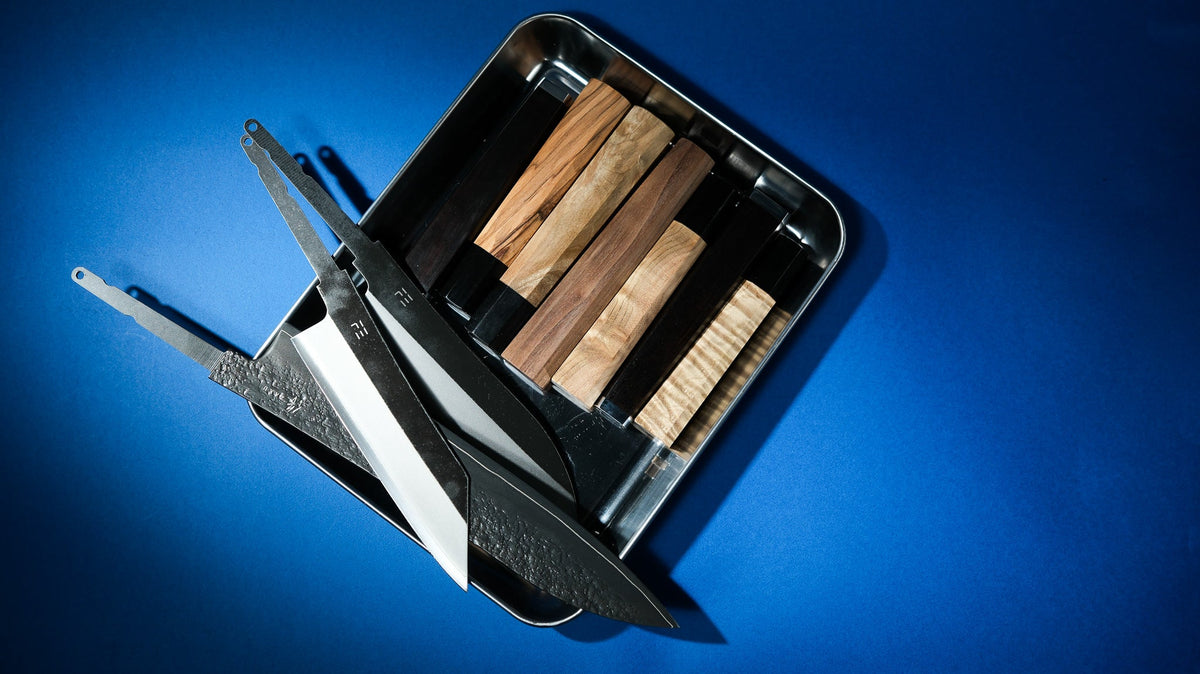
Choosing a Knife Handle: Material, Feel and Balance Explained Pick up two knives with the same blade but different handles, and your hand will tell you within seconds they aren't the same knife. One feels light and quick, while the other feels heavier and ready to go. Same steel, same edge, but a different handle will create a completely different experience. That is the handle at work, and it is the part of a knife most people think about last. This guide walks through knife handle materials, how a handle feels, and what balance means, so you know what to look for before you choose. Why does the handle matter as much as the blade? The blade does the heavy work, the cutting, but the handle is where your hand feels the knife. Every slice, push, and rock goes through your hand first. If the handle fits you, the knife just turns into an extension of your own hand, and you simply navigate the whole process with ease. If it does not fit well, you notice it by the end of the prep: a tired palm, a grip you keep adjusting, an overall feeling that a knife feels slightly wrong. This is also why a handle is a very important part for you to consider. Hands differ in size, in strength, and in the way they hold a knife. Explained: Common knife handle materials. Handles come from a few families of materials, and each one feels different in the hand. Generally speaking, a lot of Japanese knives have wooden handles; it is a traditional and classic choice. It is warm to the touch and comfortable, and every piece has its own grain, so no two handles look exactly alike. It asks for a little care: wood does not like long soaks in water, and it benefits from a little oil from time to time. Always dry it right after washing. If we are speaking about Western-style knives, they have a lot of different materials, such as resin, plastic, and epoxy. Synthetic materials, such as resin-based composites and plastics, resist water and stains well and stay consistent from one handle to the next. They often feel more neutral than wood, and you will find them on many knives built for heavy daily use. Metal handles are sturdy and easy to keep clean. They also tend to be heavy, and they can feel slippery in wet hands. None of these is the best in every case. It depends on what you value most: warmth, low maintenance, weight, or looks. At FE, the handles are made from wood, and there are four options to choose from. The four woods at FE We offer Olive, Walnut, Maple, and Ebony. Each has its own look and a different weight in the hand. Maple is minimalistic and clean, with exciting patterns. It is a hard, dense wood, and it is suitable for every kitchen. Walnut has a rich, brown look, from soft chocolate to deeper, darker lines. It is generally a relatively lightweight wood, making it a good option for those who prefer a lighter handle. Olive has a striking, golden-brown grain, and it is rare for two pieces to look the same. Olive is a dense hardwood, often giving the handle a more substantial feel compared with lighter woods. Every olive handle is, in a real sense, one of a kind. Ebony is nearly black, very dense, and fine-grained, with a smooth, polished finish. In general, it is the heaviest of the four and the one that changes how a knife balances the most. If you are torn between Maple and Walnut, the decision often comes down to color more than performance. Smooth cream or warm chocolate: pick the one you would enjoy seeing on your counter. What does “feel” really mean? Feel is the sum of small things. How thick is the handle compared with your hand? The shape under your fingers. Whether the surface is smooth and polished or has a little more grip from the grain. Whether the knife stays secure when your hands are wet from rinsing vegetables. The wood shapes some of this, but size and shape matter just as much. A handle that sits perfectly in a larger hand can feel too wide in a smaller one. The feeling that you will have will tell you everything that you need to know. What is balance, and why does a handle change it? A knife with its balance point toward the handle may feel lighter at the tip. On the other hand, a knife with its balance point toward the blade will feel heavier toward the tip. The ideal balance depends on personal preference and how the knife is used. The handle is half of that equation because it works as a counterweight to the blade. A dense wood like Ebony moves weight back toward your hand. A lighter wood, like walnut, leaves more of the weight in the blade. So the same blade can feel noticeably different depending on the handle you choose. There is no single correct balance. All of us have different preferences, and the right feel also depends on what you cut. How do you choose your handle? Start with how you cook and how the knife feels in your hand. These are starting points, not rules. If you like a light, quick knife for fast vegetable work, start with Walnut or Maple. If you prefer something steadier, with a little more presence in the hand, look at Olive or Ebony. If looks matter most to you, trust your eyes. A knife you truly enjoy seeing is a knife you will pick up more often. It is also not a permanent decision. At FE, handles are interchangeable; you can replace the handle without buying a new knife. How choosing a handle works at FE At FE, the blade and the handle are separate choices. You pick the shape that fits how you cook, then the handle that fits your hand and your taste. We put the two together by hand, and every knife is inspected for handle fit, sharpness, and straightness before it reaches you. If you are visiting Japan, visit one of our FE stores in person. You can hold the knives and feel the difference between blades and handles in person; we are located in Tokyo, Osaka, and Kyoto. To understand the whole customization process, read [How to Build a Custom Kitchen Knife at FE]. Caring for a wooden handle Wood is a natural material, so a little care goes a long way. Wipe the handle dry after washing, avoid leaving the knife soaking in the sink, and keep it out of the dishwasher. Depending on the handle's surface finish, applying a small amount of food-safe mineral oil or camellia oil can help maintain the wood in good condition. After applying the oil, wipe off any excess with a soft cloth. To understand the idea behind all of this, read [What is FE? A Knife Built Around Choice]. And if you are still deciding on the blade, see [Santoku vs Gyuto, or Bunka].

Knife guide: which knife size should you choose? 150, 165, 180 and 210 mm explained
Have you ever picked up a knife and thought, “this just feels off”? Most of the time, the reason is size. A blade that is a little too short makes you cut a cabbage in several moves, and a blade that is a little too long gets in your way on a small board. It’s likely no secret to you that there is a vast array of kitchen knives out there. Varying in length, type, and purpose. If you aren’t a professional chef or an expert in the field, it can all look a bit unusual or even confusing. But don’t worry, that’s what we’re here for. In today’s article, we’ll introduce you to the kitchen knives available at FE. We’ll talk about the differences in how they feel and the various blade lengths available. We’ll also explain what each knife is designed for so you can navigate your options more easily and make the best choice. What does knife size actually mean? When we say a Santoku is 165 mm, we mean the blade, measured from the heel to the tip. The handle is not counted. For reference, 150 mm is about 6 inches, 165 mm is about 6.5 inches, 180 mm is about 7 inches, 210 mm is about 8 inches, and 240 mm is about 9.5 inches. So when you compare sizes, you are really comparing reach. How much steel can travel through the food in a single stroke? How does size change the way you cook? A shorter blade stays close to you. It turns quickly, sits lightly in the hand, and gives you fine control near the board. It is the knife for small onions, herbs, shallow boards, and quick weeknight meals. Its limit is reach: a big cabbage or a thick piece of meat may take a few cuts instead of one. A longer blade gives you reach. It can glide through a large ingredient in one smooth stroke, and it makes slicing feel calm and even. It also asks for more space. It needs a bigger board and more room around it, and it can feel oversized when the kitchen is small. Neither one cuts better. The right length is the one that suits your board, your ingredients, and your hand. Santoku: 150, 165, or 180 mm The Santoku is an all-purpose knife for slicing, chopping, and dicing meat, fish, and vegetables. At FE, it comes in three sizes, and each one, of course, feels different. At 150 mm, it fits a small board easily and is quick to control, which many people find comfortable, compact, and light. For a very large cabbage or squash, you may need a couple of cuts. At 165 mm, it sits somewhere in the middle. There is enough length to handle most vegetables and a chicken breast in a single stroke, and it is still easy on a small or medium board. At 180 mm, it has the most reach. It moves through a whole cabbage, a squash, or a larger piece of meat with fewer strokes. It needs more board space and feels bigger in the hand, which suits you if you cook for several people and have the room on the cutting board. Gyuto: 180, 210, or 240 mm The Gyuto is a versatile chef’s knife, built for precision cutting, portioning, and everyday preparation. The curved edge and pointed tip let you rock the blade through food, and the longer length makes slicing smooth. At FE, it comes in three sizes. At 180 mm, it is a compact chef’s knife. It has the same length as the largest Santoku, but with a curved edge and a pointed tip. It is easy to control and more delicate if a chef’s knife is new to you. At 210 mm, it is often seen as the most popular size. It is long enough for cabbage, squash, and larger cuts of meat, and still manageable on a standard home cutting board. If you want one starting point, this is a very good one. At 240 mm, it gives you the longest strokes. It suits larger prep, bigger boards, and cooks who already feel at ease with a chef’s knife. On a small board, it can feel like too much. Bunka: 150, 165, or 180 mm The Bunka is a multi-purpose knife with a reverse tanto tip, which makes detailed work easier. The sizes follow the same logic as the Santoku. The 150 mm gives close control, the 165 mm sits in the middle, and the 180 mm gives more reach. If you are not sure whether you want a Santoku or a Bunka, read our detailed guide [Santoku, Gyuto or Bunka]. Why do some knives come in more sizes? You may have noticed that the Santoku, Gyuto, and Bunka each come in three sizes, and the Sujihiki does too, while the Petty, Hakata, and Kiritsuke come in two. Most of the specialist knives come in one size. There is a reason for that. The everyday shapes are used for so many different tasks, in so many different kitchens, that one length cannot suit everyone. A small board, a big family, a larger hand, a different recipe: all of these change which size feels right, so there is more choice. A specialist knife is made for one kind of job, so one well-chosen length usually covers it. The full FE range by size Knife Sizes What it is for Santoku 150, 165, 180 mm All-purpose everyday cutting: vegetables, boneless meat, fish Gyuto 180, 210, 240 mm Chef’s knife: larger ingredients, slicing, mixed prep Bunka 150, 165, 180 mm All-round cutting with a fine tip for detail Petty 130, 150 mm Trimming, peeling, and other small, detailed tasks Paring 90 mm Small work held in your hand Nakiri 165 mm Fast, clean vertical cuts through vegetables Kiritsuke Nakiri 165 mm A distinctive hybrid knife that combines the flat blade of a traditional vegetable knife (Nakiri) with a pointed, sword-like tip (Kiritsuke/Bunka). Hakata 165, 180 mm Everyday all-rounder in a style from Kyushu Kiritsuke 210, 240 mm Efficient slicing with a fine, pointed tip Sujihiki 210, 240, 270 mm Long, even slices of boneless meat and fish Honesuki 150 mm Boning and breaking down poultry Fillet 180 mm Filleting fish Steak 130 mm Cutting steak at the table Bread 230 mm Slicing bread Chinese cleaver 180 mm Broad blade for slicing and chopping vegetables and boneless meat How to choose your kitchen knife size Three questions get you most of the way. How much board do you have? A compact board points you toward 150 to 180 mm. A medium one works with 180 or 210 mm. A large board gives you room for 210 or 240 mm. Ask yourself what you cut most? Vegetables, herbs, and quick weeknight meals lean shorter. Large ingredients, roasts, and cooking for several people lean longer. How does it feel in your hand? Hand size and comfort matter just as much as the numbers. A knife that feels right is a knife you reach for. These are starting points, not rules: -Small kitchen, cooking for one or two: Santoku 150 or 165 mm, or Gyuto 180 mm. -Everyday home cooking: Santoku 165 or 180 mm, or Gyuto 210 mm. -Cooking for a family or in volume, with a large board: Gyuto 210 or 240 mm, or Santoku 180 mm. -Long, even slices of roasts or fish: Sujihiki 240 or 270 mm. And you do not need all of them. We are not telling you to build a collection. One size that suits you, and that you actually reach for, is worth more than a drawer of knives you are unsure about. Where to start Wherever you are, you can build your knife the same way. At any FE store, you can try the shapes and handles in your hands and compare them side by side. On the FE online store, you can choose your shape and your handle there too. Either way, start with the shape, since it is usually the easier decision, then take your time with the handle. To see how that works, read [How to Build a Custom Kitchen Knife at FE]. For the idea behind our brand, start with [What is FE? A Knife Built Around Choice].
Welches Messer passt in Ihre Küche: Santoku, Gyuto oder Bunka?
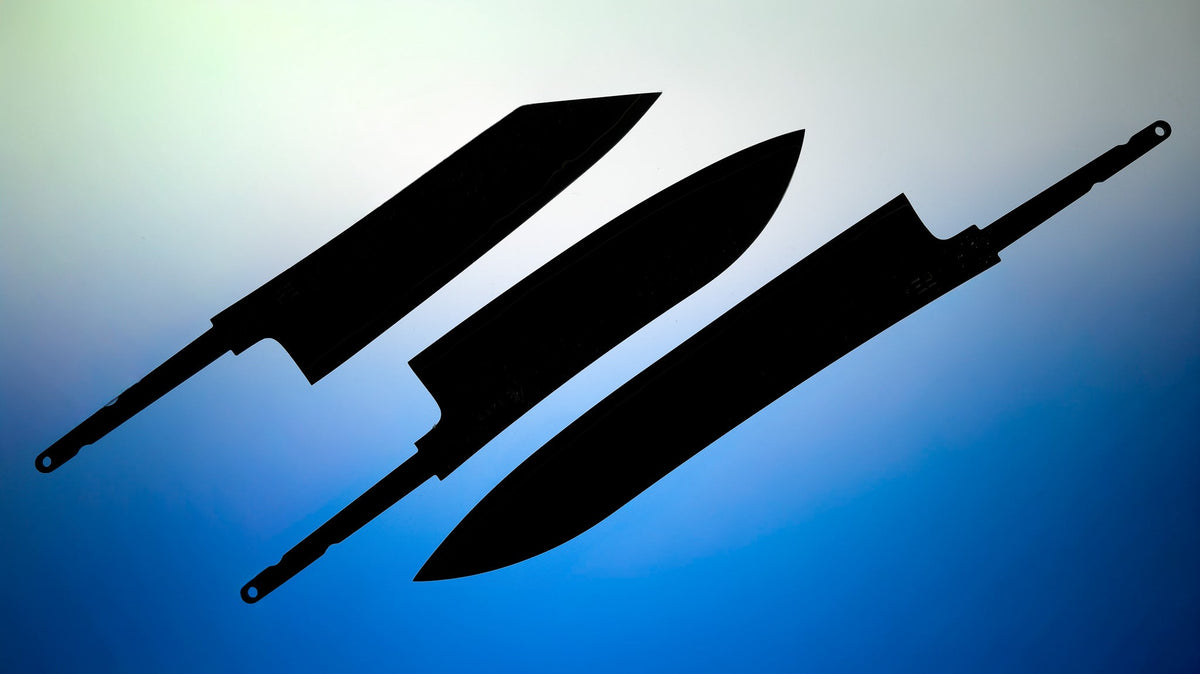
Most kitchens need one good all-purpose knife, and three names keep coming up: Santoku, Gyuto, and Bunka. All three can handle vegetables, meat, fish, herbs, and most everyday prep. That is why the Santoku vs Gyuto question comes up so often. The honest answer is that neither is better. They simply approach the same jobs differently. Bunka adds a third option that is easy to overlook: compact like a Santoku, but with a much more precise tip. Here is how to tell which one fits the way you cook. What is a Santoku? A Santoku is a compact all-purpose knife with a broad blade and a relatively flat cutting profile. The name means “three virtues” and is often associated with its versatility across meat, fish, and vegetables. Compared with a Gyuto, the Santoku usually has a less pronounced tip and keeps more of its cutting edge close to the board. Its flatter profile works particularly well for push-cutting, chopping, and everyday vegetable prep. That compact shape can also make it easier to control on a smaller cutting board. If you want one straightforward knife for everyday cooking and prefer controlled, relatively compact movements, the Santoku is a good place to start. At FE, the Santoku is available in 150, 165, and 180 mm. What is a Gyuto? A Gyuto is a chef’s-knife shape developed in Japan under Western influence. Its name literally means “beef sword,” reflecting its historical connection with meat preparation. Today, it is a much broader all-purpose knife used for meat, fish, vegetables, fruit, and general kitchen prep. Compared with a Santoku, a Gyuto usually has a longer, narrower profile and a more evident tip. The edge also tends to be more curved. That gives you more reach for longer slicing strokes and makes the tip useful for trimming, portioning, and other detailed work. Depending on the exact profile, the curve can also support more rocking motion than a flatter Santoku or Bunka. If you regularly work with larger ingredients, prefer longer slicing movements, or simply like having more blades in front of your hand, the Gyuto may feel more natural for you. At FE, the Gyuto is available in 180, 210, and 240 mm. What is a Bunka? A Bunka sits close to the Santoku in size and everyday use, but its geometry gives it a different character. The cutting edge is relatively straight, while the spine angles sharply toward the tip. This creates the distinctive K-tip, sometimes called a reverse-tanto tip. That fine point is useful when you want more precision for scoring, trimming, or detailed cuts around smaller ingredients. The Bunka is still an all-purpose knife. You do not need specialist cooking skills to use one. Think of it as an option for someone who likes the manageable proportions and flatter profile of a Santoku but wants a more precise tip. If a Santoku feels a little too rounded at the front, while a longer Gyuto feels like too much knife for your board, the Bunka is worth looking at. At FE, the Bunka is available in 150, 165, and 180 mm. Santoku, Gyuto, and Bunka at a glance Santoku Gyuto Bunka Edge profile Relatively flat More curved Relatively straight Tip Less pronounced Pointed Angular K-tip Typical movement Push-cutting, chopping Slicing, push/pull cuts, some rocking depending on profile Push-cutting, chopping, precise tip work Good for Compact everyday prep, vegetables, smaller boards Larger ingredients, longer slicing strokes, general prep Everyday prep with more precise tip work FE sizes 150, 165, 180 mm 180, 210, 240 mm 150, 165, 180 mm How do you choose? Forget the names for a second and think about your last week in the kitchen. If most of your cooking involves quick everyday prep, vegetables, smaller portions, and a compact cutting board, a Santoku may fit that routine very naturally. If you regularly work with larger ingredients, want longer slicing strokes, or simply enjoy the reach of a chef’s knife, look at the Gyuto. If you like a compact knife but frequently use the tip for controlled, detailed work, the Bunka sits somewhere between the two. And if you honestly do a bit of everything, pay attention to how you naturally move the knife. Do you prefer shorter push cuts and chopping? Do you like longer slicing strokes? Do you use the tip often? Your answer is usually more useful than the name on the product page. Length matters as much as shape. Shape is only half of the decision. A 165 mm Santoku and a 210 mm Gyuto can both be described as all-purpose knives, but they feel very different on the board. One keeps everything relatively close to your hand. The other gives you considerably more reach. That is why we recommend thinking about shape and length together. When you compare FE Santoku, Gyuto, and Bunka knives, shape and length are the first differences you are likely to notice in use. The broader FE process remains focused on precision and consistency. Our blades are CNC-machined to tolerances of up to 0.01 mm, vacuum heat-treated, gas-quenched, and cryogenically treated. Production batches are hardness-tested, followed by hand sharpening, assembly, finishing, and final inspection. Materials, finishes, handle configurations, weight, and other specifications can vary between FE models, so they matter too. But if you are trying to decide between Santoku, Gyuto, and Bunka, start with geometry. Put the three profiles next to each other. Look at the length, then look at the tip, and then think about what you actually cut. That will usually tell you more than a long specification list. Do you need all three knives? Most likely not. At FE, we are not telling you to buy more knives; we actually think the opposite. One knife you understand and actually reach for is worth more than a drawer full of knives you are never quite sure about. Start with the shape that matches the way you cook most days. Choose the length that fits your board and the amount of food you usually prepare. Then choose the handle that feels right in your hand. Because that is the part you will notice every single time you use it. Learn more about building your own combination in our article → [How to Build a Custom Kitchen Knife at FE]
How to Build a Custom Kitchen Knife at FE
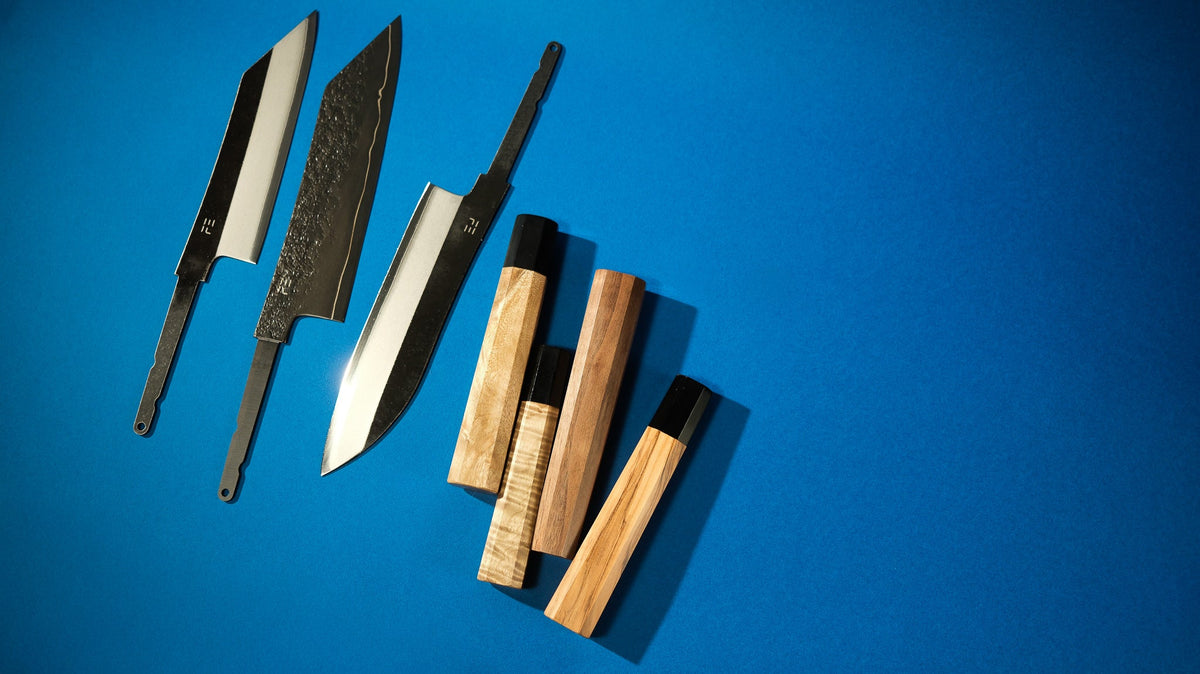
If you walk into almost any knife shop, you will notice the same thing: every knife is already finished and presented in its final shape. The blade, steel, length, and handle are all decided before you arrive, and your only job is to find the one that comes closest to what you had in mind. But what if the closest one is not quite right? Imagine having complete freedom of choice: you can create your own knife from scratch, from the blade type and finish to the handle... That sounds much better, doesn't it? This is the very idea behind the FE concept, and in this article, we’ll walk you through how to create a custom kitchen knife. What does a custom kitchen knife actually mean? At FE, a knife is not one fixed object; it is a system of parts. The blade and handle are separate components, each designed to fit the other through clear, shared standards. That is what makes the system flexible. You can choose a shape without being locked into one handle, and you can choose a handle without changing the blade. It also keeps working after the purchase. Say you own an FE knife and, a year from now, you want a different feel in your hand. You can fit another handle to the blade you already have, or another blade to the handle you love. Nothing has to be thrown away because one part changed. Customization at FE is not a color picker. It is not an engraving added at the end, and it is not a pile of options for the sake of having options. It is a way to make the decisions that change how a knife feels and performs, while understanding each one as you make it. Step one: choose the shape Kitchen knives come in so many shapes because kitchens ask for so many different things. The blade that glides through a roast is not the one you want for a pile of vegetables, and the one built for fine detail is not the one you want for a large cut of meat. Each shape exists for a reason. A Santoku is compact and steady, the everyday knife you reach for without thinking. A Gyuto is the all-round chef’s knife, with a long, slim blade that handles larger ingredients and slicing meat. A Bunka has a fine reverse tanto tip made for precise, detailed work. A Nakiri is straight and flat, built for clean, vertical cuts through vegetables. Petty, Sujihiki, Hakata, and others cover more specific jobs. Today, FE offers 15 different knife types, so there is plenty of room to find your own. To start, think about your own kitchen. What did you cook most this week? Pick the shape that matches it, then look at length, because the same shape feels like a different tool at 150 mm and at 210 mm. If you want help deciding, we wrote two guides: [Santoku vs Gyuto vs Bunka] and [choosing a knife size]. Step two: choose your own handle The handle is the part you touch every time you cook. Long after you stop thinking about the blade, your hand keeps remembering the handle. Its material, form, and weight change how the knife feels, and we believe this part matters just as much as the edge. At FE, the handle is a separate decision, not something added at the end. You can compare the options and feel how each one sits in your hand before you choose. Right now, you can pick from Olive, Walnut, Maple, and Ebony. Each wood has its own color and grain, from the pale warmth of Maple to the deep, almost mysterious black tone of Ebony. The handles are also interchangeable. If one wears out, or you simply want a different feel later, you can replace it without buying a new knife. Step three: assembly and finishing Once you have chosen a blade and a handle, we put them together. Handle assembly and surface finishing are done by hand. Before a knife reaches you, it is inspected for handle fit, sharpness, and straightness. The blades behind every combination are made the same way. They are CNC-machined to tolerances of up to 0.01 mm, vacuum heat-treated, gas-quenched, and cryogenically treated, and every production batch is hardness tested. This is exactly what gives true meaning to the freedom of choice. The ability to select elements yourself makes sense only when every combination has the same quality standard. A Santoku knife with a maple handle and an identical one with an ebony handle are crafted and inspected according to the same criteria. You choose the combination, while the quality standard remains constant. That is how we offer you this freedom without requiring you to compromise on the product's quality. Why we built it this way Part of the reason is practical: a knife that fits perfectly in your hand and suits your cooking style is more comfortable and efficient to use. However, a more significant reason arises from our experience with customers in the shop. We constantly encounter the same scenario: someone finds a blade they love but realizes they would prefer a different handle. With a standard off-the-shelf knife, that’s where the conversation ends, but with FE, that’s exactly where it begins. We want you to decide for yourself which knife you need, rather than settling for an option chosen by someone else. When you understand why you selected a specific shape, length, and handle, the finished knife becomes the incarnation of your own choices. Moreover, this isn't about buying more knives. If you have one custom-made knife that you reach for every day while cooking, that is truly all you need. Where to start Wherever you are, you can build your knife the same way. At any FE store, you can try the shapes and handles in your hands and compare them side by side. On the FE online store, you can choose your shape and your handle there too. Either way, start with the shape, since it is usually the easier decision, then take your time with the handle. To understand the thinking behind all of this, read [What is FE? A Knife Built Around Choice]. And if you would like to stay updated, create your FE account to follow our news, updates, and new articles.

FE Opens in Gion, Kyoto, With a Working Lab Behind Glass
Most knife shops show you the finished knife. At our new store in Gion, you can also see where the work happens. The FE Kyoto Gion store is open. Inside the shop, there is a lab behind a glass wall, and it is the part of the store we most want you to see. Here is what you will find there, and why we chose Gion. A lab you can see through The most distinctive feature of the Gion store is a glass-enclosed lab space inside the shop. It is not an interior designed to look like a research lab. It is a place where our staff actually carry out work and testing, and you can watch it happen through the glass. We built it this way because transparency is one of the central ideas behind FE. Words like sharp and high performance are easy to say, and hard to check. A finished knife can only tell you so much, so we would rather show you how it is made and how it performs. Sharpness is a good example. It is difficult to judge by feel alone. In the Gion lab, sharpness is measured with a special machine, so the result appears as a number instead of an adjective. A number does not tell you everything, and we will be honest about what it can and cannot say. But it is a clearer starting point than a promise. Choose your own knife, in person At the Gion store, you can build your knife from separate parts. You choose the blade shape and the handle, then combine them for the way you cook and the look you like. The goal is a knife that suits your hand and your cooking, not only your eye. Online, you can see a knife. In the store, you can hold it: feel the weight, the texture of the blade, and how each handle sits in your hand. That part is hard to convey on a screen. To see how shapes, sizes, and handles work together, read [How to Build a Custom Kitchen Knife at FE] and [What Kitchen Knife Size Should You Choose?] ZAKU, our first original series You will also find ZAKU here, FE’s first original series. It has a rugged, unpretentious, modern design, with a distinctive texture inspired by meteorites, and it looks and feels unlike a conventional knife. Meteoritic iron is one of the sources of inspiration behind FE, and Jack talks about it in his interview. Why Gion? Gion is one of Kyoto’s best-known districts. Its traditional wooden buildings and stone-paved streets have been preserved, and it welcomes visitors from Japan and from abroad. It is a place where traditional culture thrives. That is exactly why we wanted to be here. FE does not try to copy tradition as it is. We admire it and respect it, but we do not treat it as untouchable. We combine the Japanese philosophy of craftsmanship with techniques from around the world, modern materials, and new designs to offer a different kind of value in a kitchen knife. Gion felt like the right place to show that. If you are planning to visit Kyoto, stop by, hold a few knives, and see the lab for yourself. To learn more about FE, start with this article →[What is FE? A Knife Built Around Choice].
Die Prinzipien hinter FE
Küchenmesser sind Werkzeuge, die fast jeder täglich benutzt. Ob Sie professionell kochen oder nur ein paar Mal pro Woche – ein gutes Messer ist wichtig. Wir haben FE zuerst mit einer Idee entwickelt: Ein Messer muss für jeden zugänglich sein, und Sie sollten aktiv daran beteiligt sein, zu entscheiden, was für Sie am besten ist. Und genau diese Freiheit bieten wir Ihnen. Bei FE haben wir traditionelles Wissen über Messerherstellung mit der Freiheit kombiniert, zu wählen, was zu Ihrem Kochstil passt. Wir behaupten nicht, dass eine bestimmte Region oder Abstammung der einzig richtige Weg ist, ein Messer herzustellen. Wir schöpfen aus dem Wissen der Klingenschmiedekunst, wo immer es wirklich nützlich ist, kombiniert mit japanischem Designverständnis und Leistungsstandards, denn die beste Antwort auf die Frage, wie ein Messer gefertigt sein sollte, kommt nie von nur einem Ort. Wir bewundern und respektieren die Tradition, aber wir behandeln sie nicht als unantastbar. Dasselbe gilt für die Technologie. Es gibt unzählige Techniken zur Messerherstellung und Stahlverarbeitung – warum also nicht experimentieren, Neues ausprobieren und verschiedene Methoden anwenden, während man gleichzeitig respektiert, woher sie kommen? Dann ist da noch die Individualisierung. Sie ist uns wichtig – nicht, weil mehr Optionen automatisch besser sind, sondern weil ein Werkzeug bedeutungsvoller wird, wenn man an dessen Entstehung mitwirkt. Diese Ideen prägen unser Denken über FE. Die meisten Messermarken präsentieren ein fertiges Produkt. Angenommen, Sie suchen ein Santoku aus Edelstahl: Sie wissen vielleicht genau, was Sie wollen, aber am Ende wählen Sie aus dem, was bereits im Regal liegt. Sie können Klinge, Stahl, Form und Griff nicht gemeinsam auswählen. Wir wollten Ihnen eine andere Erfahrung bieten. Durch austauschbare und ersetzbare Griffe können Sie Ihr Messer auffrischen, reparieren oder das Aussehen komplett verändern, ohne ein neues kaufen zu müssen. Eine Zukunft durch Austausch Die Messerherstellung hat sich nie isoliert entwickelt. Verschiedene Kulturen bringen ihre eigenen Ansätze zu Stahl, Geometrie, Wärmebehandlung, Schärfen, Griffen und Fertigung ein. Moderne Technik fügt dem eine weitere Wissensebene hinzu. Manche Dinge bleiben gleich, aber Fertigungsmethoden verbessern sich, neue Werkzeuge tauchen auf und Techniken verbreiten sich zwischen Ländern, Branchen und Generationen. Was heute als traditionell gilt, war irgendwann einmal eine neue Lösung für ein praktisches Problem. FE möchte diesen Prozess fortsetzen: testen, verbessern und weiter forschen. Wir können das heutige Produkt noch nicht einmal als „fertig“ bezeichnen. Wir finden, das ist eine faire Haltung. Innovation erfordert nicht, so zu tun, als hätte jede Frage bereits eine Antwort. Während die Technologie voranschreitet, können wir einzelne Teile aufrüsten, ohne das gesamte Produkt neu gestalten zu müssen. Für FE bedeutet Innovation nicht, das Frühere abzulehnen. Es geht darum, es gut genug zu verstehen, um darauf aufzubauen. Unsere Vision ist eine Zukunft, in der Innovation in der Messerherstellung durch den grenzüberschreitenden Wissensaustausch vorangetrieben wird. Unsere Mission FE existiert, um leistungsstarke, anpassbare Messer zu erschaffen. Wir kombinieren globales Wissen über Messerherstellung, moderne Materialien und praktisches Design und machen gleichzeitig Handwerkskunst verständlicher und zugänglicher. Das bedeutet, über die Klinge selbst hinauszudenken. Wir machen uns Gedanken darüber, wie das Messer ausgewählt wird, wie es zusammengebaut wird, wie seine Leistung geprüft wird, wie die Komponenten interagieren und wie Sie diese Entscheidungen nachvollziehen können. Wir arbeiten auf verschiedenen Wegen an dieser Mission. Unser Ziel ist es, starke Leistung zu bieten, ohne ein gutes Messer zu einem Objekt zu machen, das nur Sammlern vorbehalten ist. Im Gegenteil: Wir möchten, dass Sie das Messer genießen können, anstatt es nur zu bewundern. Wir geben Ihnen ein echtes Mitspracherecht bei der Konfiguration Ihres eigenen Messers. Während wir weiterhin Techniken, Materialien und Ideen aus verschiedenen Teilen der Welt studieren, profitieren Sie bei jedem Kauf unseres Produkts von dieser Forschung. Wir konzipieren Produkte als Systeme mit Komponenten, die ersetzt, verändert oder im Laufe der Zeit weiterentwickelt werden können, sofern das Design es zulässt. Das Ziel ist es, Ihnen genug Informationen und Auswahlmöglichkeiten zu geben, um das Werkzeug, das Sie kaufen, zu verstehen. Zugänglichkeit ist wichtig Sie müssen kein Messerspezialist oder Koch sein, um zu verstehen, was ein gutes Küchenmesser ausmacht. Aber wir wissen auch, dass die Messerwelt schnell kompliziert werden kann. Stahlbezeichnungen, Härtewerte, Klingengeometrie, Fertigungsterminologie und Geschichten über Handwerkskunst können diese Welt einschüchternd wirken lassen, wenn Sie einfach nur ein zuverlässiges Werkzeug für den Alltag suchen. FE möchte diese Informationen klarer vermitteln. Ein Werkzeug als „zugänglich“ zu bezeichnen, bedeutet nicht, die Qualität zu senken. Es bedeutet, die Dinge verständlicher zu machen und unnötige Barrieren abzubauen. Sie sollten verstehen können, warum eine Klingenform existiert, was eine andere Größe bewirkt, warum sich ein Griff anders anfühlt als ein anderer und was bei der Produktion und Qualitätskontrolle tatsächlich passiert. Auch der Preis ist Teil der Zugänglichkeit. Unser Ziel ist es, ein Gleichgewicht zwischen Leistung, Design und Kosten zu finden, damit ein ernsthaftes Küchenmesser kein Luxusobjekt bleiben muss. Ein Werkzeug wird erst dann nützlich, wenn die Menschen es verstehen, es mit Zuversicht wählen und tatsächlich benutzen können. Besitz schafft eine Verbindung Die meisten Produkte auf dem Markt kommen in ihrer endgültigen Form an und sind bereits vollständig entschieden, bevor Sie ihnen überhaupt begegnen. Mit FE wollten wir Ihnen einige dieser Entscheidungen zurückgeben. Sie können über die Form nachdenken, die Sie benötigen, die Größe, die in Ihre Küche passt, und den Griff, der für Sie am bequemsten ist. Wir geben Ihnen den Freiraum, jedes Detail zu kombinieren, das für Ihre Art zu kochen sinnvoll ist. Das bedeutet nicht unbegrenzte Optionen oder Dekoration zum Selbstzweck. Individualisierung verändert die Beziehung zwischen Ihnen und dem Produkt. Sie schafft eine Verbindung und macht das Messer wirklich zu Ihrem. Für uns ist es das, was Partizipation bedeutet. Wenn Sie verstehen, warum Sie sich für eine bestimmte Komponente entschieden haben, trägt das fertige Messer einige Ihrer eigenen Entscheidungen in sich. Das schafft eine andere Art der Verbundenheit. Anstatt einfach zu fragen: „Welches Messer soll ich kaufen?“, können Sie anfangen zu fragen: „Welches Messer ist für mich sinnvoll?“ Der Unterschied ist gering, aber er verändert die Erfahrung. Ein Messer wirkt weniger wie ein aus dem Regal gegriffenes Objekt und mehr wie ein Werkzeug, an dessen Definition Sie beteiligt waren. Handwerkskunst sollte sichtbar sein Wörter wie Handwerkskunst und Qualität werden überall verwendet, was sie leicht auszusprechen, aber schwer zu beweisen macht. Wir glauben, dass Vertrauen stärker wird, wenn der Prozess sichtbar ist. Anstatt von Ihnen zu verlangen, einfach zu akzeptieren, dass in ein Produkt Sorgfalt geflossen ist, zeigen wir Ihnen lieber, was tatsächlich passiert. Wie das Messer zusammengebaut wird. Was von Hand gefertigt wird. Wie die Leistung bewertet wird. Welcher Teil des Prozesses von einer Maschine und welcher von einer Person ausgeführt wird – und warum. Deshalb sind Montage, Veredelung und Qualitätskontrolle zentrale Bestandteile der FE-Erfahrung. Der Prozess selbst enthält Informationen, und wir möchten diese mit Ihnen teilen. Wenn Sie sehen können, wie ein Produkt entsteht, wird die Fachsprache leichter verständlich. Ein Begriff wie „Qualitätskontrolle“ hört auf, ein abstraktes Versprechen zu sein, und wird zu einer Abfolge echter Prüfschritte. Transparenz bedeutet auch, ehrlich über die Rolle von Maschinen zu sein. Wir glauben nicht, dass Handwerkskunst verschwindet, wenn Technologie im Spiel ist. Eine Maschine kann Präzision und Konsistenz liefern, während ein Mensch Beurteilung, Anpassung und Veredelung übernimmt. Ein Werkzeug sollte sich entwickeln können Es gibt noch ein weiteres Prinzip, nach dem FE über Produkte nachdenkt. Ein Messer muss nicht sein ganzes Leben lang exakt gleich bleiben – und in der Praxis wird es das auch nicht. Griffe nutzen sich ab, Ihre Vorlieben ändern sich, neue Materialien tauchen auf und Technologie verbessert sich. Wir entwerfen unser Produkt als System, das auf diese Veränderungen leichter reagieren kann als ein Produkt, das als festes, dauerhaftes Objekt gebaut ist. Deshalb sind austauschbare Komponenten für die langfristige Ausrichtung von FE wichtig. Die Idee ist nicht, Produkte wegwerfbar zu machen oder endlosen Upgrades zum Selbstzweck nachzujagen. Es ist das Gegenteil: Wenn sich eine Komponente ändert, sollte das gesamte Messer nicht automatisch wertlos werden. Ein Werkzeug kann sich gemeinsam mit der Person, die es benutzt, weiterentwickeln. Für FE ist das eine weitere Form der Nachhaltigkeit: Produkte mit Blick auf eine langfristige Beziehung zu entwerfen. Der Grund hinter allem All diese Prinzipien führen auf dieselbe Frage zurück: Können Sie verstehen, warum dieses Produkt existiert? Nicht, weil wir Ihnen sagen, dass es innovativ ist. Nicht, weil wir es als Premium bezeichnen. Nicht, weil wir es in eine Geschichte verpacken. Sondern weil die Entscheidungen dahinter sichtbar sind. Die Form hat einen Grund. Der Griff hat einen Grund. Die Materialien haben einen Grund. Der Prozess hat einen Grund. Ihre Partizipation hat einen Grund. Das ist die Richtung, auf die FE hinarbeitet: ein Messer, das auf Wissen aufbaut, das Grenzen überschreiten kann, ein Produkt, das Freiraum für den Benutzer lässt, und ein Werkzeug, das sich weiterentwickeln kann, während sich die Welt um es herum verändert. Erfahren Sie mehr über FE [Was ist FE? Ein Messer, das auf Auswahl basiert]
„Ich wusste nicht, dass ein Messer so sein kann“: Jack Tou, der Designer hinter FE
Vor FE verbrachte Jack Jahre damit, eng mit japanischen Handwerkern zusammenzuarbeiten und eine Produktlinie für eine andere bekannte japanische Messermarke zu entwickeln. Wir haben uns mit ihm zusammengesetzt, um ihn zu fragen, was FE für ihn bedeutet und wie viel Arbeit hinter ein paar silbernen Linien auf einer Klinge stecken kann. Was sollte FE für dich ausstrahlen, bevor du mit den ersten Entwürfen begonnen hast? Ich wollte, dass FE den Menschen ein unmittelbares, starkes Gefühl vermittelt: „Ich wusste nicht, dass ein Messer so sein kann.“ Praktischer, eleganter, beruhigender und kompromisslos dein eigenes – ein Messer, das du selbst zusammenstellst. Ich möchte nicht, dass ein Küchenmesser nur als traditionelles Küchenwerkzeug verstanden wird. Es kann Technologie, Materialien, Ästhetik und Funktionalität vereinen und zu etwas werden, das wirklich zum modernen Leben passt und es verbessert. Was bedeutet der Name FE für dich? FE ist eine Messermarke, die auf der Überzeugung gründet, dass Innovation durch den Austausch von Wissen entsteht. Indem wir zeitgenössische Messermacher-Techniken aus aller Welt zusammenbringen, schaffen wir leistungsstarke, zugängliche Messer und tragen gleichzeitig zur kontinuierlichen Entwicklung der Messermacher-Kulturen bei. Aber es gibt noch eine zweite Bedeutung, die für mich eine entscheidende Rolle spielt: Future (Zukunft). FE nimmt das Beste aus der traditionellen japanischen Handwerkskunst und gibt dir die Freiheit, das zu wählen, was sich richtig anfühlt, damit das Messer, das du am Ende erhältst, kompromisslos deines ist. Wenn es bei traditionellen japanischen Marken darum geht, die traditionelle Kultur und Handwerkskunst zu bewahren und weiterzuführen, dann ist FE für mich eine Marke, die in unsere Zeit gehört. Wir leben in einer Ära rascher technologischer Entwicklung und KI, und ich möchte nicht, dass die Zukunft nur in der Form eines Messers existiert. Von Produkten und Verpackungen bis hin zu Verkaufsräumen, digitalen Schnittstellen, Personalisierung und Fotografie – ich möchte, dass alles dieselbe Designsprache spricht. Egal, ob du einem Messer, einer Verpackung, einem Bildschirm oder einem FE-Store begegnest, du solltest spüren, dass sie zum selben System gehören. Warum ist dir die Zukunft so wichtig? Ich war schon immer fasziniert davon, wie sich der Mensch die Zukunft vorstellt. In der Antike, wenn Menschen Meteoreisen vom Himmel fallen sahen, verstanden sie es als etwas Geheimnisvolles, manchmal sogar als ein Material, das den Göttern gehörte. Heute analysieren wir dasselbe Material durch Materialwissenschaft und identifizieren seine Eisen-, Nickel- und sehr spezifischen metallischen Strukturen. Für mich stehen diese beiden Arten, es zu verstehen, nicht im Widerspruch. Technische Zeichnungen, Industriedesign, frühe digitale Schnittstellen und jetzt KI dokumentieren alle, wie Menschen in verschiedenen Epochen Technologie und die Zukunft verstanden haben. FE verwendet Referenzen aus diesen visuellen Sprachen, aber ich möchte nicht, dass sie reine Dekoration sind. Idealerweise hat jedes Element eine Funktion oder einen Grund. Eine Linie könnte aus der tatsächlichen Struktur eines Produkts stammen. Eine Zahl könnte einem echten technischen Parameter entsprechen. Eine Schnittstelle sollte dir helfen, eine bessere Entscheidung zu treffen. Die Textur eines Materials sollte aus einem echten Herstellungsprozess stammen. Ich möchte nicht, dass FEs Gefühl von Zukunft einfach nur futuristisch aussieht. Ich möchte, dass es sich wie die Zukunft anfühlt, weil das Produkt selbst mit den Technologien und Denkweisen unserer Zeit entworfen wurde. Welche Designentscheidung hat die meiste Zeit in Anspruch genommen? Es mag wie eine kleine Materialwahl aussehen, aber unsere Verwendung von Nickel (Ni) hat viel Zeit und Experimentierfreude erfordert. Meteoreisen ist eine der wichtigsten Inspirationsquellen für FE. Mythen und Legenden aus Kulturen auf der ganzen Welt berichten von „Metall vom Himmel“ und Waffen, die daraus geschmiedet wurden. In echten Eisenmeteoriten ist eines der charakteristischsten Merkmale das gleichzeitige Vorkommen von Eisen und Nickel. Das hat mich dazu gebracht, zu fragen, ob wir diese Materialeigenschaft in FEs eigene Designsprache übersetzen können. Nickel beeinflusst nicht nur die Eigenschaften einer Legierung. Es kann auch einen sehr markanten visuellen Kontrast in laminierten Stählen und Damaststrukturen erzeugen, daher begannen wir, mit nickelhaltigen Materialien und Nickel-Damast-Techniken als Teil des FE-Produktsystems zu experimentieren. Als wir mit der Herstellung begannen, stellten wir fest, dass dies weitaus schwieriger war als das Zeichnen. Wenn reines Nickel mit Stahl feuerverschweißt wird, müssen Temperatur, Druck, Materialdicke und der gesamte Prozessablauf sorgfältig kontrolliert werden. Geschieht dies nicht, kann es zu Delaminierung, ungleichmäßiger Dicke oder einem Muster ohne ausreichende Definition kommen. Was du am Ende siehst, mögen nur ein paar silberne Linien auf der Klinge sein. Aber um diese Linien zu einem echten Bestandteil des Produkts zu machen und nicht zu einer bloßen Oberflächendekoration, haben wir sowohl die Materialien als auch die Herstellungsprozesse umfassend getestet und verfeinert. Wohin geht die Entwicklung bei der Personalisierung? Dies ist einer der Bereiche, in denen FE sich meiner Meinung nach sehr von anderen Marken unterscheidet. Das Design an die Größe deiner Hand anzupassen, dich einen Griff wählen zu lassen und dir bei der Suche nach der richtigen Größe zu helfen, ist für mich nur der erste Schritt. In Zukunft möchte ich, dass du basierend darauf, wie du deine Messer tatsächlich benutzt, noch weiter gehen kannst: Wähle die Klingenform, die Maße und sogar unterschiedliche Leistungsmerkmale für deine eigenen Bedürfnisse. Diese Idee hat die Art und Weise verändert, wie ich unsere Kernprodukte entwerfe. Wenn wir echte Personalisierung wollen, können wir nicht damit anfangen, jedes Messer als ein völlig unabhängiges Produkt zu betrachten. Wir brauchen von Anfang an einen einheitlichen Standard und ein kohärentes System. Die Klinge, der Griff und die anderen Komponenten benötigen klare Regeln und Schnittstellen zueinander. Wenn die Technologie voranschreitet, können wir so einzelne Teile weiterentwickeln, ohne das gesamte Produkt neu entwerfen zu müssen. Am Ende möchte ich nicht, dass ein FE-Produkt etwas ist, das „fertig“ ist, sobald das Design abgeschlossen ist. Ich möchte, dass es ein System ist, das sich mit der Technologie, mit den Menschen, die es benutzen, und mit der Ära selbst ständig weiterentwickelt. Erfahre mehr über FEWas ist FE? Ein Messer, bei dem die Wahl im Mittelpunkt steht
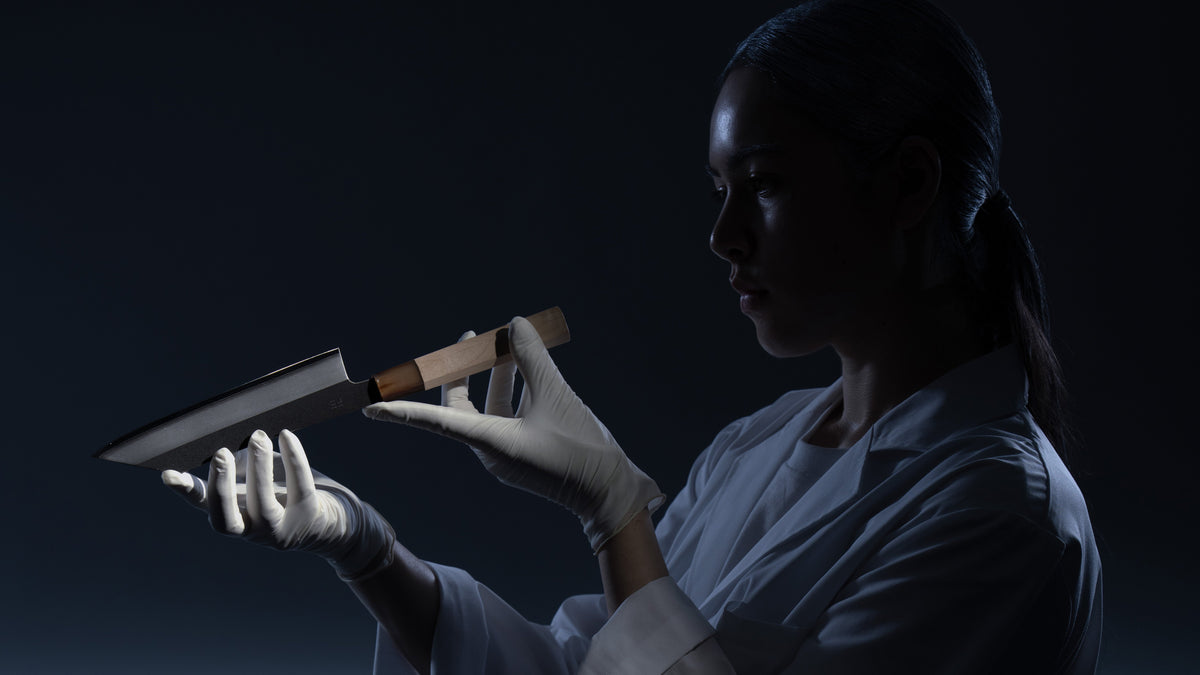
Warum FE wählen? Das Messer, das Sie wirklich verstehen
Warum FE wählen? Denken Sie darüber nach, wie viele Produkte es aktuell gibt. Die schiere Menge an Auswahl kann allein schon überwältigend sein. Wir werden ständig dazu aufgefordert, dies oder jenes zu kaufen, es wird uns erzählt, ein Produkt sei exzellent und von hoher Qualität, und doch haben Sie keine wirkliche Möglichkeit, das zu überprüfen. Sie müssen es einfach glauben und den Kauf dann trotzdem tätigen. Wie verrückt ist das? FE geht vom gegenteiligen Instinkt aus. Anstatt Sie zu bitten, Marketingbegriffen wie Präzision, Premium oder Exzellenz zu vertrauen, möchten wir Ihnen lieber das Produkt selbst zeigen und Sie entscheiden lassen, ob es tatsächlich hält, was es verspricht. Und es gibt viel, womit es sich messen muss: Japan, China, Europa, die USA, neue Marken und neue Messer, die überall auftauchen und alle für sich beanspruchen, das einzig Wahre zu sein. Die meisten Messer kommen als fertige Entscheidung bei Ihnen an. Jemand anderes hat bereits die Klingenform, den Griff und die Balance ausgewählt, und Sie akzeptieren das entweder oder nicht. Bei FE ist das anders. Sie wählen das Messer, das Sie möchten, nicht nur das Modell, das bereits für Sie entschieden wurde. Klinge und Griff sind getrennte Entscheidungen Sie wählen die Form, die zu Ihrer Art zu kochen passt, und dann den Griff, der zu Ihrer Hand und Ihrem Geschmack passt. Es ist nicht nur eine Farboption, die an ein fertiges Produkt geschraubt wird. Es verändert das, was Sie tatsächlich kaufen: kein Objekt, das jemand anderes fertiggestellt hat, sondern eines, an dem Sie maßgeblich beteiligt waren. Wir verbergen den Herstellungsprozess nicht Viele Messermarken verlassen sich auf ein einziges Wort: handgefertigt, japanisch, handwerklich, und überlassen den Rest Ihren Vermutungen. FE möchte Ihnen lieber die Wahrheit sagen. Unsere Klingen werden CNC-gefräst mit Toleranzen von bis zu 0,01 mm, dann vakuumwärmebehandelt und gasabgeschreckt sowie kryogen behandelt. Jede Produktionscharge wird auf Härte geprüft. Schärfen, Montage und Fertigstellung erfolgen von Hand, und jedes Messer wird auf Passgenauigkeit, Schärfe und Geradheit geprüft, bevor es Sie erreicht. Nichts davon ist ein Geheimnis, das wir enthüllen. Es ist einfach der tatsächliche Prozess, sachlich dargelegt, anstatt ihn auszuschmücken. Qualitätskontrolle ist kein bloßes Versprechen; es ist ein sichtbarer Schritt Wir verlangen nicht, dass Sie "strenge Prüfungen" blind glauben. Härteprüfungen, Geradheitskontrollen, Schärfeinspektionen: Das sind spezifische, wiederholbare Schritte, die entweder stattfinden oder nicht. Bei FE finden sie bei jeder Charge statt, nicht nur bei den Exemplaren, die es auf Fotos schaffen. Das Sortiment ist breit gefächert, denn Kochen ist nicht nur eine einzige Aufgabe Ein Santoku und ein Gyuto lösen unterschiedliche Probleme. Genauso wie ein Nakiri und ein Petty. Das Sortiment von FE existiert, weil wir Ihnen lieber helfen möchten, die Form zu finden, die wirklich zu Ihrer Art zu kochen passt, anstatt Ihnen ein Messer zu verkaufen und es als universell zu bezeichnen. Wir wollen nicht, dass Sie mehr Messer kaufen Dieser Punkt ist uns wichtiger, als es vielleicht klingen mag. Die Position von FE ist nicht, dass Sie eine größere Messersammlung brauchen. Sondern, dass ein Messer seinen Platz in Ihrer Küche verdienen sollte. Ein paar Messer, zu denen Sie tatsächlich greifen und die genau für das geeignet sind, was Sie tun, werden immer besser sein als eine Schublade voller Messer, denen Sie nicht voll und ganz vertrauen. Globales Wissen, nicht eine einzelne Tradition Hinter der heutigen Messerherstellung stehen so viele Techniken, Materialien und Maschinen. Es mag kitschig klingen, aber wir wollten das Beste aus all dem zusammenführen und in das einfließen lassen, was wir Ihnen bieten. FE erhebt nicht den Anspruch, dass eine bestimmte Region oder Abstammung der einzig richtige Weg zur Messerherstellung sei. Wir schöpfen aus dem Wissen der Klingenschmiedekunst, wo immer es wirklich nützlich ist, kombiniert mit japanischem Designverständnis und Leistungsstandards, denn die beste Antwort darauf, wie ein Messer gemacht sein sollte, konnte noch nie nur von einem einzigen Ort kommen. Also, warum FE? Weil Sie das Messer selbst wählen können, anstatt eines zu akzeptieren, das bereits für Sie entschieden wurde. Weil wir Ihnen sagen, was in der Produktion tatsächlich passiert, anstatt zu verlangen, dass Sie einem Werbeversprechen vertrauen. Weil Qualitätskontrolle bei uns etwas ist, das wir belegen können, nicht nur behaupten. Und weil das Messer, das Sie am Ende haben, eines ist, das Sie verstehen – nicht nur eines, das Ihnen verkauft wurde. Machen Sie das Quiz, um herauszufinden, was Sie wirklich brauchen. https://feproject.com/pages/knife-quiz-kiosk?
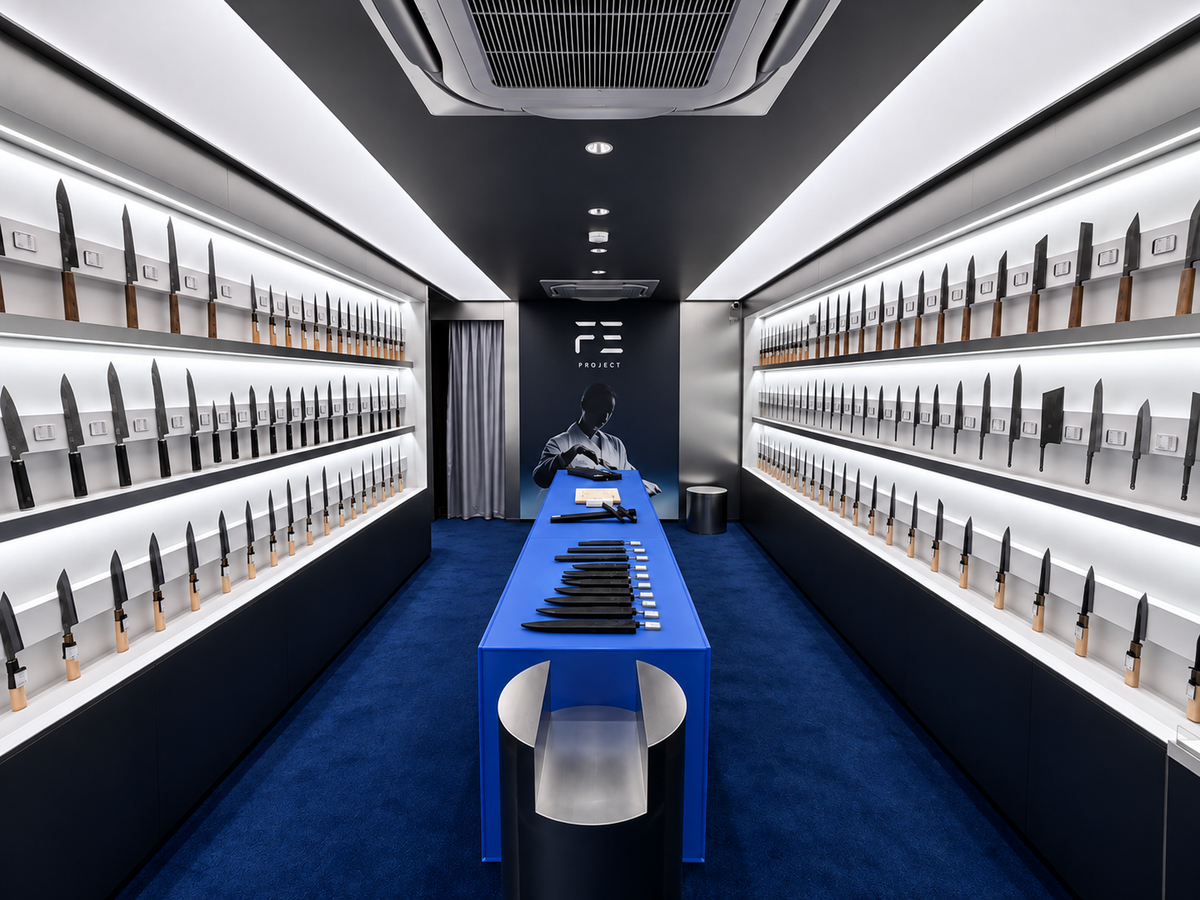
Die innovative Messermarke FE hat ihr erstes Geschäft in Osaka eröffnet.
Wir freuen uns, einige Neuigkeiten mit Ihnen zu teilen: Unser erster physischer FE-Store wurde in Osaka eröffnet. FE vereint Messerschmiedetechniken aus der ganzen Welt mit modernen Materialien, fundiert durch japanisches Designverständnis und Leistungsstandards. Im Store in Osaka Namba können Sie die Messer persönlich betrachten und anfassen, die Unterschiede zwischen Klingen und Griffen spüren und das Modell auswählen, das perfekt zu Ihnen passt. Mit diesem physischen Raum vermittelt FE die Handwerkskunst und das Vergnügen bei der Auswahl eines Messers, das online allein nicht vollständig transportiert werden kann. Eine neue Basis für FE, geboren in Osaka Osaka hat schon immer Menschen unterschiedlichster Herkunft willkommen geheißen und sie zu einer ganz eigenen, unverwechselbaren Kulinarik-, Handels- und Kulturlandschaft verschmolzen. Diese Stadt verbindet verschiedene Einflüsse, um etwas vollkommen Neues zu erschaffen. Genau dieser Gedanke durchzieht auch unsere Art der Messerfertigung. Anstatt uns auf eine einzelne Region oder Tradition zu beschränken, haben wir neue Möglichkeiten für Küchenmesser ausgelotet, indem wir auf Schmiedetechniken aus der ganzen Welt sowie zeitgemäße Materialien zurückgreifen. FE verfolgt zudem einen anderen Ansatz beim Küchenmesser selbst: Sie wählen das Messer aus, das Ihrem individuellen Kochstil und Ihren Vorlieben entspricht – bei Klinge wie bei Griff. Erleben Sie die Welt von FE in unserem Store Beim Entwurf dieses Stores wollten wir eine futuristische Atmosphäre schaffen: klare Linien, metallische Kanten, anders als in einem gewöhnlichen Messergeschäft. Messer mit unterschiedlichen Formen und Charakteren sind ordentlich entlang der Wände angeordnet, während ein zentraler Bereich dazu einlädt, die Produkte in die Hand zu nehmen und direkt miteinander zu vergleichen. In einer Umgebung, die eher an ein Forschungslabor erinnert und auf Funktion und Präzision ausgerichtet ist, können Sie die Unterschiede selbst erkunden und ein Messer nach Ihrem Gefühl auswählen. Sie können Klinge und Griff zudem separat auswählen und so aus den Elementen, die Sie wirklich wünschen, ein individuelles Messer zusammenstellen. Es geht nicht nur darum, ein fertiges Produkt auszuwählen, sondern zu vergleichen, zu entscheiden und zu kombinieren. Dies ist das, was FE bei der Herstellung unserer Produkte am meisten schätzt: Bessere Antworten zu finden, ohne in bestehenden Rahmen gefangen zu sein. Es ist dieselbe Frage, die seit Beginn im Zentrum unserer Marke steht. Was wäre, wenn der Auswahlprozess Teil des Produkts selbst wäre? Kein Zusatz, kein Feature, sondern der eigentliche Kern. Ein Werkzeug, das man nicht nur bewundern, sondern begreifen kann. Was aus dem Store erwächst: Die Zukunft von FE FE Osaka Namba ist ein Ort, um Handwerkskunst zu sehen, zu berühren und zu erleben, die Schmiedetechniken aus aller Welt mit japanischem Designverständnis verbindet. Wo Ihr eigenes Gespür auf unsere Fertigung trifft, entstehen neue Begegnungen mit Messern, die es so bisher nicht gab. Anstatt nur fertige Lösungen aufzureihen, suchen wir kontinuierlich nach der nächsten Innovation. Von Osaka aus in die nächste Stadt und darüber hinaus. FE wird seine Store-Präsenz weiter ausbauen, um immer mehr Menschen eine neue Form des Küchenmessers zu bieten, die für unsere Zeit gemacht ist. Wir freuen uns darauf, Sie zu sehen – kommen Sie vorbei und sagen Sie Hallo, wenn Sie in Osaka sind.
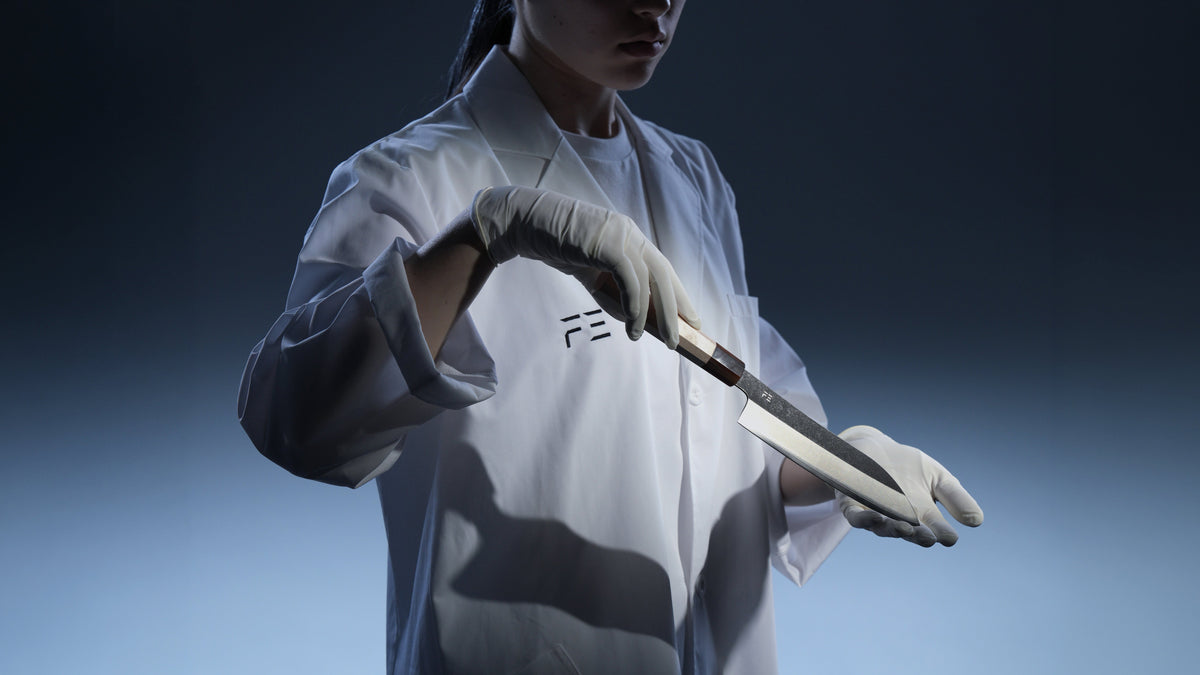
Was ist FE? Ein Messer, das auf Wahlmöglichkeiten basiert
Wenn Sie ein Küchenmesser kaufen, sind Klinge, Griff, Form und Materialien bereits für Sie entschieden. Was Sie sehen, ist das fertige Objekt: ein festes Modell in einer festen Form, bereit, mit nach Hause genommen zu werden. FE setzt an einem anderen Punkt an. Was wäre, wenn die Auswahl des Messers Teil des Produkts selbst wäre? Kein Add-on, kein Feature, sondern die eigentliche Idee. Ein Werkzeug, das man verstehen, nicht nur bewundern kann. Es beginnt mit einem Element. Der Name FE stammt von Ferrum, dem lateinischen Wort für Eisen. Es ist bewusst schlicht gehalten. Anstatt eine Identität um eine Region, eine Legende oder ein traditionelles Bild der Messermacherei aufzubauen, beginnt FE beim Material selbst und fragt, was aus einem Küchenmesser werden kann, wenn zeitgemäßes Design, Technik und verschiedene Traditionen der Messerherstellung zusammenkommen. Dies ist kein Versuch, dem Messer die Tradition zu nehmen, ganz und gar nicht. Es ist ein Versuch, sie aus einer anderen Richtung zu betrachten. Ihre Form. Ihr Griff. Ihr Messer. Es gibt so viele Formen im Sortiment, dass es auf den ersten Blick kompliziert wirken kann. Manche Menschen wünschen sich die kompakte Form eines Santoku. Andere bevorzugen die Präzision und die spitze Klinge eines Bunka. Ein Gyuto bietet kompromisslose Vielseitigkeit. Eine flache, rechteckige Nakiri-Klinge ist für saubere, vertikale Schnittbewegungen gebaut. Diese Formen existieren, weil unterschiedliche Schneidaufgaben unterschiedliche Anforderungen stellen – und diese Unterschiede verständlich zu machen, ist Teil dessen, wofür FE steht. Dann ist da noch der Griff: eine völlig andere Geschichte. Sein Material, seine Form und seine Haptik verändern die Beziehung zwischen Ihrer Hand und der Klinge. Bei der Entwicklung von FE haben wir uns dazu entschieden, Ihnen die Freiheit zu geben, Ihr eigenes Werkzeug zu bauen. Sie wählen die Klinge. Sie wählen den Griff, der zu Ihrer Art zu kochen passt. FE betrachtet diese Entscheidungen als Teil des Erlebnisses und nicht als etwas, das man in einem fertigen Produkt verstecken sollte. Wählen Sie die Form. Wählen Sie den Griff. Bauen Sie die Kombination, die für Ihre Art zu kochen Sinn ergibt. Die aktuelle FE-Kollektion umfasst alltägliche Formen wie Santoku, Gyuto, Bunka, Nakiri und Petty sowie spezialisiertere Formen wie Sujihiki, Honesuki, Hakata und Kiritsuke. Wir wollen Ihnen nicht einreden, dass Sie mehr Messer brauchen. Es ist eher das Gegenteil: Es geht darum, die Unterschiede gut genug zu verstehen, um das auszuwählen, was Sie tatsächlich benötigen. Ein Messer, das auf eine Weise persönlich ist, die ein Datenblatt nicht erklären kann. Der Prozess sollte sichtbar sein Die Messersprache wird schnell abstrakt: Premium, scharf, handgefertigt, hohe Leistung. Bei FE ziehen wir es vor, zu erklären, was tatsächlich passiert. Die Produktion beginnt mit hochwertigem Stahl, gefolgt von einer Präzisionsbearbeitung. Unsere Klingen werden CNC-gefräst mit Toleranzen von bis zu 0,01 mm. Sie werden vakuumwärmebehandelt und gasgehärtet, um Verzug und Konsistenz zu kontrollieren, und anschließend bei Minustemperaturen kryogen behandelt. Jede Produktionscharge wird einer Härteprüfung unterzogen. Der finale Schliff erfolgt von Hand. Die Griffmontage und das Oberflächenfinish werden auf die gleiche Weise durchgeführt. Jedes Messer wird anschließend auf Griffsitz, Schärfe und Geradheit geprüft. Transparenz ist eine der zentralen Ideen hinter FE. Unser Ziel ist es, den Prozess sichtbarer zu machen: weniger Mysterium, mehr Information. Ein modernes Produkt kann einen langen Weg vom Material bis zum fertigen Objekt zurücklegen: Design, Stahl, Bearbeitung, Wärmebehandlung, Veredelung, Montage, Qualitätskontrolle. Wir möchten, dass dieser Weg nachvollziehbar ist. Welches Material wird verwendet? Wie wird die Klinge geformt? Was wird gemessen? Was wird von Hand gefertigt? Diese Fragen sind keine Unterbrechungen der Produktgeschichte. Sie sind die Produktgeschichte. Leistung, die Sie prüfen können Schärfe ist ein gutes Beispiel. Es ist leicht, ein Messer als extrem scharf zu bezeichnen. Es ist interessanter zu fragen, wie Schärfe tatsächlich bewertet wird, was sie beeinflusst, wie lange sie anhält und was eine Messung aussagen kann – und was nicht. Dieser Ansatz geht über die Schneide hinaus. FE kümmert sich um das gesamte System rund um das Messer: Materialauswahl, Klingengeometrie, Wärmebehandlung, Griffform, Montage, Inspektion und schließlich die Art und Weise, wie sich das Werkzeug durch den Gebrauch verändert. Anstatt von Ihnen zu verlangen, Leistung als bloßes Adjektiv zu akzeptieren, möchten wir, dass diese Leistung sichtbar wird. Ein Messer ist nicht nur die Klinge FE war nie als reine Sammlung einzelner Produkte gedacht. Das Messer existiert in einem größeren System: die Klinge und der Griff, die Art ihrer Kombination, der Prozess dahinter, die Art und Weise, wie Sie wählen, wie das Messer getestet, gepflegt und verstanden wird, nachdem Sie es besitzen. Sogar der Laden und das digitale Erlebnis sind Teil dieses Systems. Deshalb ist Individualisierung für FE so wichtig. Es geht nicht um eine Farbwahl. Es ändert Ihre Rolle: von der Auswahl eines fertigen Objekts hin zur Teilhabe an den Entscheidungen, die es ausmachen. FE ist ein fortlaufendes Projekt, das bewusst auf Forschung und Iteration ausgelegt ist. Einige Ideen existieren bereits als fertige Produkte. Andere sind noch Experimente: neue Materialien, neue Schnittstellen, neue Testmethoden, digitale Werkzeuge, Einkaufserlebnisse, verschiedene Möglichkeiten, Menschen bei der Auswahl zu helfen. Wir finden, „unfertig“ zu sein ist völlig in Ordnung. Innovation erfordert nicht, so zu tun, als hätte jede Frage bereits eine Antwort. Manchmal bedeutet es einfach, den Test zu zeigen, die Zeichnung zu zeigen, zu zeigen, was sich zwischen der ersten und der zweiten Version verändert hat. Das Objekt im Zentrum all dessen bleibt einfach. Was sich ändert, ist der Weg dorthin – und die Entscheidung liegt bei Ihnen. FE. Ein Element. Jede Klinge.
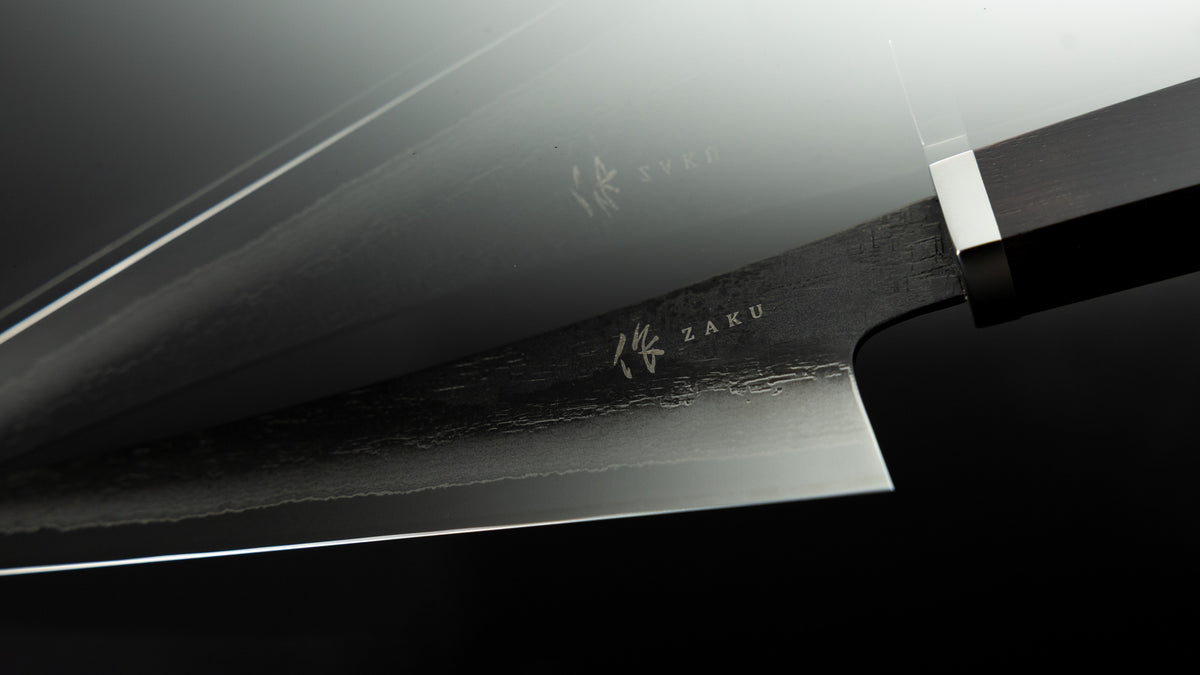
Iron Is Where We Start. Why does FE focus on iron?
Every kitchen knife starts with a metal, and for almost every knife you will ever hold, that metal is iron. This article explains why we start there. The short version: iron is not a fixed material. It has kept changing for thousands of years, from metal that fell from the sky to the modern steels in your kitchen, and every generation of smiths added something to it. We want FE to respect that history, and to keep adding to it with the technology of our time. Here is how the story goes: where iron comes from, how people learned to work it, how steel evolved, and how FE builds on all of it. The origins of iron For most of human history, a blade was made from whatever could be found and shaped. First came stone, chipped into a point. Then copper, soft but workable. Then bronze, which is copper mixed with tin. Bronze was harder and durable enough that many bronze blades and tools survive in museums today. But iron was already on Earth, and some of it had arrived from the sky. Metal from the sky Long before anyone learned to produce iron, people already knew it in a rare form: meteorites. Iron ore hides inside ordinary-looking rock, and getting the metal out means building a very hot furnace and knowing exactly what to do. Humanity did not arrive at that skill overnight. But now and then, rocky and metallic masses fall to Earth from space, and some of them are made almost entirely of iron and nickel. Imagine finding one thousands of years ago. You have never seen a metal like this. It is heavy, shiny, and strange, and it fell from the sky. Because it was so rare, people treated it as special, and in some places as sacred. They could not melt it, but they could hammer it into beads, ceremonial objects, jewelry, and blades. The most famous example is the dagger of Tutankhamun. It was found in 1925 in the wrappings of the mummy, and it is more than 3,300 years old. In 2016, Italian and Egyptian researchers analyzed the blade with a non-invasive X-ray technique. They found about 10 percent nickel and a little cobalt, a combination that is typical of iron meteorites and very rare in iron made from ore. The blade really was made from metal that fell from space, and the dry air inside the tomb kept it free of rust for over three thousand years. How iron took over from bronze Meteorites were rare, but iron ore is not. It lies in the ground across the world, which meant a smith in almost any region could, in principle, learn to work it. Bronze, by contrast, needs tin, and tin was not buried everywhere. Here is the surprising part: early iron was actually softer than bronze. It won slowly, by being easier to find and cheaper to make, and because smiths kept learning how to improve it. One of the biggest improvements was carbon. Iron mixed with the right amount of carbon becomes steel, a metal that can be hardened and sharpened to an edge that bronze could not hold as well. Steel is an alloy, and what makes it steel is control over its carbon content. Smiths found different ways to get there, adding carbon to soft iron or taking carbon out of carbon-rich iron. So iron did not win because it was perfect. It won because it was available, and because the people who worked with it never stopped improving it. How people learned to work iron Once people could make iron and steel themselves, each culture developed its own methods, shaped by the materials and conditions around it. Japan has little iron ore, so traditional steelmakers relied on iron sand. They smelted it with charcoal in a clay furnace called a tatara, over about three days and nights, to produce tamahagane, the steel behind the traditional Japanese sword. In India, smiths made steel in sealed clay crucibles. The result, known as wootz, had a rippled surface pattern. Traders carried it to the Middle East, where it was forged into the blades that came to be known as Damascus steel. Today, the name Damascus is also used for pattern-welded steel, made of layers of different metals forged together. In Europe, towns like Solingen in Germany and Sheffield in England became famous for their blades and cutlery. Different furnaces in different places, and the same metal at the core. Techniques moved between countries and generations, and what we call traditional today was once a new solution to a practical problem. How steel evolved For centuries, the standard knife steel was carbon steel: iron with carbon in it, hardened to hold a sharp edge. It has been trusted by smiths for a very long time, and it has one well-known characteristic. Why does iron rust? Rust is what happens when iron comes into contact with oxygen and water. The surface slowly turns into iron oxide, the flaky orange-brown layer you have probably seen on an old gate or a forgotten pan. This layer does not hold on. It crumbles away and exposes fresh metal underneath, so the rust keeps working its way inward. Carbon steel behaves the same way, which is why a carbon steel knife asks for a little care. Some carbon steels also develop a patina, a slow darkening that is not rust and simply records how the knife has been used. Then came stainless steel In August 1913, in Sheffield, a metallurgist named Harry Brearley was trying to make a steel that would stand up better to the heat and wear inside gun barrels. He added chromium and noticed something unexpected: the steel resisted corrosion. He first called it rustless steel. The name stainless came later, suggested by a local cutlery manufacturer. Others had experimented with chromium steels before him, but Brearley is widely credited with creating the first practical stainless steel. Here is what the chromium does. On the surface of the steel, it reacts with oxygen in the air and forms a layer of chromium oxide. You cannot see it, and it is far thinner than a human hair, but it clings tightly to the steel and seals it off from air and water. If you scratch it, a new layer forms by itself, as long as there is air. Plain iron has no such layer. A steel needs at least 10.5 percent chromium to count as stainless, and most stainless knife steels contain 13 percent or more. That does not make them rust-proof, but it makes them highly resistant. Modern powder metallurgy and other high-performance steels push hardness and edge holding further still. Each steel is a trade-off between rust resistance, how well it holds an edge, how easy it is to sharpen, and how it ages with use. No single steel is best at everything. The right one is the one whose trade-offs suit the knife and the way you cook. If you want to know how to look after a kitchen knife, read [Knife Care Tips for Everyday Cooking]. How FE builds on iron We admire the people who learned to work iron long before us, and we respect what they built. But we do not treat it as untouchable. Those smiths were defining the technology of their time. They used the best furnaces, tools, and knowledge they had, and they kept improving them. We live in a different time, with different tools, and we think the best way to honor them is to keep going. That is why FE draws on knife-making knowledge from different traditions and combines it with what is possible today. Production starts with premium steel. Our blades are CNC-machined to tolerances of up to 0.01 mm, vacuum heat-treated, gas-quenched, and cryogenically treated, and every production batch is hardness-tested. The final sharpening, handle assembly, and surface finishing are done by hand, and each knife is inspected for handle fit, sharpness, and straightness. The meteorite story is part of FE too. Meteoritic iron is one of the sources of inspiration behind our design. Iron meteorites contain nickel alongside iron, so we asked whether we could carry that idea into a modern knife, and you can see a trace of it in the silver lines that run across some of our blades. A smith once judged the heat of the fire by the color of the glowing metal. Today the tools are different, but the goal is the same: to understand what happens to the steel, and to make it visible to you. Why iron is where we start Iron has been through a great deal: a metal that fell from the sky, a clay furnace fed with sand and charcoal, a crucible in India, a laboratory in Sheffield. At every step, someone found a way to make it better. That is why we start with iron. Not because it is perfect, but because it has never stopped changing, and there is still room to change it. We keep researching, testing, and looking for materials that may work even better. From tradition to technology, and then a little further. Iron is where FE begins. Where we go next, we are still finding out. To learn more about FE, start with [What is FE? A Knife Built Around Choice].